
For many Canadians, a home functions like a bank vault. It stores capital, that they contribute to through regular, monthly mortgage payments. The expectation is that the value will grow over time, and build long-term wealth.
However, this doesn’t hold true for everyone. Poorly executed renovations can actually drag a property’s value down. This turns what should be an asset into a liability.
On the other side of the coin, some homeowners make smart, high-impact upgrades that increase their home’s value. With the right strategy, these homeowners are able to build significant equity with relatively little effort. This equity can be converted into extra cash to upgrade their lifestyle, buy a bigger house, a new car, or to invest so that the money starts to grow by itself.
In this article, we will show you how to increase the value of your home, and how to avoid renovations that you will regret.
 Immovision
What's Your Home Currently Worth?
Get a clear estimate of your home’s current value to establish a baseline before making any upgrades.
How to calculate property value?
There are three methods to calculate property value. These are:
Let’s briefly go over how each of these methods work.
Note
The comparison method
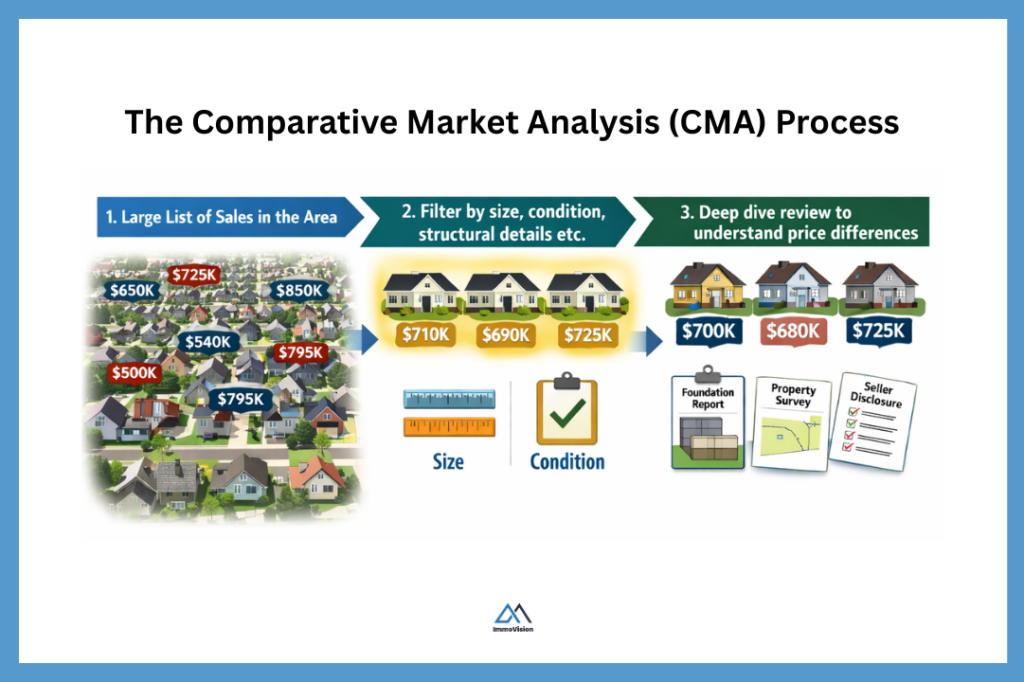
The comparison method values a home by analyzing similar properties (“comps”) recently sold in the area. An appraiser or real estate agent uses these sales as benchmarks. For example, if a comparable home sold for $700,000, it helps estimate your home’s value. This approach is known as a Market Analysis (or CMA).
The way it works is that a home appraiser will typically start with a list of 50–100 similar properties in your area. They will then narrow this down based on key features such as size, location, condition, and structural details (for example, block foundation versus poured concrete), along with many other criteria.
After applying these criteria, they’re left with 3–5 truly comparable homes that sold for different prices. They use this to establish a “price range” for your home.
The cost method
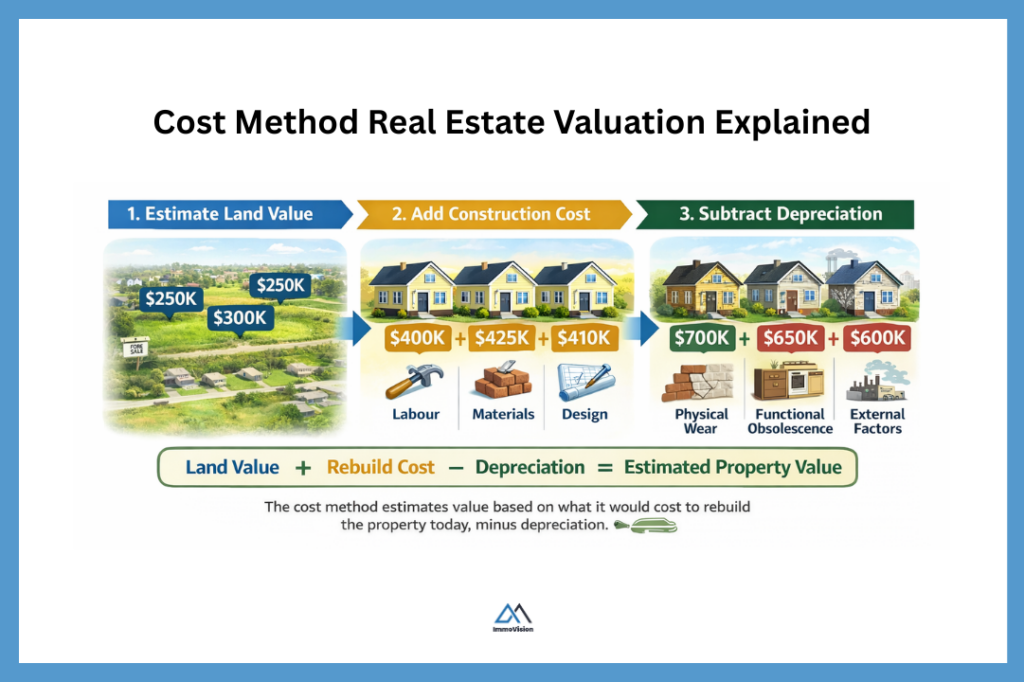
The cost method values a home based on what it would cost to rebuild it from scratch today, minus depreciation. Instead of comparing it to other homes, this approach focuses on the underlying value of the land and the cost of construction.
The way it works is that an appraiser will first estimate the value of the land as if it were vacant. Then, they calculate the cost to rebuild the home using current material and labour costs. From this total, they subtract an amount for depreciation. This normally includes physical wear and tear, outdated design (functional obsolescence), and any external factors that may impact value.
After applying these adjustments, the appraiser arrives at an estimated value for the property. This method is most commonly used for newer homes, unique properties, or in situations where there are few comparable sales available.
The income method
The income method values a property based on the income it can generate. Instead of focusing on comparable sales or construction costs, this approach looks at a property as an investment and estimates what it’s worth based on its earning potential.
The way it works is that an appraiser will start by calculating the property’s gross rental income. This is how much rent it can generate annually. From this, they subtract operating expenses such as maintenance, property management, insurance, and taxes to arrive at the net operating income (NOI).
They then apply a capitalization rate (“cap rate”), which reflects the expected return for similar properties in the market. For example, if a property generates $50,000 in annual net income and the market cap rate is 5%, the estimated value would be around $1,000,000. This method is most commonly used for income-producing properties such as duplexes, triplexes, and apartment buildings.
Immovision
Free Instant Valuation
Find out how much your house is worth with our online tool.
Why do property prices go up in Canada?
According to MLS® Home Price Index (HPI), property prices across Canada have increased 24.4% since January 2018, with certain cities considerably outperforming the wider market. In Montreal for instance, home prices have gone up by 83.4% over the same time period.
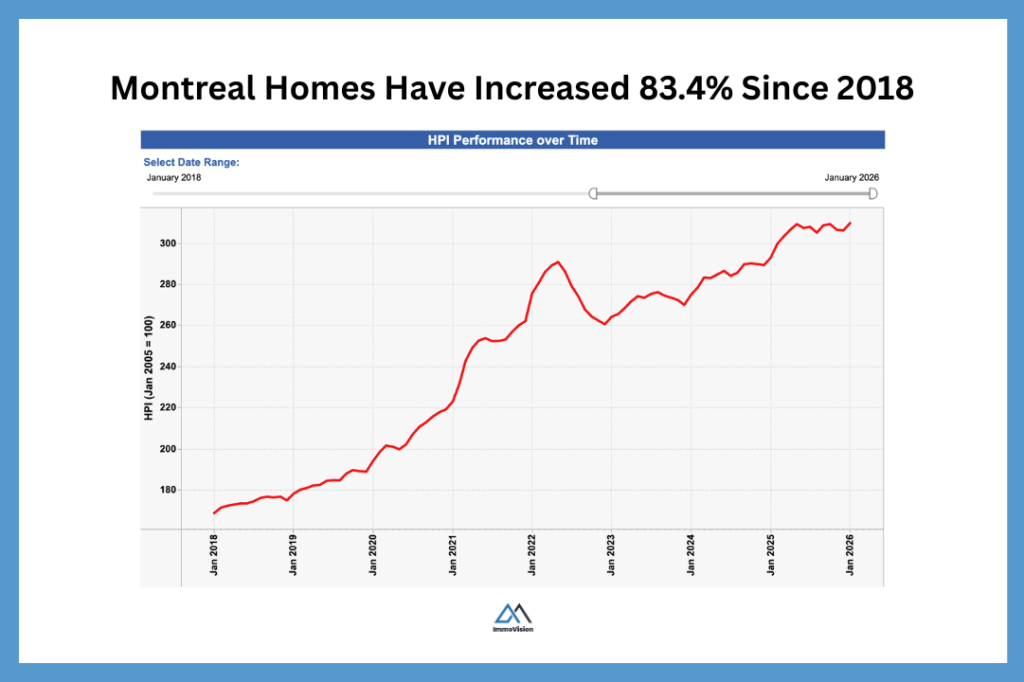
There are several reasons why prices have risen so quickly during this period. Primarily, it was driven by historically low interest rates set by the Bank of Canada during COVID. This was further supported by favourable lending conditions, such as low down payment requirements and government-backed mortgage insurance. Together, these factors made it significantly easier for both first-time buyers and investors to access credit and enter the market. As a result, demand increased rapidly, placing upward pressure on home prices.
While overall property prices may rise over time, individual homes can still lose value depending on a variety of factors. Conversely, some properties significantly outperform the broader market. In the next section, we will explore the key considerations when purchasing a home to help ensure your investment grows in value rather than declines.
Note
How to Increase the Value of Your Home: Key Factors to Consider When Buying
As we have seen, Canada’s property market has increased at a rate of 24.4%, however property values in certain cities have gone up a lot faster, and within those cities, certain types of property within certain neighbourhoods have gone up even faster than that. For instance, in Montreal’s Griffintown, condo’s prices went up as much as 150% during the same period.
While it is impossible to predict with certainty where prices will sky rocket, there are several factors that can help inform decisions, if your goal is to buy a property with strong appreciation potential. These are:
- Homes in Flood Zones
- Traffic and Noise
- Transport Links
- Local Amenities
- Local School Results
- Neighbourhood Upkeep
Homes in Flood Zones
In 2017 and 2019, there were big floods in parts of Canada, including Québec. Some places got hit really badly, for example, about one-third of Sainte-Marthe-sur-le-Lac was flooded. Local governments responded to this in different ways.
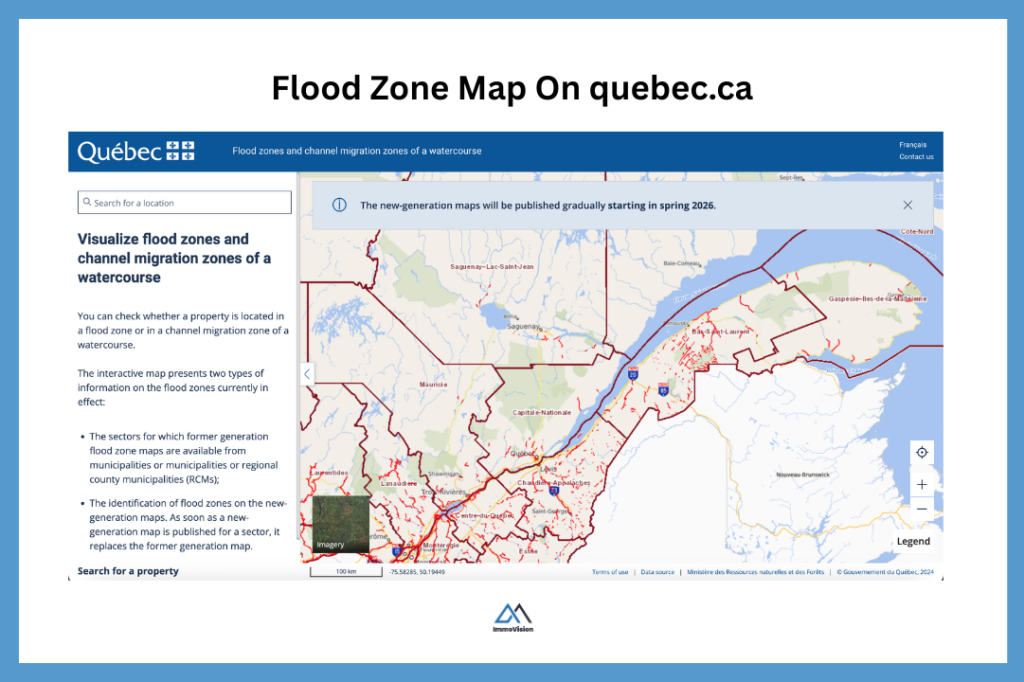
In Quebec, the provincial government created something called Special Intervention Zones (SIZ). These were basically temporary “high-risk flood areas” drawn on maps to control construction and rebuilding after the damage. The SIZs drew a lot of criticism, especially from homeowners and real-estate professionals because property values in these areas lost a lot of value. And in March 2022, the SIZ were officially removed, and have now been replaced with a new system which is avaliable on Quebec.ca.
Note
Buyers should ask their real-estate agent to check municipal government maps and relevant provincial flood zone data to confirm a property’s risk exposure.
If buyers want a more accurate view, they can also ask a land surveyor to provide an updated certificate of location or verify the property’s position against current flood zone maps, which will typically cost between $800 and $3,000, depending on the complexity of the property.
Traffic and Noise
The majority of buyers prefer quiet living environments. In practice, this often means avoiding homes located close to major sources of noise, such as highways, airports, railway lines, and busy commercial areas. As a result, proximity to noise can be an important factor in both buyer demand and long-term property value.
Of course, this has to be considered in context. Extremely remote locations may be very quiet, but they often lack access to amenities, employment, and services that buyers also value.
As top-performing Montreal real estate broker Reda Wahba explains, “the majority of my clients don’t want to live next to airports or busy roads.
However, I do have some clients who grew up in very dense cities, or in flight paths, and were used to constant background noise. In this case, we have been able to buy them larger homes for less money, by finding them homes near Montréal–Trudeau International Airport, since the noise didn’t bother them at all.
That said, these buyers tend to be the exception. Most clients I work with strongly prefer quiet streets and will filter out homes near major roads or flight paths from the beginning.”
Transport Links
When new transport links connect remote areas to the city centre, property values in the newly connected areas usually go up.
This is because it becomes faster and easier for commuters to get to work and access the commercial core. Less time commuting means a better quality of life, so more people want to live in these areas, and this increased demand pushes property values higher over time.
A good example is the Réseau Express Métropolitain (REM) in Montreal. This project was a response to rapid population growth, increasing congestion, and the need to better connect suburban areas to the city core.
Montreal realtor Reda Wahaba says: “We are already seeing property prices in the West Island start to go up. We expect to see this happen in Lachine as well, as the City of Montreal is investing heavily in this area, with grants for small businesses and local development. As infrastructure improves and more people move in, demand increases, and that’s what ultimately drives prices higher.”
Local Amenities
The majority of people also want to live in places with good amenities such as parks, quality schools, shopping areas, restaurants, and reliable public transport links.
In practice, you can often spot future growth by looking at where major retailers like Walmart and Maxi are opening new locations. This is because these companies invest heavily in data and typically expand into areas where population growth is expected.
You can also look at how local governments are investing in their area. Are they building new parks, libraries, or recreational facilities like swimming pools? Local governements will often publish upcoming projects online. For instance, if you go onto the City of Montreal website, you can see what projects and investments are planned across Montreal. This gives you a clearer picture of which areas are likely to become more desirable in the future.
Local School Results
Even if you don’t have children, local school results play a big role in your home’s resale value. This is because many buyers consider school zoning before choosing where to live.
Each province has different rules, but generally you either pay for private education or your child attends a free public school. Free schooling can save you thousands per year, but naturally, parents want their kids to attend a school with a strong reputation for academic results. However, your child is usually assigned a school based on where you live, within a specific school catchment area (zone).
Because of this, buyers are often willing to pay a premium to live in areas zoned for top-performing schools, which in turn pushes property values higher in those neighbourhoods.
Neighbourhood Upkeep
In real-estate there is something called the “principal of regression”. This is when a high-value property loses value because it is surrounded by lower-value properties. In other words, a premium home can be “pulled down” in value by its neighbourhood context. For example, if there are vacant, neglected, and deteriorating houses nearby, or crumbling roads and infrastructure, this can drag down the value of all the properties in the neighbourhood.
By contrast, a well-maintained neighbourhood helps preserve (and often enhance) property values. This is one of the core reasons homeowners pay property taxes: to support infrastructure, public services, and community upkeep that sustain the overall quality of the area.
Because of the money home owners contribute through property taxes and the direct impact that public spending can have on property values, homeowners should take an active role in their communities. They must hold local officials accountable for how those funds are used, and advocate for consistent standards of maintenance, since these efforts directly protect and strengthen their investment.
What are the Best Renovations that you can do to Increase Home Value?
We’ve all seen those Canadian real-estate reality shows that obsess over the glamour of multi-million dollar Toronto or Vancouver renos, but when you get down to brass tacks, you won’t see a dime of ROI on 90% of those high-end upgrades.
In reality, the best ROI renovations tend to be simple things, that broden the property appeal. Whether this is fixing a crack in your foundation, replacing an faulty sump pump, or just repainting your home a neutral color, the highest ROI renovations are the simple things.
In this section, we cover the top five renovations that you can do to increase the value of your home in 2026. These include:
Maintenance
A well-maintained home not only preserves value but also instills confidence in buyers, often leading to stronger interest and, in competitive markets, multiple offers. This can drive up the value of your property. For many essential renovations, there are government schemes that will help finance part of the cost of renovation.
Whilst every home is different, the most important things to maintain include:
- Foundation – Any cracks, water infiltration, or signs of movement (e.g., uneven floors, sticking doors) should be addressed promptly. In certain areas like Montreal’s West Island, realtors must suggest that you get a pre-listing pyrite inspection.
- Roof – Missing, curling, or damaged shingles should be replaced. Buyers will also look for signs of leaks, aging materials, or poor drainage.
- Plumbing – Leaks, low water pressure, corrosion, or outdated piping (such as older galvanized pipes) can signal costly future repairs to buyers.
- Electrical systems – Outdated wiring (such as knob and tube), overloaded panels, or lack of modern safety features (like grounded outlets) can be a major concern for buyers and insurers.
- Heating – Make sure that you regularly check and service your boiler, furnace, or HVAC system.
Painting
Most real-estate agents will recommend that you re-paint your home neutral colors, as part of a checklist to prepare your home for sale. This is because, re-painting can increase your property value by 5%. This means that you could sell for $35k more on a property worth $700k).
The reason that this works is that repainting your home not only makes the home appear better maintained, but it also photographs well. Good quality pictures attract more potential buyers, and the use of neutral colors means that your home will appeal to a broader range of tastes which again, will increase overall buyer interest.
So, while the exact return depends on your home’s current condition and the quality of the work, repainting with high-quality materials in neutral tone, is consistently ranked as one of the highest-ROI improvements homeowners can make.
Updating Curb Appeal
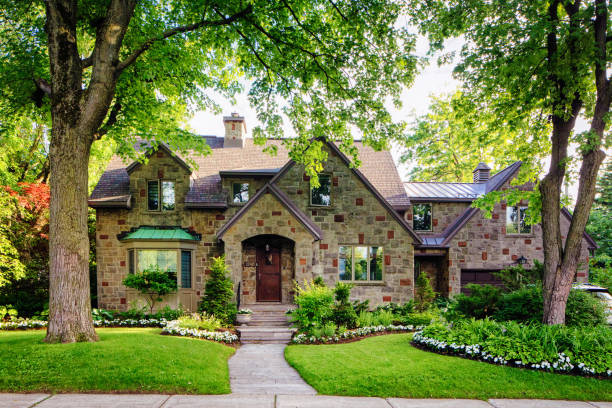
The first thing prospective buyers see as they walk up to your home is the exterior. A well-kept lawn, trimmed hedges, fresh flowers, a well kept, or new garage door, re-painted porch, and a solid front door, work together to create a strong first impression. In our research, we found these items increase the value of your home by the following amounts, if done when preparing your home for sale.
| Improvement | Typical ROI (%) | Estimated Value Added (on $700K home) |
|---|---|---|
| Lawn care & basic landscaping | 100% – 200% | $5K – $15K |
| Tree trimming & hedge cleanup | 75% – 150% | $3K – $10K |
| Adding flowers / curb appeal | 100% – 150% | $3K – $8K |
| Garage door replacement | 90% – 110% | $8K – $15K |
| Repainting exterior (porch, trim, door) | 50% – 100% | $10K – $25K |
| Front door replacement | 60% – 90% | $5K – $12K |
Minor Kitchen and Bathroom Remodel
A major kitchen and bathroom remodel can increase your property value and, make it easier to sell your home. For example, if you re-tile your entire bathroom floor and walls, and add a walk in shower, this will sell your house. However, doing this kind of major remodeling is extremely expensive, and you are unlikely to see a positive ROI.
By contrast, smaller upgrades like repainting your cabinet doors white, upgrading countertops, or installing a modern vanity sinks can significantly boost your home’s appeal without the high cost of a full renovation. Below are a list of the top recommended kitchen and bathroom remodelling, based on our own research.
| Improvement | Typical ROI (%) | Estimated Value Added (on $700K home) |
|---|---|---|
| Repainting kitchen cabinets (white/neutral) | 70% – 120% | $8K – $20K |
| Updating cabinet hardware (handles/knobs) | 80% – 150% | $3K – $10K |
| Adding quartz countertops | 60% – 100% | $10K – $25K |
| Installing modern backsplash | 70% – 110% | $5K – $15K |
| Upgrading to a floating bathroom vanity | 60% – 100% | $8K – $18K |
| Replacing faucets & fixtures (modern finish) | 80% – 120% | $4K – $12K |
| Updating lighting (pendants, vanity lights) | 75% – 120% | $5K – $12K |
| Re-caulking, re-grouting tiles | 100% – 200% | $3K – $8K |
Window Replacement
Upgrading your windows will almost always improve the value of your home, since it makes the space more comfortable to live in, and can improve energy efficiency. In winter, well-insulated windows help retain heat, reduce drafts, and lower heating costs, something that is especially important in a cold climate like Quebec.
Most contractors recommend replacing your windows when they show signs of deterioration, such as drafts, condensation between panes, difficulty opening or closing, or visible damage to the frame or seals.
What are the factors that can decrease home value?
Not all renovations increase the value of your home. In fact, some upgrades can actually reduce your property’s value. There are also factors—often outside of your control—that can negatively impact what your home is worth. These include:
- Neglected maintenance
- Shoddy workmanship
- Code violations
- Neglected houses nearby
- Change in zoning bylaws
- Government appropriation
Neglected Maintenance
Prospective buyers will discount the price of your property based on the estimated cost of any outstanding maintenance. This adjustment is often reflected in a CMA that is done prior to the buyer submitting an offer to purchase. Here, the buyer will compare the price of your home to other comparable properties in your area, work out a fair price and then reduce that value to account for visible defects or deferred maintenance. Simply put, the buyer does this to avoid overpaying for a home that requires additional work.
The same principle applies during the appraisal process. Lenders rely on appraisers to confirm a property’s value before approving financing, and significant maintenance issues can result in a lower appraisal or even prevent financing altogether. Since most offers are conditional on financing, this can directly impact your ability to close a sale, unless you are dealing with a cash buyer willing to purchase the property as-is.
Because of this, it’s important to address maintenance issues in a timely manner. If you don’t have the budget to fix everything at once, prioritize the repairs that are most visible or, those repairs that if ignored could lead to wider and more expensive problems. For instance, a small crack in a basement wall can quickly turn into damp, which can turn into mold, which can spread into the walls of your house.
Note
Shoddy Workmanship
Poor workmanship, whether from the original construction or later renovations, can significantly reduce a property’s value. These issues often arise when homeowners take on DIY projects that require specialized skills, or use low quality tools and materials to do the work.
In some cases, taking a DIY approach to save money can mean that you end up paying twice: once to complete the work, and again to have it corrected by a qualified professional. And if the damage done by the homeowner in a DIY project is extensive, repair costs may be significantly higher than just paying for a professional from the get-go.
Problems can also occur when low-cost handymen are hired for specialized tasks such as plumbing or electrical work. Handyman tend to be very good at resolving visible issues, like replacing a faulty electrical outlet. However, because they are not professionally trained, they often miss more serious underlying risks.
For example, if a handyman mixes a homes aluminum wiring with a new copper wired outlet, this can create fire hazards. These issues are often flagged during inspections and, if significant enough can allow buyer’s to back out of their offer to purchase, or request a price reduction.
Because of this, it’s best to hire contractors with the appropriate liecneses. In Quebec, you should ask to see a contractors RBQ (Régie du bâtiment du Québec) license for specialized work. Homeowners should also be realistic about their own DIY limits and invest in proper tools and quality materials when taking on smaller projects.
Code Violations
Every Canadian province has its own building code that define what is allowed in construction and in home renovations. In Canada, these are rules set by provincial governments and enforced by local municipalities.
In Quebec, building standards are defined in the Code de construction du Québec. It governs everything about how a home is built, right down to the type of electrical outlets allowed in your kitchen and how close they can be placed to sinks and water sources.
Provincial building codes are updated regularly, and licensed contractors are expected to stay up to date and ensure that all work meets current requirements. However, many homeowner “weekend projects” can unintentionally create building code violations.
This can become a serious issue when it comes to insurance. If damage is caused by non-compliant work, such as faulty wiring or improper plumbing, your claim could be denied. In cases like fire or water damage, this could leave you paying thousands of dollars out of pocket.
Neglected Houses Nearby
In real estate, appraisers use something called the principle of regression to help determine a home’s value. This principle states that a higher-value property will tend to be pulled down in value when it is surrounded by lower-value homes.
In other words, even if your home is upgraded or superior in quality, its value is still influenced by the properties around it. For example, a fully renovated home with high-end finishes located on a street of older, less updated properties will most likely not achieve the same price it could in a more uniformly upscale area.
Change in Zoning Bylaws
Changes in zoning bylaws can negatively impact property value by altering how land can be legally used, either on your property or nearby. For example, if a municipality changes zoning bylaws to allow night clubs to open in a previously quiet residential area, this can reduce the value of your home.
Zoning can also reduce value by limiting future potential. In Montreal’s Plateau, converting duplexes and triplexes into single-family homes (“plex-to-cottage” conversions) became popular because it allowed buyers to create larger, high-end residences close to downtown. However, in 2024, the borough introduced stricter bylaws to limit these conversions and preserve rental housing. As a result, properties that once appealed to buyers looking to upscale or consolidate units became less attractive.
A similar pattern has occurred with short-term rentals. Montreal now has some of the strictest Airbnb regulations in Canada, limiting rentals to primary residences and restricting them to specific periods and zones. This has significantly reduced the income potential of many investment properties—particularly small condos in areas like downtown and Griffintown, leading to a decline in their value.
Government Expropriation
Government expropriation is when the government takes private property for public use. Typically this is done when the government wants to build new infrastructure such as roads, transit lines, or utilities. This is one of the clearest ways that public action can reduce property values.
In the most direct case, the government may take part or all of a property to build major infrastructure. This can result in the partial or complete demolition of a home or building. While compensation is typically provided, it does not always fully reflect market value or account for relocation costs, disruption, and the loss of future potential.
Governments may also partially expropriate property. For example, if a portion of a lot is taken to widen a road or install public infrastructure. In this case, the remaining property will lose value because (A) it is now smaller and (B) the remaining property is often less functional (for example, a worse layout, reduced parking, and so on). These things can negatively impact resale value.
Even when the property itself is not taken, nearby expropriation projects can still have a negative impact. Increased traffic, noise, or changes to the surrounding environment can make an area less desirable, which can ultimately affect resale value.
Frequently asked questions
However, popular doesn’t always mean profitable.
In fact, many commonly recommended renovations deliver a negative return on investment when it comes time to sell. That’s because value isn’t determined by the renovation itself. Value is actually determined by how buyer demand.
As such, if your goal is to increase the value of your home, the best home improvements you can make will depend on what competing homes in your area look like, what buyers expect in your price range, and how your property is positioned when it hits the market.
This is where working with a real estate professional becomes critical. Rather than recommending generic upgrades, a realtor can build a targeted marketing plan based on your local market. This helps you focus only on the improvements that will make your home more competitive, which will in turn attract more buyers, generate stronger interest, and ultimately driving better offers.
To find a local realtor who can help you with this, use Immovision Agent Finder.
To get a more accurate home value estimate, you should work with a local realtor or property appraiser who will come to your home and assess its condition in person. When they do this, they will evaluate upgrades and finishes, and compare it to similar properties currently on the local market.
Final Remarks
The value of your home in Canada is influenced by many different factors. This includes location, market conditions, property condition, and buyer demand.
However, across Canada, property prices have continued to rise for the last 15+ years and so, what many homeowners don’t realize is just how much wealth they may be sitting on.
That equity can be used in several ways, whether it’s selling to downsize and free up cash, or refinance to diversify your income streams, build rental income, invest in stable, long-term assets, or reinvest into additional real estate opportunities.
To find out how much your home is worth, start with our free home value estimator, and get a detailed home value estimate in just a couple of minutes.