

Most homes that sit on the market longer than expected (or fail to sell altogether) do so because they weren’t properly prepared before listing. And even among those that do sell, poor preparation can result in a significantly lower sale price, and often a longer time on the market.
In many cases, the amount of money you make from selling your house comes down to one thing: how well your home is presented.
In this guide, you’ll find our complete “How to Prepare a House for Sale Checklist”. This has been built from real-world experience across hundreds of home sales in Montreal.
 Immovision
Get Expert Guidance Before You List
Every home is different, and not everything on this checklist will apply to you. The key is knowing exactly what to do, and what to ignore.
1. Declutter
Decluttering your home makes it feel larger, cleaner, and more functional. It also helps buyers believe their belongings will fit comfortably in the space. For example, if a buyer opens a closet and sees 30–40% less clothing, they’ll naturally assume there’s plenty of room for their own items.
What to do:
- Remove 30–40% of your belongings
- Box up items and store them (with friends, family, or a storage unit)
- Donate or sell anything you no longer need (especially if you’re downsizing)
2. Depersonalize
You want buyers to imagine themselves living in the home and not to feel like they’re visiting someone else’s space. The more neutral the environment, the easier it is for them to emotionally connect with your home. To do this, you need to remove all personal items.
What to remove:
- Family photos
- Personal collections
- Certificates and diplomas
- Trophies and awards
- Religious symbols
- Controversial books or materials
- Highly specific or niche decor
Note
You do not want visitors to go online and start looking for your children, or identifying your family outside of the home.
3. Deep clean
A deep clean gives buyers the impression that the home is move-in ready and has been well cared for over the years. Cleanliness signals maintenance, and maintenance builds trust.
What to do:
- Scrub kitchens and bathrooms thoroughly
- Clean baseboards and door frames
- Wipe down and clean inside appliances (fridge, oven, stovetop)
- Clean cupboard doors and the inside of cabinets
- Vacuum and mop all floors
- Dust all surfaces
- Wash walls, especially areas with stains or buildup (e.g., bathrooms)
- Clean bathtubs and remove soap scum from shower glass
- Remove and replace any dirty or moldy caulking
- Take everything out of cupboards, clean inside, then replace items neatly
- Clean jars in your cupboard and remove any visible stains or residue
- (Optional) Add shelf liners or mats inside cupboards for a fresh finish
4. Clear surfaces / use the rule of 3
You want your surfaces to feel clean, open, and uncluttered.
This allows key features like a beautiful marble or stone countertops to stand out instead of being hidden behind everyday items. Once you have cleared the surfaces, you can add a few items back, but do so intentionally using the rule of 3. Grouping objects in sets of three. This creates a balanced, visually appealing look that feels deliberately styled rather than cluttered.
What to do:
- Start by removing everything from surfaces (coffee machines, kettles, air fryers, toasters, etc.)
- Wipe down the surfaces
- Store away non-essential, everyday-use items
- Add back a few strategically chosen objects
- Use the rule of 3 (e.g., a vase, a small stack of books, and a candle)
- Keep spacing intentional, and don’t overcrowd the area
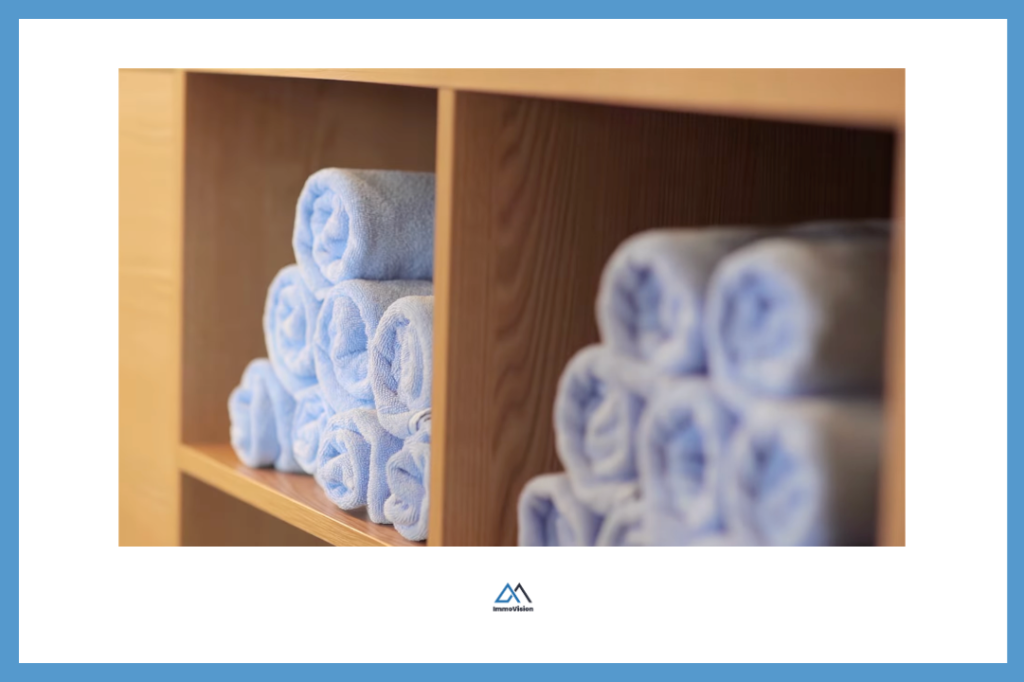
5. Replace & stack towels
Neutral colors create a calm, clean, and cohesive look throughout the home. In bathrooms especially, this helps evoke a sense of cleanliness and relaxation, similar to the feeling of a high-end hotel or spa (calm, fresh, and slightly luxurious). Old, mismatched towels can make the space feel dated or unclean, even if they’ve been washed.
What to do:
- Replace worn or mismatched towels with new, neutral ones (white is ideal)
- Neatly fold or roll towels
- Stack them in a simple, organized way (on shelves or counters)
6. Replace linens
Bedrooms should feel like a retreat—fresh, simple, and inviting. Neutral bedding appeals to the widest range of buyers because it feels clean and allows prospective buyers to imagine their own style in the space. Bold patterns or worn linens can be distracting and make the room feel less “move-in ready”.
What to do:
- Make the bed neatly before every showing or visit
- Use clean, neutral bedding with minimal patterns
- Choose simple, layered looks (e.g., duvet, pillows, throw)
- Ensure everything is wrinkle-free
7. Add throw pillows
Throw pillows can add warmth and visual interest, but only when used correctly. The goal isn’t to draw attention to the pillows themselves, but rather to make the space feel finished and inviting. A common mistake is adding bold “pops of color.” While often recommended, this can actually distract buyers from seeing the room as a whole. Instead, stick to neutral, coordinated tones that blend seamlessly into the space.
What to do:
- Add a small number of pillows to the room (2–5 depending on the space)
- Arrange them neatly on sofas or beds
- Choose neutral, coordinated colors (avoid bold contrasts)
- Keep patterns minimal, or subtle
8. Add textures
Textures add depth and make a space feel more layered and high-end. Without texture, rooms can feel flat and “builder-grade.” By contrast, a mix of materials creates visual interest and gives the impression of quality. This is one of the easiest ways to increase the perceived value of your home without major renovations.
What to do:
- Add textured rugs (e.g., wool, jute, or patterned weaves)
- Use woven baskets with neatly folded blankets
- Incorporate soft elements like throws or cushions
- Hang curtains to soften the room (avoid bare windows where possible)
- Mix in natural materials like wood, glass and stone (e.g., wood trays, stone countertops, ceramic vases)
Not sure which of these actually matter for your home?
Every property is different. The key is knowing what will have the biggest impact on your sale price.
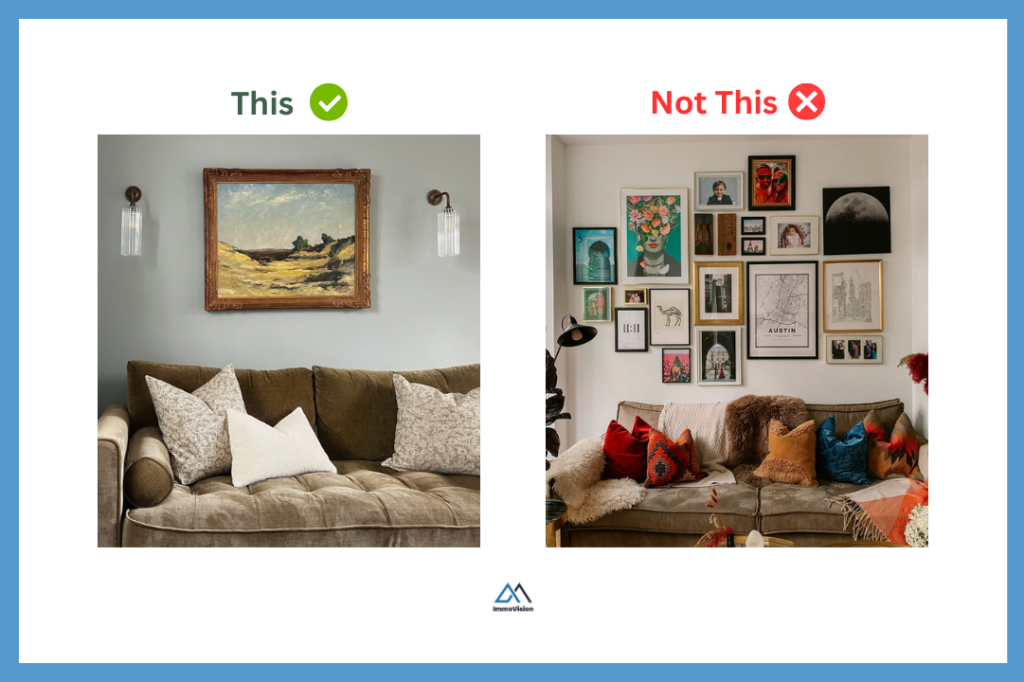
9. Rehang pictures to gallery height
Most sellers hang artwork too high, often because they’re placing it relative to furniture or personal preference rather than eye level. However, the goal is to make your home look polished in listing photos, and for visitors. As such, you should hang artwork at proper “gallery height”. This creates a more professional, cohesive look.
What to do:
- Take down existing artwork
- Rehang pieces so the center sits 57–60 inches from the floor (this is gallery height)
- Keep spacing and alignment consistent across walls
- Use larger pieces of art
- Remove overly busy “gallery walls”
10. Add greenery
Adding greenery brings life, freshness, and a sense of calm into your home. It helps spaces feel more inviting and well cared for. This approach is often referred to as biophilic design. It connects indoor spaces with natural elements. Buyers tend to respond positively to spaces that feel alive and balanced, rather than sterile or empty.
What to do:
- Use simple plants or greenery (real or high-quality faux)
- Add at least one plant to key rooms (living room, kitchen, bathroom)
- Keep placement intentional, and don’t overcrowd the space
- Choose low-maintenance, clean-looking varieties
11. Remove small items
Lots of small items will make your home feel cluttered and disorganized. The goal is to simplify each room so buyers can focus on the space itself, and not the things in it.
What to do:
- Store away knick-knacks and decorative clutter
- Remove toiletries from bathroom counters and showers
- Put away ornaments and miscellaneous items
12. Wash windows
Clean windows maximize natural light and make the home feel brighter, fresher, and better maintained. Dirty or streaky windows can instantly make a property feel neglected.
What to do:
- Wash windows inside and outside
- Remove streaks, smudges, and dust
- Clean window tracks and frames
- Take down screens and fly nets to improve the view
13. Tidy up the yard / balcony area
Outdoor spaces are an extension of your home. A clean, usable yard or balcony, with a few strategically placed pieces of furniture will help buyers imagine themselves enjoying the space.
What to do:
- Sweep and remove debris
- Hose down surfaces (patio, balcony, walkways)
- Trim plants and remove dead foliage
- Touch up paint where needed (railings, fences)
- Add simple outdoor seating to define the space
14. Repaint
Many homes (especially from the 1990s–early 2000s) feature warmer tones like yellows or beiges that now feel dated. Today’s buyers prefer lighter, neutral colors (especially whites) which make spaces feel larger, brighter, and more modern. A fresh coat of paint is in fact one of the highest ROI improvements you can make before selling.
What to do:
- Focus on high-traffic and highly visible areas first
- Repaint walls in light, neutral tones (whites or soft greys)
- Repaint trim for a clean, crisp finish
- Cover scuff marks, stains, and general wear and tear
15. Make repairs
Buyers will actively look for signs that the home hasn’t been maintained. They’ll test lights, faucets, toilets, and fans. They will review your seller’s declaration for bigger issues such as problems with the plumbing, heating systems, electrical, or foundation. Even small defects can raise red flags and lead to lower offers. Addressing repairs upfront builds trust, and helps avoid renegotiations later.
What to do:
- Fix all minor issues (leaky taps, loose handles, squeaky doors, broken fixtures)
- Ensure all systems are functioning properly
- For larger issues, either repair them or clearly disclose them
Note
It is important to be transparent about any problems you are aware of. Hiding problems can lead to legal liability for hidden defects. Also, remember that most buyers will conduct an pre-purchase inspection, so unresolved issues will likely surface anyway. In this case, you will either have to renegotiate the price, or risk losing the deal altogether.
16. Replace broken lightbulbs
Lighting plays a major role in how buyers perceive your home. Bright lighting makes spaces feel larger, cleaner, and more inviting. Dim or yellow lighting can make rooms feel smaller, dated, and even a bit unclean. So you will want to make sure that all your bulbs are high-watt and, that every bulb works properly.
What to do:
- Replace all burnt-out bulbs
- Use high watt bulbs throughout the home
- Ensure each room is well-lit (add lamps if needed)
- Use fixtures that complement the style of your home
- Open curtains and blinds to maximize natural light
- Pair good lighting with clean windows and mirrors to maximize brightness
17. Remove visible laundry
Laundry baskets with visible clothing are a clear sign of everyday living. They create a sense of clutter that can distract the prospective buyers and make your home feel less organized. As with the other items on this list, you want to remove any reminders that the home is actively being lived in, so it feels more like a clean, move-in-ready space.
What to do:
- Remove all laundry baskets from visible areas
- Store them in a closet, laundry room, or off-site if needed
- Keep dirty clothes out of sight at all times
- Stay on top of laundry during the listing period to avoid buildup
18. Remove trash cans
Trash cans can introduce both visual clutter and unwanted odours. Even clean bins can subconsciously signal mess or maintenance issues if they’re in plain sight. You want buyers focusing on the home and not on waste or cleaning habits.
What to do:
- Remove trash cans from visible areas where possible
- Store them inside cabinets (e.g., under the sink)
- If they must remain visible, ensure they are clean and odour-free
- Empty bins regularly, so that they do not overflow during showings
19. Add mirrors
Mirrors are a simple but powerful staging tool. They reflect light, making rooms feel brighter and more open, and can create the illusion of additional space. This is why many stagers and realtors use mirrors strategically to enhance a home’s perceived size and layout.
What to do:
- Place mirrors across from windows to reflect natural light
- Use mirrors in smaller rooms or narrow spaces to create depth
- Choose frames that match the home’s style
- Avoid overusing mirrors
20. Deodrize
A bad smell creates an immediate negative impression. It can make the property feel poorly maintained, and can distract buyers from everything else. The challenge is that most homeowners become nose-blind to their own space. However, if you smoke indoors, have pets, cook strong-smelling foods, or have carpets and fabric surfaces, there’s a high chance odours are present (even if you don’t notice them).
The key is to eliminate odors at the source, not mask them.
What to do:
- Identify and address the source of odours (carpets, furniture, trash areas, drains, etc.)
- Deep clean fabrics, rugs, and upholstery
- Sprinkle baking soda on carpets, sofas, and mattresses; let sit 15–30 minutes, then vacuum
- Use activated charcoal to remove particular strong odours
- Take out trash regularly and clean bins thoroughly
- Open windows to improve ventilation whenever possible
21. Odorize
Once odours have been removed, you can introduce a very subtle pleasant scent to create a welcoming atmosphere. The goal is not to overpower the space, but to enhance the feeling of cleanliness.
Strong artificial fragrances can backfire. Buyers may assume you’re trying to hide a problem, which can create doubt and reduce trust.
What to do:
- Keep scents light and neutral (e.g., citrus, vanilla, fresh linen)
- Use candles, wax warmers, diffusers, or subtle air fresheners sparingly
- Avoid strong or overpowering fragrances
- Let in fresh air before showings
- Optional: create natural scents (e.g., bake bread) for a warm, inviting feel
22. Remove signs of pets or children
Not all buyers have pets or children, and visible signs of them can make it harder for buyers to connect with the home. It can also raise concerns about cleanliness, damage, noise, or odours.
The goal is to present a clean, neutral space that appeals to the widest audience possible.
What to do:
- Remove pet beds, toys, litter boxes, and food bowls
- Hide children’s toys, play mats, and bulky equipment
- Store away items like high chairs, strollers, or pet crates
- Repair any visible damage (scratches, stains)
- Do a thorough clean to eliminate pet hair and lingering smells
23. Remove dirty caulking
Old, stained, or moldy caulking, especially in kitchens and bathrooms, can make the home feel poorly maintained, even if everything else is clean. Fresh caulking is a small, inexpensive upgrade that makes these areas look newer and well cared for.
What to do:
- Inspect caulking around sinks, tubs, showers, and backsplashes
- Remove any discolored, cracked, or moldy caulking
- Apply fresh, clean caulking for a crisp finish
- Focus on high-visibility areas (bathrooms and kitchen)
24. Get a pre-listing inspection
A pre-listing inspection helps you identify issues before buyers do. This allows you to fix problems in advance or price the home accordingly. This reduces the risk of renegotiation after an offer to purchase. It also builds trust and can make your listing feel more transparent and professional.
What to do:
- Hire a qualified home inspector before listing
- Order specialist tests where relevant (e.g., pyrite, radon, asbestos)
- Review the report in detail
- Fix major issues where possible
- Be prepared to disclose any remaining problems
- Use the inspection as a tool to justify your asking price
25. Get your documents in order
Having your documents ready upfront makes the sales process smoother and builds buyer confidence. In Quebec, this step is especially important, as buyers and brokers will expect key documents early in the process. Being organized also helps you address potential concerns proactively, reducing the chances of renegotiation later.
What to do:
- Order or update your certificate of location (if required)
- Complete the seller’s declaration thoroughly and honestly
- Gather condo documents (if applicable), including financials and bylaws
- Compile maintenance records and repair history
- Collect renovation documents (receipts, permits, inspection certificates)
- Be upfront about known issues (e.g., rising condo fees, plumbing concerns)
Immovision
Find Out What Your Home Really Needs Before You List
Every home is different, and not everything on this checklist will apply to you. The key is knowing exactly what to do, and what to ignore, so that you don’t waste time or leave money on the table.