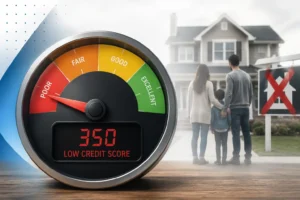

In Quebec, you will often hear that you need a credit score of at least 600 to buy a house. While credit scores do matter, the reality is far more nuanced than most people realize.
Many first-time buyers, self-employed workers, new immigrants, and buyers with imperfect credit are still able to qualify for a mortgage and purchase a home — sometimes with credit scores well below 600.
In practice, lenders look at much more than just your credit score. They also evaluate your income, debt levels, down payment, employment stability, and overall ability to afford the property over the long term.
This is important because buying a home is not just about qualifying for a mortgage. It is about making sure the property is financially sustainable once you account for monthly mortgage payments, property taxes, insurance, maintenance costs, and other living expenses.
In this guide, we explain what credit score is needed to buy a house in Quebec, how lenders actually assess mortgage applications, and what options may still be available if your credit score is lower than expected.
 Immovision
Need help with your financing?
You don’t have to figure everything out on your own. If you’d rather skip the stress and get clear answers about your options, you can speak directly with a mortgage broker now. A good broker can quickly tell you what solutions may be available based on your situation.
What is a credit score in Canada?
Your credit score is a measure of how reliably you manage debt and repay money you owe. If you are reliable, you will usually have a higher credit score. If you regularly miss payments or struggle with debt, your score will be lower.
Lenders use your credit score to judge how risky it is to lend you money. A higher score suggests you are more likely to repay your mortgage on time, so lenders are often willing to offer you a lower interest rate. A lower score signals more risk, which can lead to higher interest rates or difficulty qualifying for a mortgage.
Because of this, a good credit score can make it easier to qualify for a mortgage and secure a better interest rate.
What is a good credit score to buy a house?
In Canada, credit scores are calculated by two major credit bureaus: Equifax Canada and TransUnion Canada. Each bureau uses its own scoring model and may collect slightly different information from lenders and creditors. As a result, your credit score can vary between the two bureaus.
Because of these differences, what is considered a “good credit score for buying a house” can vary slightly depending on the lender and the scoring model being used. The table below explains the typical credit score ranges and what they generally mean for homebuyers.
| Classification | Credit Rating | TransUnion Range | Equifax Range |
|---|---|---|---|
| Subprime | Poor | 300 – 692 | 300 – 559 |
| Near-Prime | Fair | 693 – 742 | 560 – 659 |
| Prime | Good | 743 – 789 | 660 – 724 |
| Prime | Very Good | 790 – 832 | 725 – 759 |
| Super-Prime | Excellent | 833+ | 760+ |
Generally speaking, if your credit score falls within the “Good”, “Very Good”, or “Excellent” ranges, it is typically considered a good credit score for buying a house. In practice, this usually means a score above 743 with TransUnion and above 660 with Equifax. Borrowers in these ranges are generally more likely to qualify for competitive mortgage rates and better lending terms.
However, it is still possible to buy a house with a credit score in the “Fair” or even “Poor” range. In these situations, you may need to work with Alternative Lenders, such as B Lenders or Private Lenders, which often have more flexible approval requirements but may charge higher interest rates and fees.
How to find out what your credit score is?
Your credit score changes over time based on how you manage your finances. Factors such as paying bills on time, keeping credit card balances low, managing debt responsibly, and avoiding too many new credit applications can all impact your score.
Before applying for a mortgage, it is a good idea to check your credit score so you understand where you stand and what type of mortgage rates and lenders you may qualify for.
There are two ways to check your credit score: a hard inquiry or a soft inquiry.
A hard inquiry is usually done when you apply for credit, such as a mortgage, loan, or credit card. This gives lenders access to your full credit report and detailed credit history. Because hard inquiries are associated with taking on new debt, multiple hard checks within a short period of time can slightly lower your credit score and may signal increased financial risk to lenders.
A soft inquiry, on the other hand, allows you to check your credit score without affecting it. Soft checks typically provide your current score along with some basic information about your credit profile, making them a safe and convenient way to monitor your credit before applying for a mortgage.
If you want to check your credit score without impacting it, you can use LoansCanada.ca to perform a free soft credit check.
How to buy a house with a bad credit score?
If your credit score is either “Fair” or “Poor”, then most likely the traditional lenders (banks and credit unions) will not give you a mortgage. This is because these lenders have strict rules around who they can lend to. Some of these rules are set by federal regulators and the Canada Mortgage and Housing Corporation (CMHC). These rules aim to reduce risk in the Canadian financial system.
In addition, banks and credit unions also create their own lending rules because they want to reduce the risk of lending money to borrowers who may struggle to repay the mortgage.
However, there are also alternative lenders who have more flexibility around who they can lend to. These are commonly known as B Lenders and Private Lenders. These lenders assess risk differently and are often willing to work with borrowers who do not fit traditional banking criteria, such as new immigrants and first time buyers without much credit history, self-employed people, and those with inconsistent income, high debt levels, past bankruptcies, or consumer proposals.
Pros and cons of working with alternative lenders
If you are considering working with a B Lender or Private Lender, there are couple of things that you need to be aware of.
First, these types of mortgages are usually viewed as temporary financing solutions. Borrowers tend to use them while they work to improve their credit scores. This is because the interest rates and borrowing costs are typically much higher than those offered by traditional lenders.
Second, if you borrow money from an alternative lender, you may also be required to provide a larger down payment so as to reduce the amount of money that the lender needs to lend compared to the value of the property. This gives the lender a larger financial cushion in case you default on the mortgage and the lender has to repossess and sell the property. If there is a larger down payment, then there is a better chance that the sale price of the home will be enough to recover the money that was lent out.
So – whilst the B Lenders and Private Lenders give you a way to buy a home now, this access typically comes at the cost of higher interest rates.
Immovision
Need a good mortgage broker?
Connect with a mortgage broker, and get access to exclusive rates that fit your exact situation.
Frequently asked questions
– Your down payment
– The type of lender you apply with (A lenders, B lenders, or private lenders)
– Whether your mortgage is insured or uninsured
– Your income, debt levels, and overall financial profile
– The credit bureau being used to assess your application
– The lender’s specific lending guidelines
In general, borrowers with stronger credit scores have access to more lenders and lower interest rates, while borrowers with lower scores may have fewer options or need to work with alternative lenders.
– Personal information – this tells you identifying information such as your name, address, date of birth, employment history, and any other details linked to your credit profile.
– Trade lines – this tells you about your credit accounts, including credit cards, loans, mortgages, balances, payment history, and whether payments were made on time.
– Inquiry information – this tells you who has accessed your credit report and when. Too many hard inquiries in a short period can negatively affect your score.
– Public records and collection information – this tells you about bankruptcies, judgments, liens, or accounts that have been sent to collections, all of which can significantly lower your credit score.
Once you know what is affecting your credit score, you can begin taking steps to improve it. Some of the best ways to improve your score include paying bills on time, reducing outstanding debt, keeping credit card balances low, avoiding unnecessary credit applications, and correcting any errors found on your credit report. It is also important to maintain older credit accounts where possible, since a longer credit history can positively impact your score.
Improving a credit score takes time and consistency, but responsible credit use and regular monitoring of your credit report can lead to steady improvement over time. For more information on this, read resources provided by financial institutions, government consumer agencies, or credit bureaus such as Equifax and TransUnion.
Final remarks
The credit score needed for a house in Quebec depends on whether you are willing to work with alternative lenders or only with traditional A lenders. Borrowers with credit scores of roughly 743+ on TransUnion or 660+ on Equifax are generally more likely to fit within the range many A lenders look for, while alternative lenders may consider applications with lower scores.
However, alternative financing often comes with trade-offs, including larger down payment requirements, higher interest rates, and more restrictive terms. For many buyers, this can still be an effective short-term solution that allows them to secure financing now, improve or repair their credit profile over time, and potentially refinance into more competitive lending options in the future.
If you’re unsure which route makes the most sense for your situation, working with a mortgage broker can help you understand your options and find the financing strategy that best aligns with your goals.