
Radon is a naturally occurring radioactive gas found in the environment around us. It is invisible, odorless, and tasteless—so you would never know it’s there without testing.
At low levels, radon is generally not a concern. However, long-term exposure to high concentrations can significantly increase the risk of lung cancer. In fact, radon is the second leading cause of lung cancer in Canada, after smoking.
Research from the government of Canada shows that roughly 1 in 5 Canadians (17.8%) live in homes with dangerously high radon levels. Despite this, many homeowners are unaware that radon may be present in their homes, how serious the risk can be to them and their family, or how simple and affordable it is to fix.
In this article, we’ll explain what radon is, how it enters your home, how to test for it, and the practical steps you can take to protect yourself and your family.
What is Radon Gas?
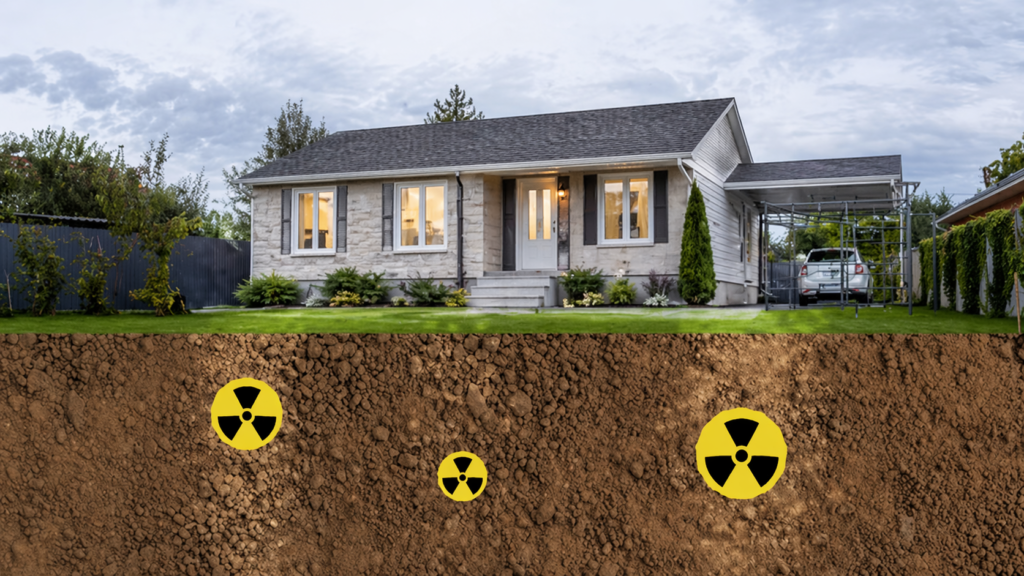
Radon is a radioactive gas that is naturally present in the environment. It is formed through the radioactive decay of uranium found in soil and rock. As uranium breaks down, it transforms into radium, which then decays further into radon gas.
This process occurs below the Earth’s surface. Once radon gas is formed, it can travel upward through cracks and gaps in the ground until it reaches the surface, where it is released into the air. Radon gas can also become trapped inside buildings. When this happens the concerntration of gas builds up, which is where things start to get dangerous.
Why is Radon Gas Dangerous?
Radon is usually present in very low concentrations, so it doesn’t pose much risk. But when you’re exposed to higher levels over a long period of time, it becomes dangerous.
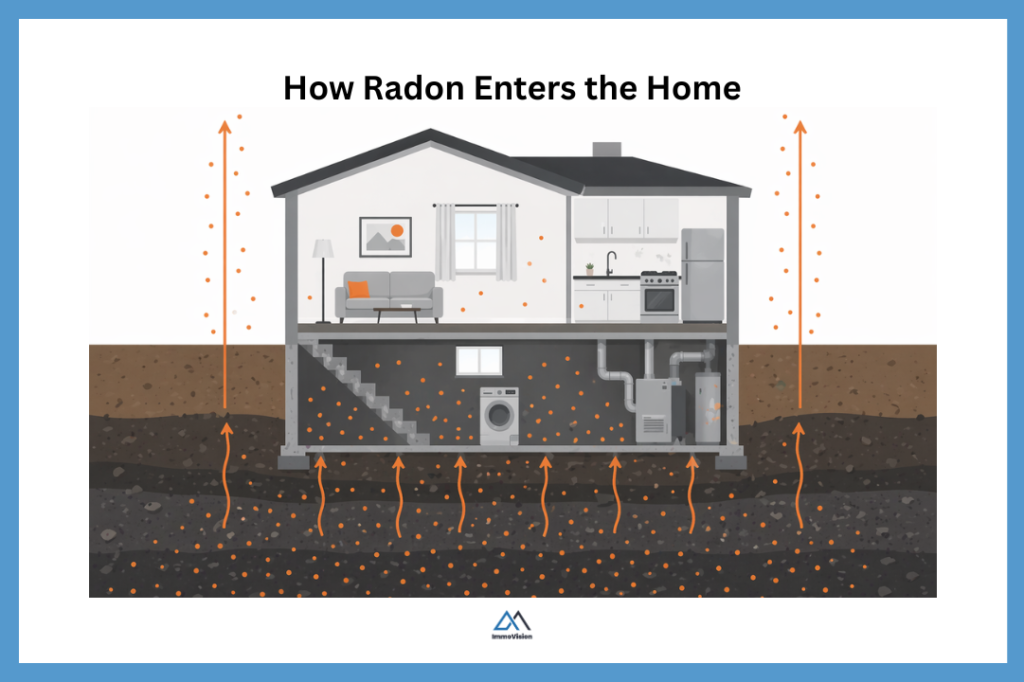
What happens is radon gas naturally rises from the ground and enters homes through cracks in the foundation, gaps around pipes, and other openings. Once the gas is inside your home it can build up, especially in basements and poorly ventilated spaces. You then breathe in the radon gas, and as it breaks down, it forms radioactive particles that get trapped in your lungs. These particles release radiation that damages lung tissue, increasing the risk of lung cancer.
In Canada, more than 10 million homes exceed the recommended radon limit. And, according to Health Canada, radon is the number one cause of lung cancer among non-smokers and the second leading cause overall. In total, radon is responsible for about 16% of lung cancer deaths in Canada, which amounts to roughly 3,200 deaths per year. Research from the World Health Organization also suggests that children are more vulnerable to radon exposure than adults.
One of the reasons radon is so dangerous is that it is colorless, odorless, and tasteless, meaning it can go undetected in a home for years. However, certain areas of Canada are at more risk that others.
Radon Gas Map Quebec: Is Your Home At Risk?
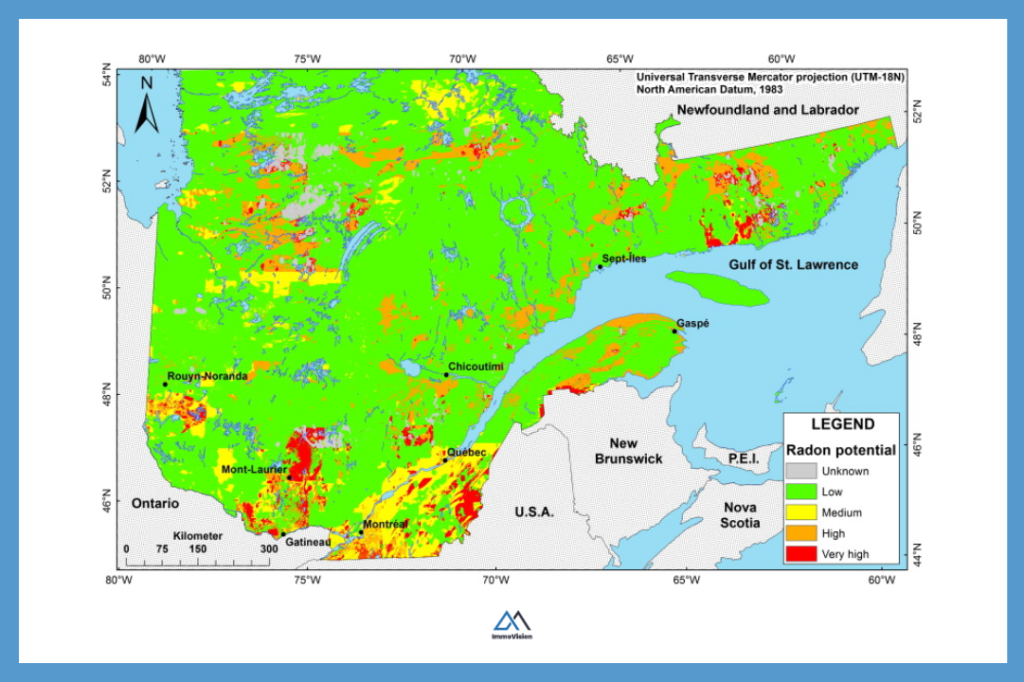
Certain regions of Quebec have higher radon levels than the national average. This is largely due to local geology, particularly regions with uranium-rich rock and soil. The map below highlights which parts of Quebec are most at risk.
If you live in an area of medium, high, or very high risk, you should consider testing your home for radon to determine whether you and your family are safe, or whether mitigation measures are needed to reduce exposure.
 Immovision
Is Your Home in a Radon Risk Area?
Enter your address and instantly know if your home is in a radon risk area.
How Does Radon Gas Get Into Your Home?
Radon is quickly diluted in outdoor air. This means that radon levels are generally very low outdoors, and it does not pose a significant health risk. However, radon can get into your home through various entry points, where it gets trapped and can build up to dangerously high-risk levels.
Radon can get into your home through:
- Cracks in your foundation
- Sump-pumps
- Morter joints
- Radon-rich ground water supplies
- Gaps around pipe fittings
- And so on.
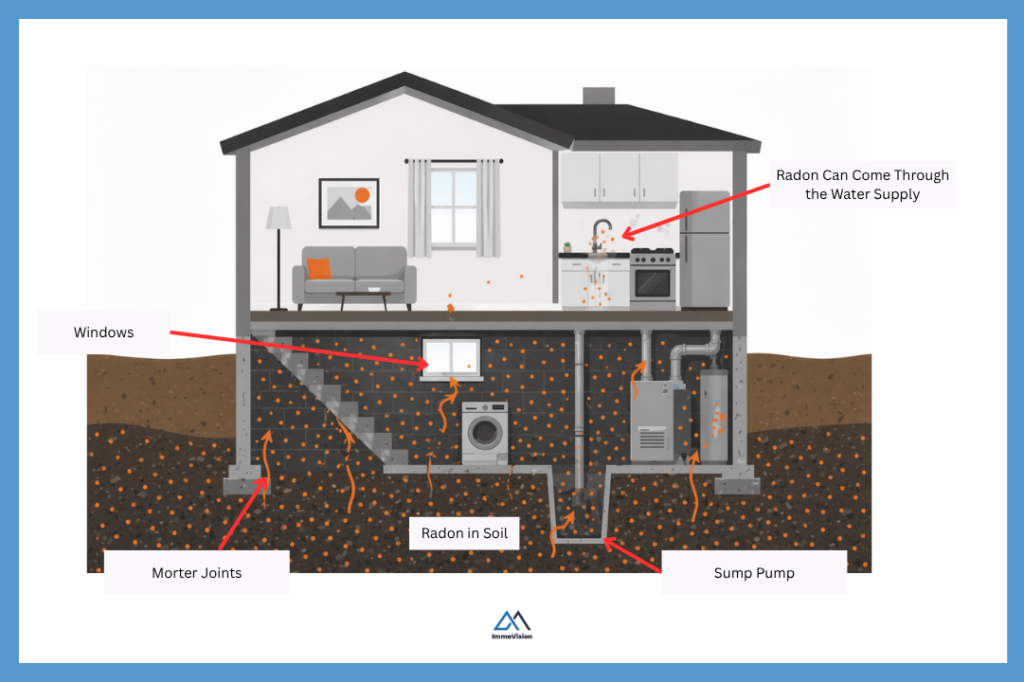
Radon normally builds up in the lowest, and least well ventilated parts of the home. For instance, in basements and crawl spaces. In Quebec, homes are more likely to be at risk from high radon levels during winter. This is because homes are more insulated during the winter and less well ventilated compared to summer months. This is why testing for radon is normally recommended throughout the year.
How to Test for Radon Gas in Your Home?
To test the concentration of radon gas in your home, you need to a device called a radon monitor. This will give you the concentration of radon in terms of becquerels (pronounced BEK-uh-rels) per cubic metre of air (Bq/m³).
There are two different types of radon monitors: passive and electronic.
- A passive monitor is left in your home for at least three months, and ideally during the winter (October to April). This is because winter is when homes are least ventilated, and radon levels are often at their highest. Once the test period is complete, the device is sent to a specialized laboratory for analysis.
- An electronic monitor provides real-time or short-term readings, allowing you to see radon levels more quickly. However, long-term passive tests are generally considered more reliable for determining average exposure. For accurate results, electronic monitors should be used for at least one month, and ideally over a full winter period.
You can also hire a professional radon inspector to come to your home and run a test for you. This can be beneficial as a certified radon tester will use more advanced equipment and follow standardized testing protocols, that will allow them to provide a more detailed and reliable assessment of your home’s radon levels.
⚠️ Note
Where to Buy a Radon Gas Monitor?
The table below shows a list of radon gas monitors that are approved by Health Canada, along with links to their manufacture’s website. We also include a list of radon gas monitors that are not approved.
Approved Electronic Radon Monitors
| Image | Model | Accuracy | Reading Frequency | Display | Power | Type | Status |
|---|---|---|---|---|---|---|---|
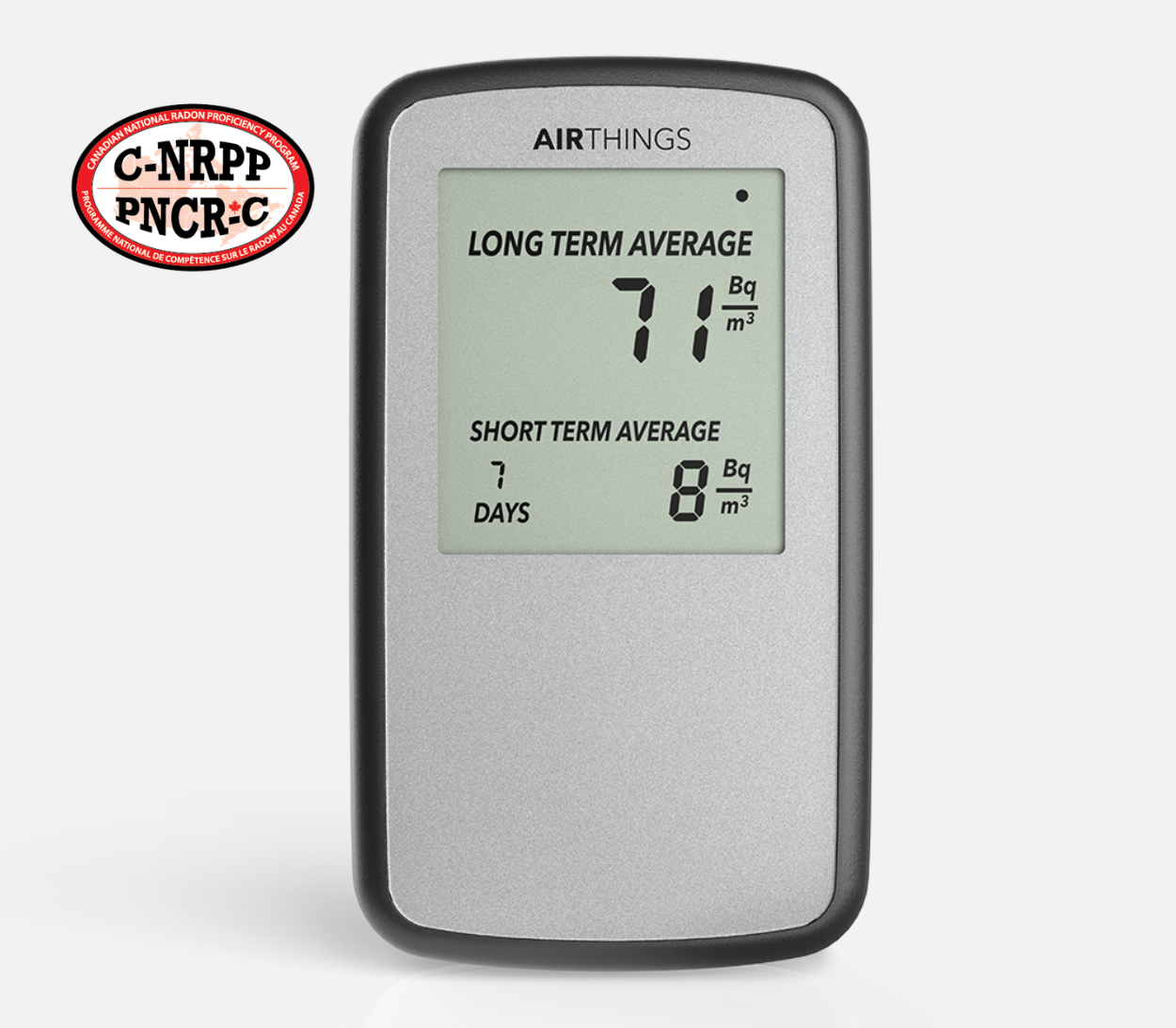 |
Airthings Corentium Home Link to Manufactures Website |
±10% (7 days), ±5% (2 months) | 12h / 24h / 7d | On-device display | Battery | Electronic | Approved |
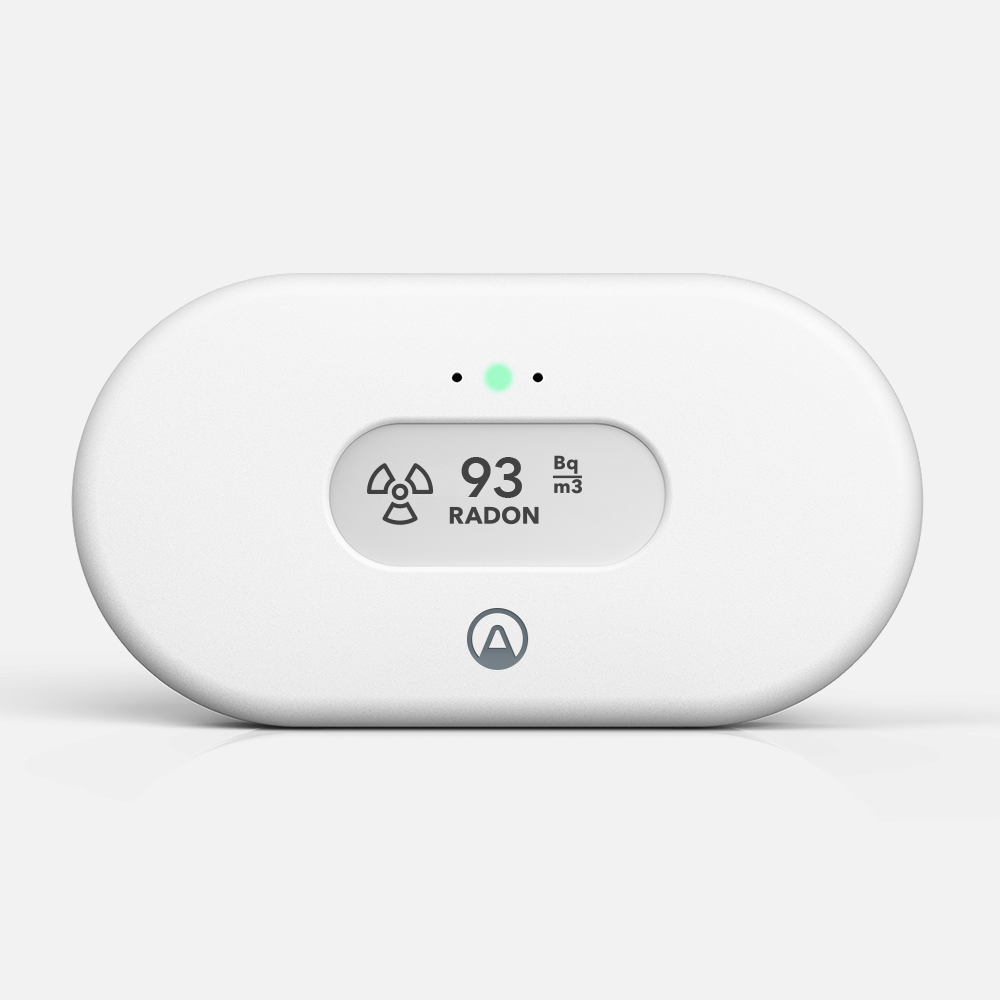 |
Airthings View Link to Manufactures Website |
±10% (7-day avg), ±5% (2 months) | Hourly | Display + App | Battery / USB-C | Electronic | Approved |
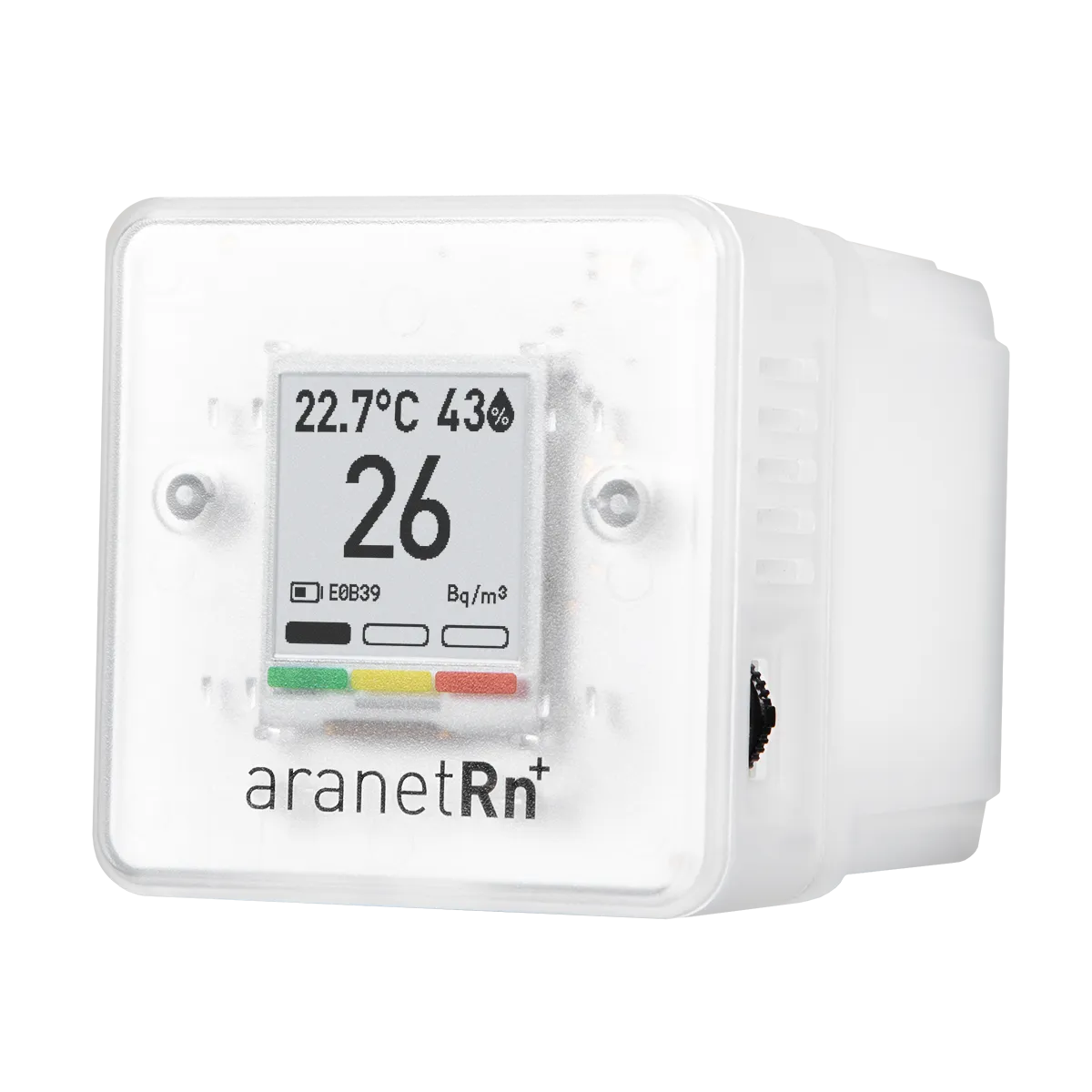 |
Aranet RN+ Link to Manufactures Website |
±8% | 10 min / 24h / 7d / 30d | Device + App | Battery | Electronic | Approved |
 |
Ecosense EcoQube Link to Manufactures Website |
±10% @ 370 Bq/m³ | Every 10 min | LED + App | Plug-in | Electronic | Approved |
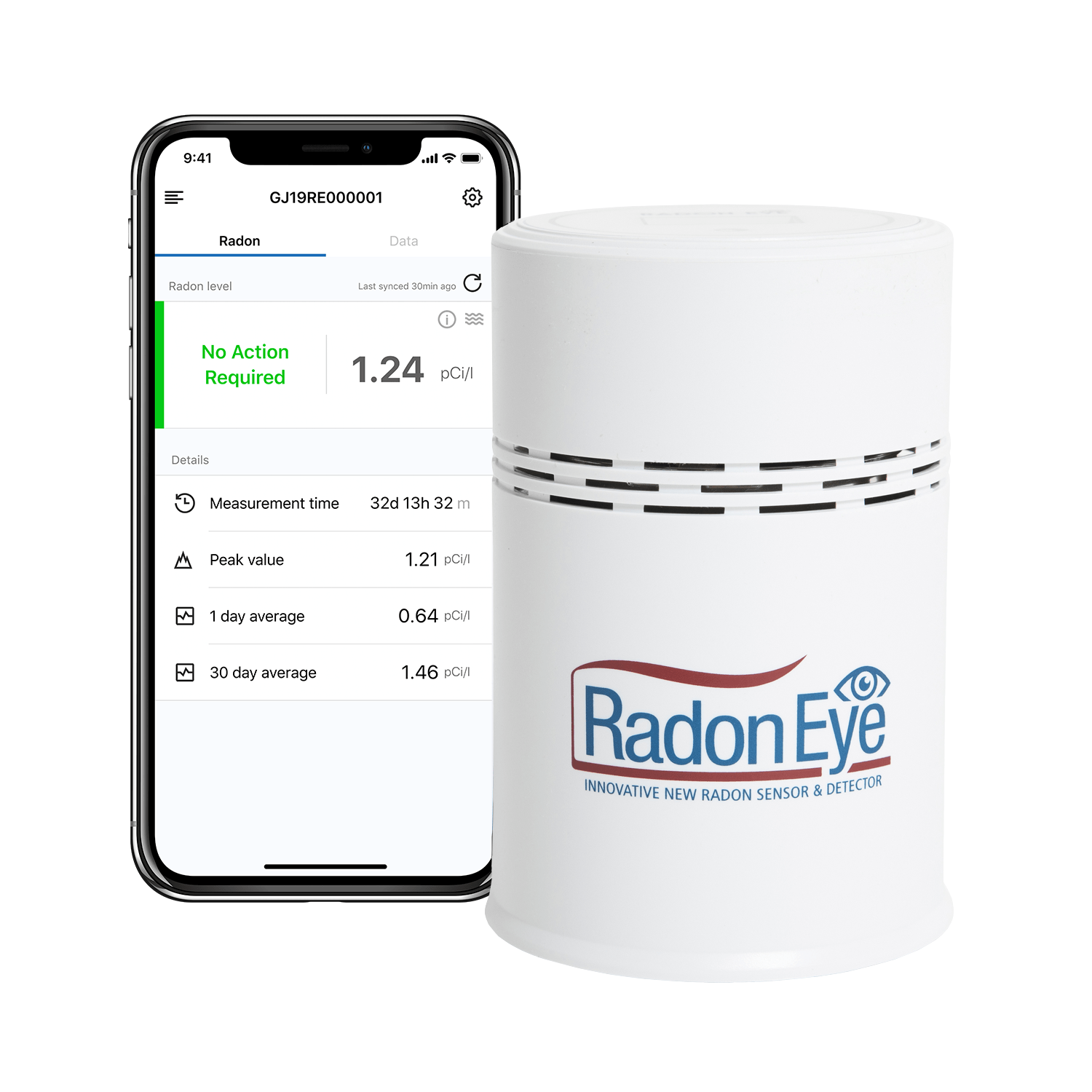 |
Ecosense RadonEye RD200 Link to Manufactures Website |
±10% @ 370 Bq/m³ | Every 10 min | OLED + App | Plug-in | Electronic | Approved |
 |
SunRadon Luft Link to Manufactures Website |
±10% (7 days) | Hourly | App + indicator | Plug-in | Electronic | Approved |
Not Approved / Recalled Radon Monitors
| Manufacturer | Model | Type | Status |
|---|---|---|---|
| Bootu | RN-80 | Electronic | Not Approved |
| CRADTEC | PRM-02H / PRM-03H | Electronic | Not Approved |
| INKBIRD | Various Models | Electronic | Not Approved |
| LifeBasis | Various Models | Electronic | Not Approved |
| HAKINAKU | Smart Detector | Electronic | Not Approved |
| Various (Recalled) | Multiple Devices | Electronic | Recalled |
🚨 WARNING
Homeowners should be aware that many of the unapproved monitors can still be bought on Amazon, and other online stores.
What is a safe level for radon?
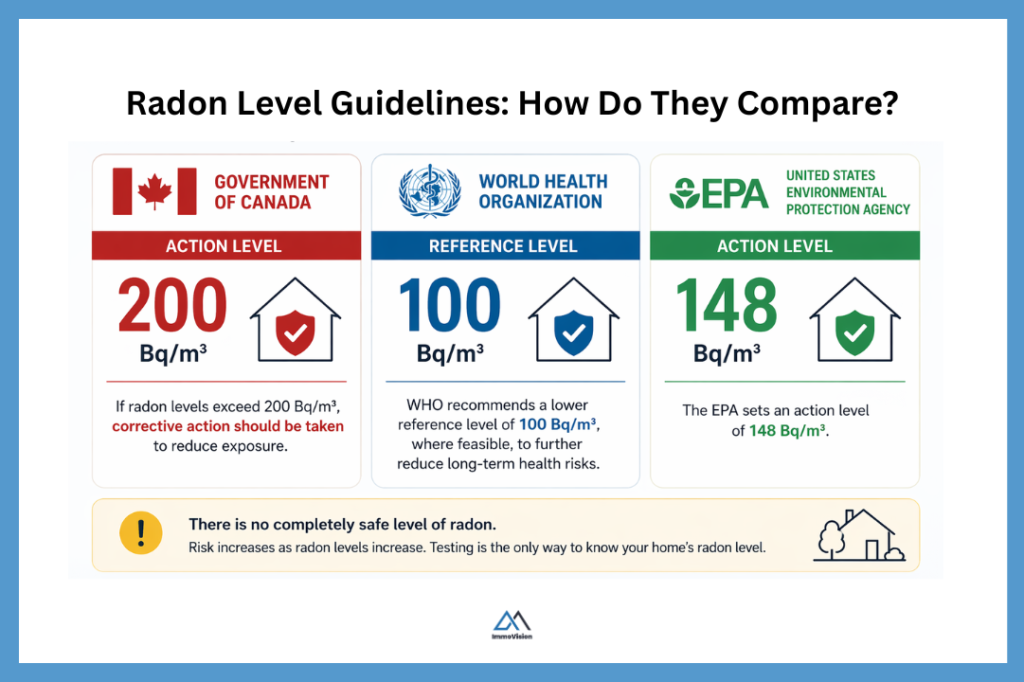
There is no known safe level of radon. This means that even at very low levels, there is still some long-term risk. The goal is to reduce exposure as much as possible rather than reach a point of zero risk. As such, different health organizations set different thresholds for when they think that the risk is high, and action should be taken.
According to the Government of Canada, if radon levels exceed 200 Bq/m³, corrective action should be taken to reduce exposure. However, the World Health Organization recommends a lower reference level of 100 Bq/m³, and in the United States the Environmental Protection Agency sets a level of 148 Bq/m³.
As a homeowner, you should decide what level of risk you are prepared to live with for instance, you might decide to take action when you measure 50 Bq/m³ of radon concentration, or follow the WHO guidelines, rather than the higher levels set by the Government of Canada.
How to Mitigate Effects of Radon
If the radon concentration in your home is very high, you will need to hire a qualified contractor. They will install a system that evacuates the radon under the foundations before it enters the living spaces of the building.
The most effective system to mitigate the effects of radon uses a technique called active soil depressurization. This is essentially a ventilation system that provides suction under the entire home. This suction draws radon gas from below your foundation to a single suction point, where it can be collected. The gas is then routed through a vent pipe and expelled outdoors, typically above the roof, to prevent re-entry into the home.
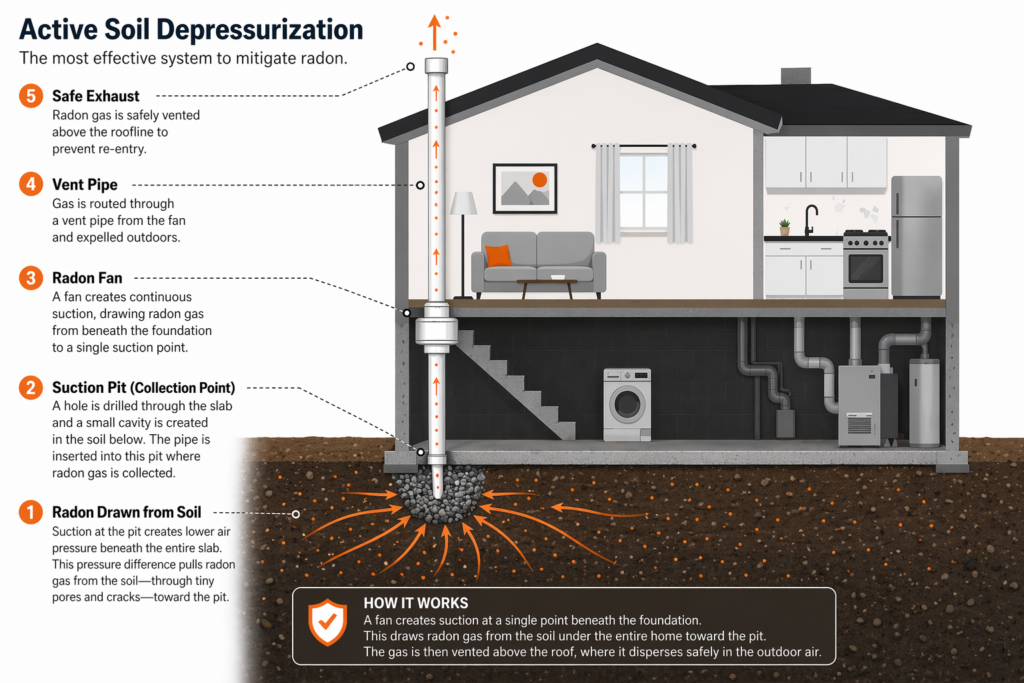
A contractor will build this system by first running a communication test to identify where best dig the suction pit. This will tell them how easily air (and radon gas) moves beneath the slab, helping determine the best location and number of suction points needed for effective mitigation
The contractor will then drill a hole in the basement slab and then digging out a radon suction pit. They will then run a PVC pipe through the house, or around the edge of the house, to vent the radon gas safely outside, and install a fan above the roofline. If you have an unsealed sump pump, the contractor should also seal it to prevent radon from entering the home.
Cost of Radon Mitigation in Quebec
For most homes, a standard active soil depressurization system typically costs between $2,000 and $4,000. This aligns with guidance from Health Canada for straightforward installations in typical residential properties.
Industry data from Canadian radon professionals, including CARST (Canadian Association of Radon Scientists and Technologists) and C-NRPP (Canadian National Radon Proficiency Program), suggests a national average of approximately $2,900 for installed systems. However, costs can increase significantly in more complex situations, such as homes with crawlspaces, multiple foundations, or challenging layouts, where prices may range from $5,000 to $11,000 or more.
The best approach is to consult with qualified contractors who specialize in radon mitigation. In Quebec, these are contractors who hold the relevant RBQ licenses. Different contractors can assess your specific situation, explain the proposed solution, and provide detailed quotes. It’s also important to ask about performance guarantees, including whether the system will effectively reduce radon levels in your home.
Buyers: How to Protect Yourself in a Real Estate Transaction
When buying a home in Quebec, there are several steps that you can take, to protect yourself against buying a place that has a radon problem.
First, you should check the seller’s declaration, and ask the listing agent if the home has been recently tested or radon, or if any work has been done to correct a radon problem in the past. If the home has not been tested recently, and/or no radon mitigation system exists, then the OACIQ recommend that the buyer makes their promise to purchase conditional upon the satisfactory completion of a radon test. A radon test can take several months (typically 3 months), because it takes time to accumulate the necessary data.
Until the test results are available, the OACIQ also recommends that a portion of the purchase funds be held in trust by the notary. This amount can then be used to cover the cost of installing a radon mitigation system if elevated radon levels are detected.
To build this mechanism into the transaction, the OACIQ suggests buyers use the following wording:
Wording From The OACIQ
| The parties instruct the acting notary to withhold from the proceeds of the sale an amount of $________. This amount shall be remitted to the BUYER if the report produced by a certified radon measurement professional states, following a test to measure radon levels in the living space of the IMMOVABLE, that the average annual radon concentration is equal or exceeds 200 Bq/m3 and if a copy of the report is submitted to the SELLER within ___________ days following the signing of the deed of sale. Failing which, the amount shall be remitted to the SELLER, at the expiry of that time frame. The amount mentioned above is intended to compensate the BUYER for the cost of work required to reduce the average radon levels in the living space of the IMMOVABLE. Upon receipt of this amount, the BUYER waives any claim and any other recourse in this regard. All costs and fees relating to the management of the amount withheld by the notary shall be borne by the SELLER. |
Immovision
Need Help?
Find a local buyers agent to help you complete this clause.
Sellers: How to Protect Yourself in a Real Estate Transaction
When selling a home in Quebec, it is important to understand that radon levels exceeding 200 Bq/m³ at the time of sale may be considered a latent defect. For this reason, sellers are required to disclose any known presence of radon in the property in the seller’s declaration, along with any measures taken to reduce radon concentration. Failure to disclose known issues may expose a seller to legal recourse under the rules governing latent defects.
When a seller is unsure about radon levels in a property, they may choose to conduct a radon test prior to listing. This allows them to better understand potential risks and disclose any known results to prospective buyers. If the test detects a high concenration of radon, the seller may decide to carry out mitigation work before bringing the property to market.
While testing does not provide a permanent certification of radon levels, it can reduce uncertainty for buyers, improve transparency, be used in the seller’s marketing material and help facilitate a smoother sales process by addressing known environmental risks in advance.
Frequently Asked Questions
Long-term radon exposure is a known risk factor for lung cancer, particularly when combined with smoking. While radon exposure alone does not automatically lead to screening, your physician will consider the exposure material information and use this to determine whether any follow-up or preventive screening is appropriate.
Final Remarks
Radon is a real and often overlooked risk in Quebec homes, but it is also one of the most manageable environmental hazards homeowners face today. With the right information, simple testing, and proven mitigation methods, radon exposure can be significantly reduced, often at a relatively modest cost.
Whether you are buying, selling, or already living in a home, understanding radon is an important part of protecting your long-term health. The key is to be aware if you are at risk and what steps that you can take to reduce the risk.