
What is an estate sale and how do they work?

An estate sale is a method of selling your home and all (or nearly all) of the contents of your home.

It will normally take place either after someone passes away as part of settling an estate, or during the persons lifetime when they are downsizing, relocating, or liquidating assets. Normally an estate sale is organized by a professional estate sale organizer who will hold the sale on behalf of the family members. In this article, we cover:

What is an estate sale?

An estate is everything that a person owns, for instance a house, car, furniture, decorations and so on. And an estate sale, is simply the sale of someone’s entire estate (everything that they own). Normally this happens when a person either passes away or downsizes for retirement.

Typically a professional estate sale company will handle an estate sale. The company will sort, value, photograph and advertise every item for sale. They will also manage buyers during the sale, and handle all payments and paperwork. Below is an example of an online estate sale gallery from the estate sale company Ronda Bly in Montreal. This particular company specializes in higher-value and collectible items, not just general household goods.
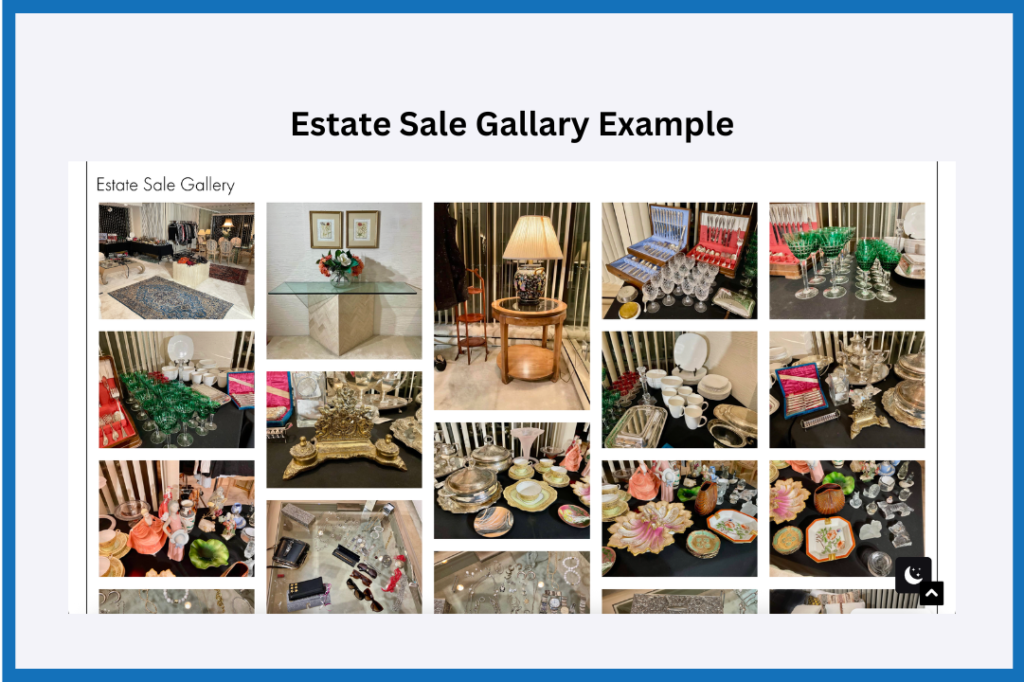
A screenshot showing an example of an online estate sale gallery from Montreal estate sale company Ronda Bly.
An example of an online estate sale gallery from Montreal estate sale company Ronda Bly.

The top 5 estate sale companies in Montreal

As of October 15th 2025, there are roughly 49 estate sale liquidators in Quebec. These companies generally fall into one of the following categories: general estate sale liquidators, high end liquidators, auction and collectables, estate sale moving and disposal services. The right estate sale company for you will be the one that matches your has experience selling items like yours. This company will often be able to sell your property for thousands, or even tens of thousands more, than their closest competitor.

Here is a list of the top 5 estate sale companies in Montreal.

1. MDS Estate Sales

MDS Estate Sales Card
About
Reviews
Contact

MDS Estate Sales is a professional estate sale liquidator with over 10 years of experience. It is owned by Mary De Santis who takes an active role in each of the estate sales. MDS Services include in-home estate sales, pricing, digital inventory reports, clear-outs, and coordination of donations. The company emphasizes a personalized approach to each estate sale and does not specialize in any particular niche, instead offering general estate liquidation services tailored to the client’s needs.

In addition to conducting estate sales, the company purchases gold, silver, and select furniture directly from clients for resale through online marketplaces and dealer networks.

Service Area: Montreal and surrounding regions, Quebec

MDS Estate Sales is owned by Mary De Santis and her clients say that she takes a personal interest in every estate sale. The company has more than five star reviews on Google from both sellers and repeat buyers. Mary’s clients highlight her thoughtful approach and her ability to draw a large crowd to her estate sales.

Address: 6500 Trans-Canada Hwy 4th floor, Pointe-Claire, Quebec H9R 0A5, Canada

Phone: (514) 923-9204

2. Ronda Bly Estate Sales & Appraisals

Ronda Bly Estate Sales Card
About
Reviews
Contact

Ronda Bly positions itself as the Montreal’s Premier Estate Sale and Appraisal Company. The company specializes in the sale of high-value personal property including fine art, collectibles, jewelry, antiques, and luxury items. The owner of the company, Ronda, is a Certified Personal Property Appraiser and she not only runs public estate sales, but she will also run private sales for high ticket items such as fine art, that might appeal to a more niche audience.

The company charges a minimum fee for labor, advertizing and supplies. Once this minimum fee is reached, the company will charge only a percentage of the total revenue generated.

Service Area: Montreal and surrounding regions, Quebec

Ronda Bly has been in the estate sales business for more than 25 years. Ronda’s sellers generally speak well of her and she has more than 40 five star reviews on Google. Her critics are mainly buyers who say that she is a hard negotiator and will refuse to lower prices until the final day of the estate sale.

Address:Address: 4300 Blvd. De Maisonneuve Ouest, Westmount, Quebec H3Z 3C7

Phone: (514) 236-4159

3. Sell My Stuff Canada (Montreal)

Sell My Stuff Canada (Montreal) Auctions Card
About
Reviews
Contact

Sell My Stuff Canada is an online estate sale and liquidation service helping people sell personal belongings across Canada. Founded in 2008 by Josh Horowitz, a third‑generation contents sale expert. The company offers a free listing service for items in your estate. They will visit your home to stage, price, and photograph items. They will then upload the images to an online catalogue, and promote the items through digital marketing, email, and social media to reach potential buyers.

Service Area: Across Canada, with a branch focused on Montreal.

Sell My Stuff Canada has been in business since 2008 and is well regarded across Canada, with strong Reddit reviews. The Montreal specific branch has 18 reviews, with 17 five star reviews. The company responds to any negative feedback and understands the importance of being a trusted brand on the internet. Advocates for this platform mention the automatic real-time price drop mechanism as a powerful motivator to get buyers to buy items.

Address:Address: 67 Rue Montague, Kirkland, QC H9J 2T7

Phone: (514) 838-0676

4. Kavanagh Auctions

Kavanagh Auctions Card
About
Reviews
Contact

Kavanagh Auctions is a family run auction house based in Montreal. They focus on antiques, mid-century modern, industrial, art deco and oriental items, including (but not limited to) Furniture, Artwork, Decorative items, Jewelry, Sculpture, Lighting and more.

The company normally works with estate liquidators to help sell more high end or unique items. However, you can also contact them directly and, if you have a lot of items to sell, they will come to your home, view, stage, photograph and set the starting price points for items in your auction. Kavanagh Auctions will run the auction for you, handling marketing, cataloguing, and the sale itself, and you pay a commission only on items that sell.

Service Area: Montreal and surrounding areas.

Kavanagh Auctions is a respected auction house in Montreal that was founded in in 2008 by Beau Kavanagh and Angus Tasker. The company is run by four people including Beau and Angus who take an active day to day role in the business. In their online reviews, customers mention that they enjoy physically visiting their store in NDG and also participating in online auctions. The company has 4.5 average on Google reviews and over 25 five star reviews.

Address:Address: 6059 De Maisonneuve Blvd. W.,Montreal, QC H4A 3R8

Phone: (514) 585-3301

5. Succession Estate

Kavanagh Auctions Card
About
Reviews
Contact

Succession Estate (also referred to online as L&L Succession Estate) is a Montreal-based estate liquidation service that focuses on comprehensive estate management and sale support for families handling a succession. They emphasize professionalism, personalized planning, and impartial evaluation of estate assets to reduce stress and help clients through the entire process.

Service Area: Montreal and surrounding regions in Quebec, serving families who need support with estate liquidation, appraisal, and succession planning as part of settling an estate.

Succession Estate is a smaller estate liquidator in Montreal that works primarily on a referrals basis. The company has only one review online at Yelp.

Phone: (514) 298-3687

How much will you make from an estate sale?

The amount of money that you will make from an estate sale in Montreal depends on how many items that you have for sale, how much money the estate sale company charges and the amount of buyer interest. However, a typical estate sale for a mid-sized home can easily generate anywhere from $10,000 to $20,000 CAD in total sales. From this, most estate agents will take 35% – 40% commission meaning that you can expect to net roughly $6,000 – $13,000 CAD in profit.

An infographic showing how an estate sale adds up.
Estate sales can quickly add up to tens of thousands of dollars in profit.

Key factors that affect your profit include:

  • Item value: If you have high quality furniture, collectables, artwork, antiques, jewelry made from precious metals or first edition books, you tend to get more money.
  • Market demand: Prospective buyers value items differently depending on their individual taste and circumstance. A skilled estate sale company will know how to market your estate sale such that it attracts the right buyers and maximizes demand.
  • Sales strategy: Set prices too high and interest dries up; drop them too fast and you risk selling valuable items for less than they’re worth.

Note

Some people choose discount companies to save on commission, but lower fees often means less exposure and weaker pricing. It is better to choose an estate sale company with experience in your type of belongings, rather than getting hung up on price. For example, if you have artwork, do they know how to properly price it and reach the right collectors?

How does the estate sale work?

Every estate sale is different. After a loved one passes, you may need to complete certain legal steps first, such as obtaining probate and formally appointing an executor to administer the estate. Once you complete any required legal groundwork (or decide to sell), you can begin the practical steps shown in the graphic below.

An infographic showing how the estate sale process works from legal preparation to final clear out.
How the estate sale process works from legal preparation to final clear out.

Once you appoint the estate sale company, they will review all the possessions in the home and prepare the items for sale. This involves taking out all the items for the cupboards, photographing every item, conducing price research, organizing the home’s belongings, and creating an online catalogue to market the items to buyers, collectors, and dealers. This can take anywhere from between 2 – 4 weeks for a small team.

After pricing and cataloguing all items, the estate sale company begins promoting the sale. It does this by alerting its network of specialized dealers, collectors, and subscribers. They use targeted outreach, email campaigns, and social media to let them know about your upcoming estate sale.

The company usually holds the sale over one or two weekends, managing attendance, payments, negotiations, and security. On the final day, the company heavily discounts remaining items to maximize the chances of clearing everything. Afterward, the estate sale company will take unsold goods and either donate these, or sell them through secondary channels, leaving the home empty and ready for your real-estate agent to list.

Why hire an estate sale company?

Your time is valuable. So valuable, in fact, that many people choose to throw away their possessions rather than spend hours sorting, pricing, and selling them. An estate sale company handles the work for you and ensures that it properly reimburses you for your items. To break this down a little bit more, a professionally run estate sale will:

Put less stress on your family

Selling personal property (especially items that belonged to a loved one) can be emotionally difficult. A professional estate sale company removes that burden from your family by handling the sorting, pricing, and negotiations with buyers.

This creates emotional distance from the transaction and allows family members to focus on supporting one another rather than managing the sale.

Correctly price and value your items

A professional estate sale company knows how to determine the fair market value of your belongings. To do this, they rely on their experience and industry connections, to assess everything from antique furniture and collectibles to everyday household items. By accurately pricing items, they ensure you don’t undersell your possessions while keeping the sale attractive to buyers.

Market your estate sale

Typically, the estate sale company will start by taking out all of your possessions from inside cupboards. They will then review, clean, photograph and price all of your possessions. They will then upload the images onto an online catalogue for your sale.

Next they will start to send out targeted email campaigns, social media announcements, and direct dealer notifications to interested parties. A good estate sale company connects with specialized antique dealers and alerts its social media followers or mailing list whenever it announces a new estate sale. This strategy maximizes exposure, attracts the right buyers at the right time, creates more competition, and ultimately sells your possessions for higher prices.

Add credibility to your sale

In this day and age, companies are constantly vying for your attention online. Serious buyers who are prepared to pay serious money for antiques, collectibles, or fine furniture, often will not buy from a stranger on the internet. However, if a buyer has previously had a successful transaction with a reputable estate sale company, they are far more likely to purchase again.

Clear out and donate what is not sold

After the estate sale has finished, the estate sale company will clear out whatever is not sold, so that the real-estate agent can come in and sell the house. Sometimes the company will know of people or groups that are able to buy this stuff and who did not attend your estate sale. Alternatively, they may be able to donate it to, making sure that nothing goes to waste.

Do I need to empty a house to sell it?

You do not necessarily have to empty a house before selling it. Your options depend on your situation, how you decide to sell the house, and your selling method. For example:

  • If you choose to sell with a realtor, your agent may suggest that you leave behind select pieces of furniture or art work to help with staging. Meanwhile, if your home is empty, your agent may suggest virtual staging.
  • If you choose to sell to a house buying company for cash, you will not need to clean or repair the home, and many “We buy house” businesses and investors will take care of any unwanted items left behind.

How much do estate sale companies charge?

Estate sale companies typically charge a commission based on the total sales revenue from the estate sale. This commission will typically range anywhere from 30% – 55%, depending on various factors such as:

  • The value of the items being sold
  • The location of the estate sale
  • The service level provided (sorting, packing, and cleanup)

Some estate sale companies will charge additional fees for administrative tasks, appraising high-value items, post-sale clean-outs, or disposal of unsold belongings. Before signing a contract, make sure that you review the fee structure carefully so as to avoid unexpected costs and ensure you fully understand how your net proceeds will be calculated.

How much is your inherited home worth?

If you are curious about how much your inherited home is worth, get a preliminary estimate using Immovision’s free Home Value Estimator.

How to find an estate sale company

To find an estate sale company, you should take the following steps:

  • Define your goal: The goal is to find an estate liquidator who has knowledge about your particular situation. For instance, whilst some companies will tell you that they cannot get much for your possessions, another company, with a different buyer network or area of expertise, can achieve a better result.
  • Check online reviews: Before interviewing any estate sales company, it is worth reading their online reviews. This will give you some insights into aspects of their service that past clients like and, allow you to spot any recurring issues or red flags.
  • Interview at least three companies: Once you have checked the online reviews, the next step is to choose at least three providers to interview. At this interview, you can ask them questions about their credentials, process, and availability. In the next section, we include a list of interview questions that you can ask to ensure they are the right fit for your estate and your goals.
  • Ask for referrals: If you have a friend who used an estate sales company and they were happy with the service, ask for a referral. However, even with a referral, you should evaluate the company as carefully as you would any provider you found yourself. Every estate is different and a company that was the perfect fit for someone else may not necessarily be the best fit for you.

Questions to ask an estate sale company

Below are a list of questions that you can use to interview an estate sale company:

  • How many estate sales have you successfully managed?
  • How long have you been in business?
  • When would you have time to run my estate sale?
  • How long does the entire process typically take from initial assessment to final payout?
  • What is your commission structure?
  • Are there any additional fees I should expect?
  • How do you research and determine pricing for items?
  • Do you have certified appraisers on staff or access to professional valuation experts when needed?
  • What is your marketing strategy?
  • How large is your buyer network (dealers, collectors, subscriber lists)?
  • Can you provide references from recent clients?
  • Are you fully insured?
  • How do you manage security during the sale?
  • How are payments processed and documented?
  • What happens to unsold items after the sale?
  • How is the home left once the sale is complete?
  • How and when will I receive my proceeds?

Frequently asked questions about estate sale companies and estate sales

You should contact an estate sales company as soon as you think you will need an estate sale. Most estate liquidators need at least a few weeks to assess, price, and market your items properly.

An estate sale will typically be run over one weekend. The normal schedule is that, items will be listed on an online catalogue in the week leading up to the event. For physical estate sales, prices are normally not shared online prior to the event. If the estate has collectables that appeal to a specific type of collector, the collectors may be invited to an early viewing on the Thursday before the official estate sale.

On either Friday or Saturday morning, doors open to the public at the advertised time. The estate liquidator will often run a managed entry system to ensure a safe and orderly flow of buyers. Staff are positioned throughout the home to assist customers, answer questions, and manage purchases. As the weekend progresses, many companies will implement scheduled discounts to encourage the sale of remaining items.

After the event concludes, the estate sale company will reconcile sales, remove any unsold items according to the agreed plan (which may include donation, consignment, or disposal), and provide the client with a detailed accounting of proceeds and fees. Payment to the client is typically issued within an agreed timeframe following final reconciliation.

An estate sale is similar to a garage sale (also called a yard sale) in that both are held at a private residence and invite members of the public to attend and purchase items. However, the scale, organization and types of things that you find at an estate sale are normally much different.

A garage sale is typically a small, informal event where a homeowner sells selected unwanted household items, usually lower- to mid-range goods, at low, negotiable prices from a driveway or garage. In contrast, an estate sale involves the sale of most or all contents of a home, often due to downsizing, relocation, or estate settlement.

Estate sales generally feature a larger volume of items, including higher-quality furniture, collectibles, artwork, décor, and tools, with prices that may range from moderate to high depending on value and rarity. They are usually held throughout the entire home, professionally staged, and managed by an estate sale company rather than the homeowner.

Generally, no — estate sale companies sell the contents of the home, not the house itself. The house will normally be sold by an licensed realtor.

Technically you do not need to empty your house to sell it however, real-estate agents normally recommend that you declutter your home and get it professionally staged before listing it, since this can increase the sale price by more that 5%.

Unlike a garage sale, which usually features selected unwanted items, an estate sale is generally a full household liquidation.

Items commonly sold include furniture (such as sofas, dining sets, and bedroom suites), artwork and decorative objects, antiques, collectibles, jewelry, watches, rugs, books, records, kitchenware, tools, and everyday household goods. Higher-value estates may also include fine art, rare collectibles, designer fashion, or specialty items like musical instruments. In some cases, vehicles such as cars or motorcycles may also be offered for sale.

Generally speaking, everything that is not permanently attached to the property can be included in the sale. Built-in fixtures such as cabinetry or plumbing, are usually excluded unless specifically stated.

Yes. While most household contents can be legally sold at an estate sale, certain items are restricted or require special handling under Canadian law.

Firearms, for example, are regulated under the Firearms Act. They cannot simply be displayed and sold to the public. Any transfer must comply with federal licensing requirements, and in most cases firearms are handled separately through a properly licensed dealer.

Prescription medications and controlled substances cannot be sold and must be safely disposed of, usually through a pharmacy. Government-issued identification (such as passports, driver’s licences, or SIN documents) and confidential personal records also cannot be sold and should be securely destroyed.

Certain items made from protected wildlife materials such as ivory or endangered species products may be restricted under federal legislation like the Wild Animal and Plant Protection and Regulation of International and Interprovincial Trade Act, and may require permits or specialist review.

Vehicles can be sold, but ownership must be transferred in accordance with provincial regulations rather than through a simple cash transaction.

A professional estate sale company will identify any restricted items in advance and ensure they are handled properly, either by removing them from the sale or referring them to an appropriately licensed specialist.

Yes. Estate sales can be held online, in person, or as a combination of both.

Traditionally, estate sales take place inside the home over a weekend, with buyers attending in person. However, many companies now offer online estate sales or online auctions, where items are photographed, catalogued, and listed on a bidding platform. Buyers place bids digitally, and winning bidders either pick up their purchases locally or arrange shipping.

Online estate sales became especially common during the COVID-19 pandemic and they remain popular because they reach a wider audience and reduce in-home traffic.

In many cases, estate sale companies will now run a hybrid model, where they will market items online in advance and then hosting a physical sale, or offering online bidding for select high-value pieces while selling the remaining household contents in person.

Yes – in most cases, commission is negotiable.

Estate sale companies typically charge a percentage of total sales, and that percentage can vary depending on several factors such as the size and value of the estate, the amount of sorting, staging, and research required, whether the home needs to be cleared out afterwards.

For larger or higher-value estates, companies may agree to a lower percentage because the overall revenue justifies the work. For smaller estates, the percentage may be higher to cover fixed labour and marketing costs.

That said, commission is not the only factor to consider. A lower rate does not always mean higher net proceeds if the company lacks strong marketing, pricing expertise, or an established buyer network.

Final remarks

An estate sale company can help you sell the contents of a home, including furniture, artwork, antiques, collectibles, jewelry, and everyday household items. This can be particularly useful when downsizing, relocating, settling an estate after someone passes away, or preparing a property for sale.

A in a real estate transaction, a good agent can really help you manage all of the moving pieces, because they can guide you through what needs to be done and coordinate the many small details that can otherwise feel overwhelming.

Take the next step

Find a top real estate agent in your area to help you buy your dream home