Definition
What is a property title?
The property title in Quebec is a legal concept representing your ownership of a property.
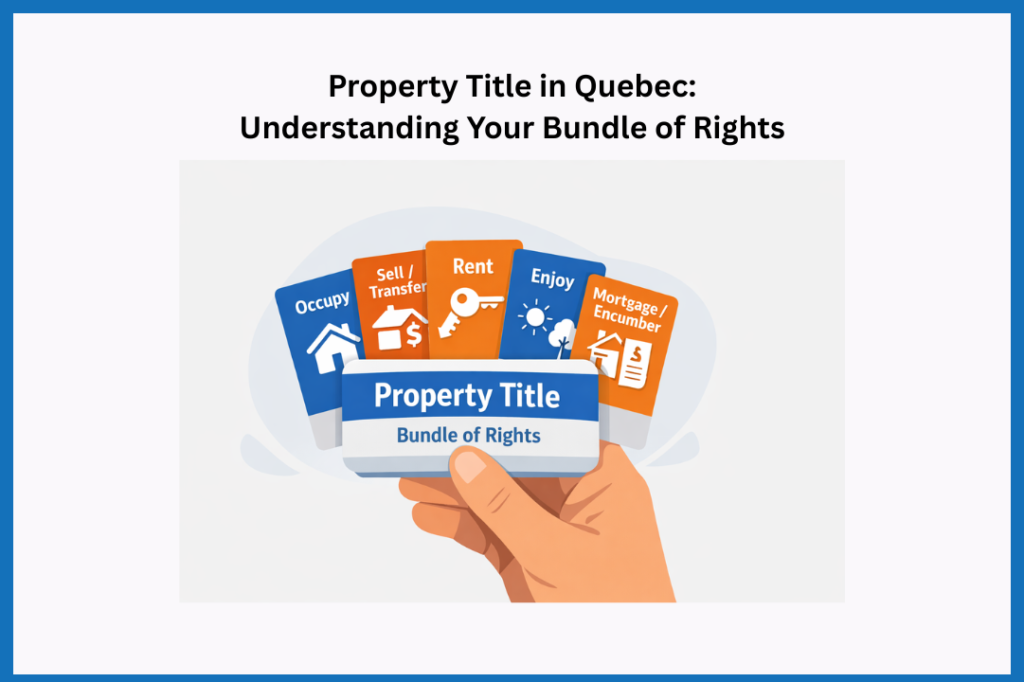
In Quebec, owning property does not give you absolute freedom to do anything you want. Instead, ownership means that you hold a bundle of legal rights such as, the right to occupy the property, the right to sell or transfer it, the right to enjoy the land without interference and so on. When you hold all of these rights together, you have full “ownership” of the property. You can think of it like a holding a set of cards, where each card represents a key right that you have as a property owner. When you hold all the cards together, you have full legal ownership.
Note
How is a property title created?
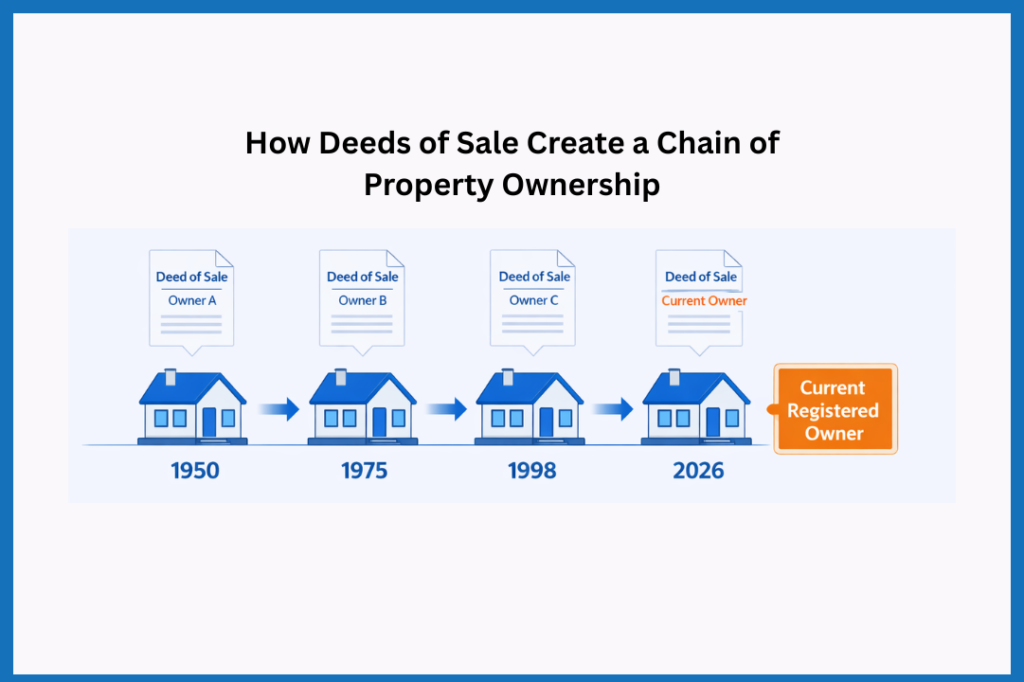
When a real estate transaction takes place, the notary records the details in a deed of sale, the legal document that transfers ownership from the seller to the buyer. In Quebec, the notary drafts and registers the deed in the Quebec Land Register, which officially records the transfer of ownership.
As a result, every property has a documented history of past owners and sales. A house built in 1950, for example, may have changed hands many times, with each sale recorded and registered. Together, these deeds form a legal chain of ownership showing exactly who owned the property over time.
What is a property title defect?
In theory, this chain of documents clearly proves who owns the property. In practice, errors, omissions, and disputes can interrupt it. When that happens, lawyers refer to the issue as a title defect.
Title defects can show up for many reasons, including boundary mistakes, missing or incorrect registrations, unpaid debts tied to the property, or fraud in the property’s history. For example, a previous owner may have built a fence or driveway slightly beyond the actual property line. If no one notices, the mistake can carry forward through several sales. Years later, when a new buyer plans renovations or a neighbour raises a concern, the boundary issue comes to light and turns into a dispute over who owns that piece of land.
Note
What is a title search?
Before a property transaction closes, a notary conducts a title search to ensure the buyer will receive clear and legal ownership. This involves reviewing the Quebec Land Registry to identify anything that could affect the buyer’s rights or create unexpected obligations.
Typically, the title search is performed in stages:
- Establish a timeframe: The notary determines how far back to review ownership records to ensure no hidden claims exist.
- Ownership history: Verifies who previously owned the property and confirms the chain of title is clear.
- Existing mortgages (hypothecs): Checks for any loans or liens on the property that must be settled before transfer.
- Rights and restrictions: Looks for easements, servitudes, or other obligations affecting the property.
- Judgments and pending lawsuits: Ensures there are no legal claims that could impact ownership.
- Taxes and municipal charges: Confirms all property taxes, fees, and charges are up to date.
- Other legal issues: Identifies any additional problems that could affect the ability to sell, lease, or mortgage the property.
What is title insurance?
Title insurance is a type of insurance that protects property owners and lenders against financial losses from defects or problems with a property’s title. For example, if a previous owner used took out debt against their home, you, as the current owner, take over responsibility for this debt. This can put new home owners tens or even hundreds of thousands of dollars in unexpected debt. Title insurance is there to protect you against issues like this.
Typically title insurance will cover the following:
| Risk Category | Example |
|---|---|
| Title defects | A stranger claims they inherited the property and wants to be declared the owner. |
| Non-compliance with municipal by-laws | You discover a deck was built without a permit; city inspectors require you to move it. |
| Encroachment on a neighbouring lot | A survey shows part of your shed is on your neighbour’s property, and they demand it be removed. |
| Fraud, forgery, or identity theft | A fraudster steals your identity and takes out a mortgage on your property, leaving you responsible for the debt. |
| Charges appearing between deed signing and registration | Debts or liens that arise after signing but before the deed is officially registered in the Land Registry. |
| Debts of previous owner | Unpaid utility bills, property taxes, or condo fees that transfer to you as the new owner. |
| Construction legal hypothecs | Work done prior to your purchase, like renovations or improvements, creates a legal claim against the property. |
| Unknown servitudes | E.g., Hydro-Québec has a servitude on part of your land and requires removal of your pool or shed. |
| Survey plan errors | Mistakes in the property survey that could affect boundaries or structures. |
| Title search errors | Any mistakes in the official registry that might prevent selling, leasing, or mortgaging the property. |
Note
Frequently asked questions
Final remarks
In Quebec, the property title is a legal concept representing your ownership. Holding the title gives you a bundle of rights such as the right to occupy, use, rent, sell, or enjoy the property without interference.
The title transfers each time the property is sold, gifted, or otherwise legally transferred, and the new owner’s rights are recorded in the Quebec Land Registry. Over time, errors, omissions, unpaid debts, or disputes can arise, creating potential risks to the current owner.
It is the notary’s job to verify the title and ensure the transaction is legally valid. While all notaries follow the same framework, the thoroughness of their search, clarity in explaining risks, and careful review of past registrations vary. That’s why choosing a notary with a strong reputation and experience is essential to protect your ownership.