
Real-estate is generally considered a secure financial investment and this is often the case. However, latent defects can significantly reduce the value of your home and turn an otherwise sound investment into an expensive mistake.
In this article, we explain everything you need to know about latent defects, so you can make informed decisions before buying a home and know exactly what to do if one is discovered after the purchase. Ultimately, reading this article is will give you the best chance to protect the value of your investment and avoid costly surprises.
- What is a latent defect?
- What is considered a latent defect?
- What is a patent defect vs latent defect?
- Frequently asked questions
- Final remarks
What is a latent defect?
A latent defect (also called a hidden defect) is a serious defect that existed at the time of sale, was not visible or discoverable by a property inspection, and significantly reduces the property’s value or makes it unfit for its intended use.
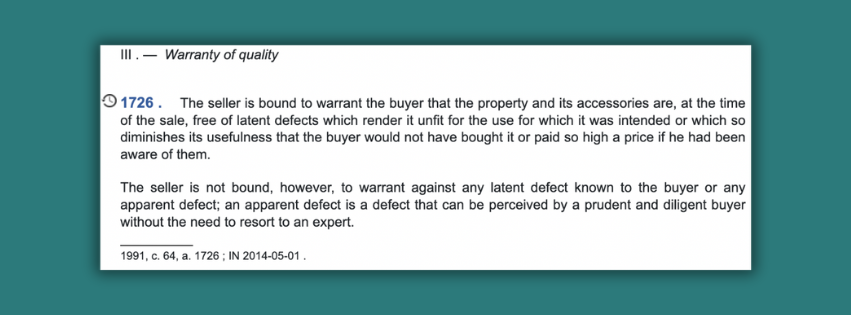
Article 1726 of the Civil Code of Quebec (CCQ) protects buyers from latent defects by holding sellers legally responsible for serious hidden defects that existed at the time of sale. This is the case even if those defects are discovered after the transaction has closed. This means that a buyer can take legal action against the seller to seek compensation, a price reduction, or even cancellation of the sale if a qualifying latent defect is discovered after closing.
Whilst there is no time limit on when a latent defect may be discovered, homeowners must notify the seller within a reasonable time after discovering the defect. And generally, buyers have up to three years from the date of discovery to take legal action.
What is considered a latent defect?
For a defect to be considered a “latent defect” under the Civil Code of Quebec (CCQ), the defect must satisfy the following four criteria:
- The defect existed at the time of sale
- The defect was not visible or discoverable upon inspection
- The defect significantly affects the property’s use or value
- The seller did not disclose the issue to the buyer
- Once discovered, the buyer must inform the seller of the defect
Let’s take a look at exactly what each of these points means.
1. The defect existed at the time of sale
Article 1726 of the CCQ states that, “the seller is bound to warrant the buyer that the property and its accessories are, at the time of the sale, free of latent defects”. This means that the defect must already exist when ownership transfers from the seller to the buyer. The date of this will be the date written on the deed of sale.
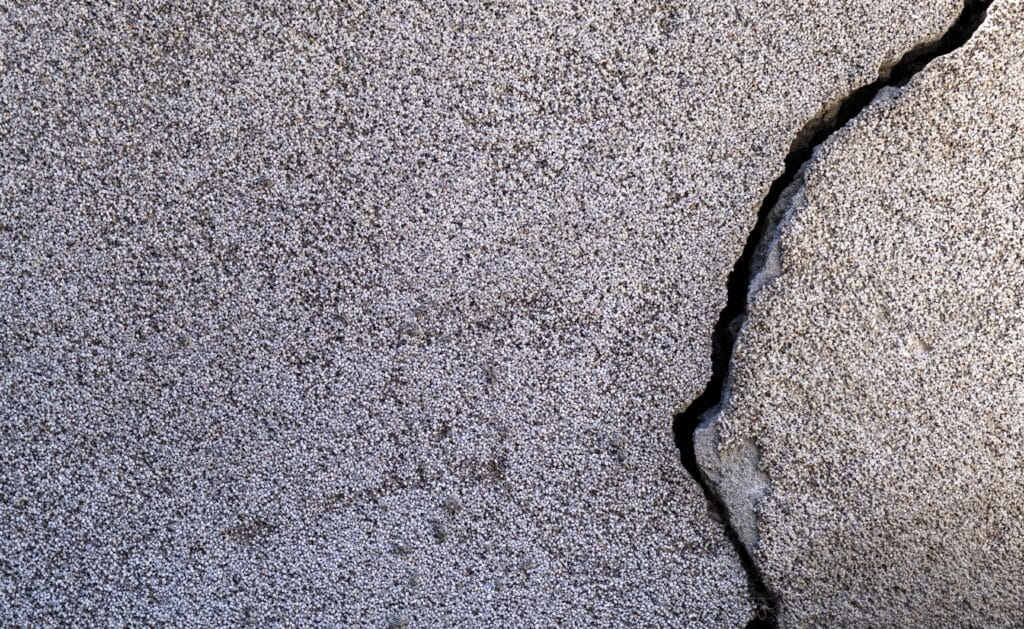
It is important to note that the date a problem becomes visible does not always indicate when the defect arose. For example, a small crack in the wall may have seemed minor at the time of sale. However, if the crack worsens after purchase and compromises the structural integrity of the home, it could be considered a latent defect, since the issue existed before the property was sold.
To prove that a defect existed before the property was sold can be hard to do. Buyers will need to get expert reports from qualified professionals such as building inspectors, engineers, or contractors. These reports play a crucial role in demonstrating that the defect existed prior to the sale and was not caused by normal wear and tear, inadequate maintenance, or the buyer’s own actions.
2. The defect was not visible or discoverable upon inspection
The second half of Article 1726 of the CCQ states that “The seller is not bound, however, to warrant against any … apparent defect; apparent defect is a defect that can be perceived by a prudent and diligent buyer without the need to resort to an expert”.
This means that Article 1726 excludes defects that the buyer could have discovered through a reasonable inspection, so only hidden or non-apparent defects (latent defects) make the seller legally responsible. As such, if the buyer did not get a pre-purchase inspection, they cannot hold the seller responsible for defects that a prudent inspection would have revealed.
In some areas of Quebec, certain properties may be at higher risk for hidden issues, such as structural problems, soil instability, or pyrite in the foundation. To be considered a prudent buyer under Article 1726, you should order special inspections or tests to uncover potential latent defects before completing the purchase. Failing to do so could cause a defect to be considered “apparent” rather than hidden, which may limit your ability to hold the seller responsible later.
3. The defect significantly affects the property’s use or value
Article 1726 also states that latent defects must render the property “unfit for the use for which it was intended”. And that, the defects are such that the “buyer would not have bought [the property] or paid so high a price if he had been aware of them”.
For instance, let’s say that you buy a detached house for $500,000 and, that the price that you pay is comparable to other detached houses in neighbourhood with similar features and construction quality. Let’s say that two years after purchasing the house, you discover that the roof was improperly installed, allowing water to slowly infiltrate the structure and cause hidden rot and mold, even though no issues were visible at the time of sale. After an expert evaluates the extent of the damage, they advise you that the cost of repair will be $40,000.
In this case, had the defect been known at the time of purchase, you likely would have either negotiated a lower purchase price or refused to buy the property altogether. As such, the fair market value of the home at the time of sale would have been closer to $460,000, reflecting the cost of repairing the latent defect.
4. The seller did not disclose the issue to the buyer
Article 1726 states that the seller guarantees the property is free of undisclosed latent defects at the time of sale. In a transaction, the seller provides a seller’s declaration listing all defects they are aware of. Therefore, for a defect to be considered a latent defect, it must not be included in the seller’s declaration and meet the other criteria for a latent defect.
It is also true that the buyer must not be aware of the defect at the time of sale. For example, if a pre-purchase inspection identifies the issue, this gives the buyer the opportunity to renegotiate the purchase price, request repairs before closing, or, if the promise to purchase includes an inspection condition, withdraw from the transaction.
5. Once discovered, the buyer must inform the seller of the defect
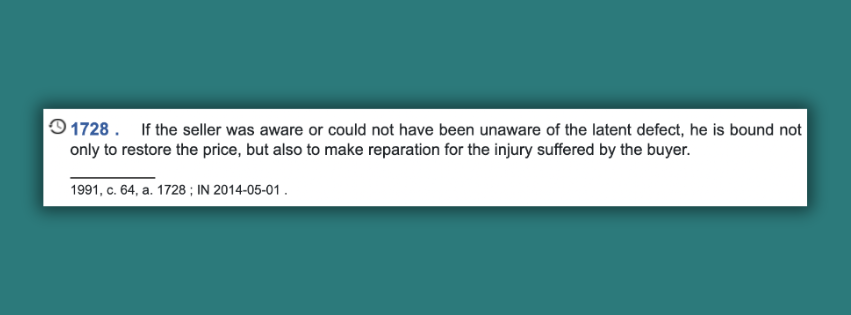
Article 1739 of the Civil Code of Québec requires a buyer to notify the seller in writing of a latent defect within a reasonable time after discovering it. While the Code does not define a specific deadline, Quebec courts generally consider a delay of around six months from discovery to be reasonable. This will be unless the circumstances justify a longer period (for example, when expert reports or further investigations are required).
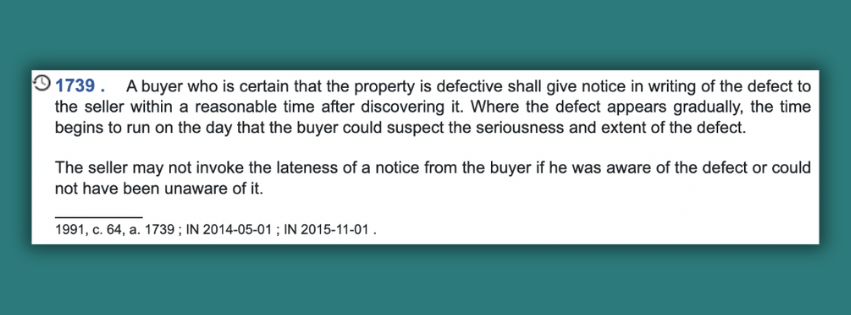
This notification is usually made by sending the seller a formal letter of demand, which serves to put the seller in default. The purpose of this letter is to formally notify the seller of the alleged latent defect and preserve the buyer’s legal rights.
The letter of demand gives the seller the opportunity to access the property, observe the alleged latent defect, and respond before the matter proceeds to court. This allows the seller to repair the defect, mandate an expert of their choosing to assess or correct the issue, or contest the existence or qualification of the alleged latent defect.
This step is essential, as Quebec courts generally expect the seller to be given a fair chance to verify and address the defect before the buyer initiates judicial proceedings.
Patent defect vs latent defect?
In real estate, a patent defect is a defect that is visible, obvious, or easily discoverable through a normal and careful inspection of the property at the time of purchase. For example, cracked tiles, peeling paint, or a leaking faucet. Since patent defects are apparent, buyers are generally expected to notice them during a pre-purchase visit or inspection, and sellers are typically not liable for them once the sale is completed.
The table below shows the difference between patent vs latent defects at a glance.
Patent defects vs latent defects at a glance
| Patent Defect | Latent Defect |
|---|---|
| Visible or obvious at the time of purchase | Hidden and not apparent at the time of purchase |
| Can be discovered through a normal, careful inspection | Not discoverable without specialized inspection or opening up the structure |
| Buyer is generally expected to notice it | Buyer could not reasonably detect it |
| Seller is usually not liable after the sale | Seller may be liable if legal conditions are met |
| Example: cracked tiles, peeling paint, broken fixtures | Example: foundation defects, hidden mold, faulty drainage |
Frequently asked questions
1. Document the defect: Take photos, videos, and keep any expert inspection reports showing the issue exists and was hidden at the time of sale.
2. Notify the seller: Inform the seller in writing as soon as possible (denounce the defect), ideally within six months of discovery.
3. Seek legal advice: Consult a lawyer experienced in Quebec real estate law to understand your rights and possible remedies.
4. Negotiate or pursue legal action: Many claims are settled through negotiation or mediation. If necessary, your lawyer can help you file a lawsuit within the legal time limit (generally three years from discovering the defect).
Acting quickly and documenting everything is key to protecting your rights and increasing the chances of a successful claim.
1. Pre-listing inspection: By hiring a certified inspector before listing the property, sellers can identify hidden issues and decide whether to repair them or disclose them upfront. This transparency helps prevent disputes later.
2. Latent defect insurance: This specialized insurance protects sellers from financial liability if a latent defect is discovered after the sale. It can cover repair costs or legal expenses, giving sellers peace of mind.
3. Full disclosure: Clearly disclosing known issues or past repairs in writing reduces the likelihood of claims. Even minor problems noted upfront can prevent larger disputes.
4. Proper documentation: Keeping records of inspections, repairs, and maintenance can demonstrate that the seller acted responsibly, which can be crucial if a claim arises.
While no method completely eliminates risk, combining these strategies (especially pre-listing inspections and latent defect insurance) can significantly reduces the chance of a successful claim.
Final remarks
A latent defect is a hidden problem in a property that wasn’t visible or discoverable at the time of sale and that can significantly affect its use or value. Under Article 1726 of the Civil Code of Quebec, a defect is considered latent when it existed at the time of sale, wasn’t apparent upon inspection, materially impacts the property, and the seller failed to disclose it. Buyers must inform the seller once they discover a latent defect and (if possible) do so within 6 months of discovering the issue.
A thorough pre-purchase inspection can protect you against latent defects by identifying hidden issues early in the purchase process allowing you to re-negotiate the price, and strengthening your legal position if a defect is discovered after the sale. Meanwhile, sellers may benefit from pre-listing inspections.
If a latent defect is found after the sale, it’s best to first understand your rights and second, consult a legal professional before taking any action.