
Buying a plex in Montreal can be one of the smartest ways to build long-term wealth, but only if you understand the risks.
Plexes come with unique zoning rules, tenant protections, financing differences, and legal obligations that can turn a good deal into an expensive mistake if overlooked.
In this guide, we explain what a plex is, the pros and cons of ownership, and the key risks you need to know in 2026 to buy with confidence and avoid costly surprises.
- What exactly is a plex?
- Can you convert a plex into a single family home?
- Can you sell units of a plex individually?
- What are the pros and cons of owning a plex? (At a glance)
- What are the advantages of owning a plex?
- What are the disadvantages of owning a plex?
- Is a plex a good investment?
 Immovision
Can You Qualify For A Plex?
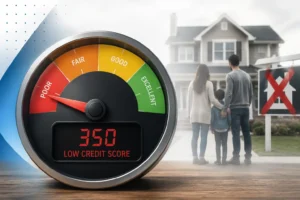
Before shopping for a plex, it’s important to understand your financing options. You will need a credit score of at least 660 to qualify for a mortgage with a bank.
What is a plex?
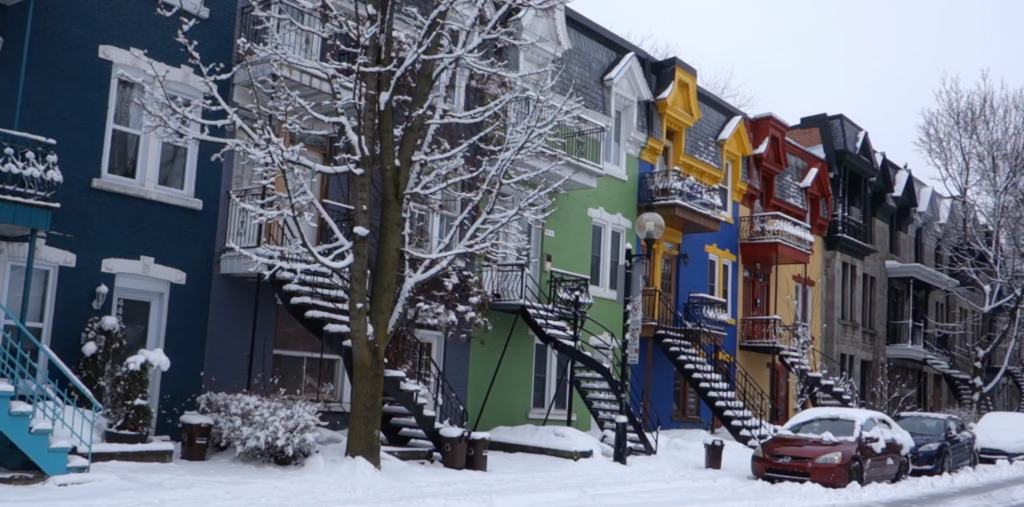
A plex, also known as a mulitplex, is basically just a small apartment building that fits two, three or even four separate dwellings that are stacked vertically. There are four main types of plex, these are:
- Duplex: 2 stacked units
- Triplex: 3 stacked units
- Quadruplex: 4 stacked units
They function like small apartment buildings, but on a much smaller scale. Most plexes are owned by one individual homeowner who lives in one unit and rents the others out. This means that they have one title and one cadastral (lot) number for the entire building. Because of this structure, plexes often function well as small-scale investment properties (more on this later).
In Quebec, you will see plex style buildings listed for sale as condos (both divided and undivided). This is because it is possible for the owner of a plex to turn them into divided or undivided condos. This will typically happen if the owner of a plex wants to break up the units within the plex and sell them all individually.
Can you convert a plex into a single family home?
In some cases you can convert a plex into a single family home. This type of conversion is called a plex to cottage conversion. Whether you are able to do so or not depends on the local municipal zoning rules.
For instance, many municipalities in Montreal have recently passed bylaws which make plex-to-single-family conversions harder. The reason for this is to address the shortage of affordable housing in downtown and highly sought after areas. Keeping plexes multi-unit helps slow property price growth and maintains the number of rental units which lowers the cost of living. For example, Plateau-Mont-Royal introduced a new bylaw in 2024 that aims to restrict plex to cottage conversions.
Can you sell units of a plex individually?
In Quebec, it is possible to sell individual units of a plex but, it depends entirely on the buildings legal structure. If the building is currently held by a single owner under one title, it must first be converted into a form of co-ownership (divided or undivided). However, depending on where your plex is located, there may be restrictions on what you are legally allowed to do. For instance, Montreal generally prohibits converting rental buildings into divided co-ownership.
In every case, the process involves two mandatory steps:
1. Verify municipal bylaws and zoning regulations
Confirm whether your municipality permits conversion to co-ownership and whether any conditions, restrictions, or exemptions apply.
2. Obtain authorization from the Tribunal administratif du logement (TAL)
If the building includes rental units, you must apply for and receive TAL approval before the conversion can legally proceed.
What are the pros and cons of owning a plex? (At a glance)
| Pros of owning a plex | Challenges of owning a plex |
|---|---|
| Owner-occupancy model | Zoning bylaw risks |
| Lower barriers to entry | Living close to tenants |
| Great investment properties | Management and maintenance |
| Helps first time buyers get into a better property | Additional legal and regulatory burden |
Now that we have a view on what are the pros and cons of owning a plex, let’s dive in deeper.
Immovision
Which Type Of Home Can You Afford?
Whether you’re considering a plex, a freehold townhouse, condo townhouse, stacked or semi-attached townhouse, your credit profile will play a major role in determining what you can afford. You will need a credit score of at least 660 to qualify for a mortgage with a bank.
What are the advantages of owning a plex?
In this section, we dig deeper into the advantages of owning a plex. These include:
- Owner-occupancy model
- Lower barriers to entry
- Great investment properties
- Helps first time buyers get into a better property
Owner-occupancy model
An owner-occupancy refers to someone who acquires a plex or building of five units or less who resides there. In this situation, the owner-occupant earns income by renting out the other units as rental units. The rental income helps to pay for the mortgage and other building expenses.
This can be a faster path to wealth creation since it (A) lowers the amount of downpayment required to buy a plex, allowing you to purchase a more valuable property, (B) rental income will significantly lower your monthly housing costs and (C) it helps you build up equity faster. We will dive deeper into each of these points in more detail throughout this section.
“In Canada, buying a multi-family property and using rental income from other units to pay your mortgage is one of the most reliable ways to build equity and reduce your personal housing costs.” — Scott McGillivray, Canadian Real-Estate investor
Lower barriers to entry
In Canada, your required down payment for a typical residential property depends on the price of the unit. If you are buying a property less than $500,000, the minimum down payment is 5%. If the property costs between $500,000 and $1,000,000, the minimum down payment is 5% of the first $500,000 plus 10% of the portion above $500,000. For properties over $1,000,000, the minimum down payment is 20% of the total purchase price.
However, the rules for a plex are different.
If you plan to live in one of the units of small plex (1 to 4 units) and intend to occupy the property as your principle residence, the mortgage insurance rules change the downpayment needed. The rules are:
- Duplex (2 units): The minimum down payment is 5% of the purchase price (or as per the split rule if above $500K).
- Triplex/Quadruplex (3–4 units): The minimum down payment is 10% if owner-occupied. If you do not live in the property, the minimum down payment jumps to 20% and is treated as an investment or rental property.
This happens because the mortgage insurance companies, such as CMHC, offer insured mortgages with higher loan-to-value (LTV) ratios for owner-occupied properties. This is because they recognizing that having a homeowner living on site reduces lender risk. Of course, you must still comply with the other requirements for mortgage insurance approval set by the insurance companies such as creditworthiness, total debt affordability (your TDS ratio) and housing only affordability ration (your GDS ratio).
💡 Buyers Tip
For a full list of the mortgage insurance rules, so that you can get informed about the downpayment rules in Canada, check out the CMHC Quick Reference Guide.
Great investment properties
One of the main reasons that people like the plex is that it makes for a great investment property. This is primarily for four reasons:
- More leverage: By putting less money down, you increase your leverage. As experienced investors know, higher leverage can amplify both potential gains and potential losses. On the upside, even small increases in property value create larger equity gains. The downside risk can be mitigated if you (A) rent out part of your unit to cover costs, (B) purchase in a neighbourhood and city with a growing population, which helps ensure demand for your property remains strong and (C) understand zoning risks.
- Faster equity build up: If you own a single family detached house, you pay 100% of the mortgage off yourself. By contrast, if you own a plex, multiple tenants will contribute to your mortgage every month. This means that a larger portion of your mortgage principle is paid down earlier and faster.
- Shared maintenance over units: A plex benefits from shared maintenance and centralized management. This can significantly reduce the pre-unit costs when compared to say renting out lots of condos in different buildings. It also reduces operational complexity, for instance, you do not need to deal with multiple condo boards.
- Value is driven by income, not comparables: Whilst single family homes are generally valued based on comparables (or “comps”), plexes are valued based on income potential. This means that if you can increase the rents and reduce expenses, you can increase the value of your plex independently of the market. This is called forced appreciation.
Helps first time buyers get into a better property
As we have already seen, owning a plex can help first-time buyers qualify for a higher mortgage. This is because lenders often consider the rental income from the other units. This means that your income effectively looks higher, making it easier to afford a larger property. These can be combined with first-time buyer incentives such as withdrawing savings from your RRSP or using funds from a First Home Savings Account (FHSA) to make it easier to get into a better home.
What are the disadvantages of owning a plex?
In this section, we dig deeper into some of the disadvantages of owning a plex. These include:
- Zoning bylaw risks
- Living close to tenants
- Management and maintenance
- Additional legal and regulatory burden
Zoning bylaw risks
Zoning bylaw risks are the potential legal and regulatory issues that could limit how you use, renovate, or expand a property, which can negatively affect the value of the property or its income potential. For instance, if you own a duplex and want to add a third unit, the municipality might not allow it because the lot is zoned only for two units.
Zoning bylaw risks exist with all types of property however zoning risks are typically higher for plexes. This is because plexes are considered essential to the city’s rental housing stock. For instance, in Montreal, the key zoning risks include:
- Prohibition on Unit Reduction: Several boroughs, including Le Plateau-Mont-Royal, Ville-Marie, and Villeray–Saint-Michel–Parc-Extension, have implemented or strengthened bylaws to prohibit converting duplexes or triplexes into single-family homes (“cottages”). This is designed to prevent the loss of rental units during the housing crisis.
- Divided Co-ownership Conversion Bans: Most boroughs strictly prohibit converting rental plexes into divided condos. Even if you obtain a rare borough exemption, you must still get final authorization from the Tribunal administratif du logement (TAL).
- Affordable Housing Requirements (20-20-20 Rule): Bylaw for a Diverse Metropolis, projects exceeding certain residential area thresholds (temporarily 1800 m² through 2026, then reverting to 450 m²) must sign agreements to contribute to social or affordable housing.
- Heritage & Architectural Restrictions: Many plex-heavy zones have strict rules regarding the preservation of exterior features, such as the iconic winding outdoor staircases, which can limit renovation options and increase costs.
💡 Buyers Tip
In Montreal, purchasing a plex with existing zoning or building code violations makes you legally responsible for correcting them, regardless of who caused them. While you may have legal recourse against the seller, the immediate burden of fines, repairs, or even demolition orders falls on you.
In 2025, Montreal has significantly increased inspection frequency, particularly for rental buildings, with fines ranging from $1,000 to $40,000 for maintenance or safety violations. This is why it is important to find a local realtor who specializes in plexes since they will be able to help you identify potential compliance risks before you buy.
To find a local realtor who specializes in plexes use Immovision Agent Finder.
Living close to tenants
Living close to tenants can be both a blessing and a curse. On the one hand, it will allow you to keep a close eye on how the property is being used. On the other, it means that tenants can easily knock on your door at any hour to ask for fixes for minor issues that they might otherwise have waited for or just fixed themselves (for example, a blown lightbulb or a clogged sink).
In addition, living close to people can lead to awkward social dynamics. For instance, disagreements over rent increases, late payments or lease violations become personal and physically unavoidable when you live next door to one another. For instance, in 2025, the TAL recommended a rent increase of 5.9%. This was the highest rent hike in over a decade. Communicating this and justifying the increase to a neighbour can lead to a significant strain on the relationship.
Management and maintenance
Being an owner-occupant means you are the primary maintenance person, snow shoveler, and emergency contact. Unlike an absentee landlord, you cannot easily ignore a problem that is physically occurring in your own building. This can be stressful and time-consuming, especially if problems happen outside of normal hours.
You may also incur unexpected costs for repairs or urgent fixes, and there’s little flexibility to delay action without affecting your tenants or property. Essentially, living in your plex ties you closely to the day-to-day management and any issues, making it more hands-on and potentially demanding than owning a rental property remotely.
Additional legal and regulatory burden
As an owner-occupant, you are required to respect certain legal obligations. This includes that the tenant will be allowed to continue to occupy the unit as long as they comply with the conditions on the lease.
For instance, under Quebec law, you must guarantee your tenants’ “peaceable enjoyment” of their unit. This means that you cannot interfere with their right to live quietly and safely in their home. If you perform renovations or have a loud lifestyle yourself, you could be held liable for disturbing them.
If a tenant doesn’t pay rent or refuses to leave after their lease ends, you cannot take the unit back yourself. Quebec law requires you to follow strict legal procedures through the TAL, including giving proper notice and obtaining an official eviction order before regaining possession.
Although most of the time, you will eventually get your unit(s) back, it can be costly because legal fees, tribunal application fees, and the time spent waiting for a hearing can add up. During this time, you are still responsible for paying the mortgage, property taxes, and any other ongoing expenses, even though you may not be receiving rent from the unit. Furthermore, Quebec law also states that you cannot repossess a unit if the tenant is over 70 years old, has lived there for more than 10 years, and meets certain low-income criteria. This can limit your flexibility as an owner-occupant.
Is a plex a good investment in Montreal (2026)?
Buying a plex in Montreal is generally considered a good investment, particularly for long-term wealth building and generating stable income. However, the “good” aspect of the investment is highly dependent on your personal strategy, financial situation, and tolerance for hands-on management and regulatory complexities.
Price wise, Montreal’s real estate market for plexes (2-5 units) has shown strong growth, with a median price increase of 11% year-over-year as of November 2025, and a 9% increase in Q2 2025. This consistent appreciation helps build significant equity over time. In addition to this, rental demand is high in Montreal, with the time-to-rent for units in a plex currently averaging 60 days.
When you combine the potential for steady price increases, consistent rental income that offsets the mortgage cost, and the a low barrier to entry (down payments as low as 5-10%), this makes a plex an attractive investment.
However, the investment is not without significant operational and regulatory risks. Success requires active property management and a deep understanding of Quebec’s tenant-friendly laws and municipal bylaws.
Need a realtor?
In Quebec, real estate brokers have a strict duty to verify the information they provide and, a duty to advise you on risks like zoning and building compliance. If a broker failed to warn you about these risks or provided incorrect information, you can hold them liable through several formal channels. Therefore, working with a broker can add an additional layer of protection. Buying a plex is one of the more complex real-estate transactions. You need to be very clear on what your goals are with the property.
At Immovision, we scan 17,000+ realtors across Quebec, to find the one that has relevant project skills, track record and location expertise to help in your project. You can try this tool out for free @ Agent Finder and take the first step toward a confident plex purchase.