
Verdun is a beautiful riverside community situated along the St. Lawrence River, just minutes from downtown Montréal.
The community was founded in 1875 as an independent municipality. Over the years, it has evolved from a working-class riverside town into one of the city’s most desirable neighbourhoods. Today, Verdun is known for its great location, walkable streets, green riverfront parks and bike paths. It also has a vibrant café and bar culture, and strong sense of community.
In this article we will look at:
- Where is Verdun located?
- What is it like to live in Verdun?
- What is the best neighbourhood in Verdun?
- Where are the best schools in Verdun?
- What is the daycare waitlist like in Verdun?
For more information about the real-estate market in Verdun, read our article Verdun Real Estate: Local Market Insights.
Where is Verdun located?
Verdun is located in the southwestern part of the Island of Montréal. It sits along the St. Lawrence River, just southwest of downtown Montréal. It borders Pointe-Saint-Charles and Saint-Henri, LaSalle, the Lachine Canal and the borough of Ville-Marie and the St. Lawrence River.
Below is a Google Map that shows Verdun’s location.
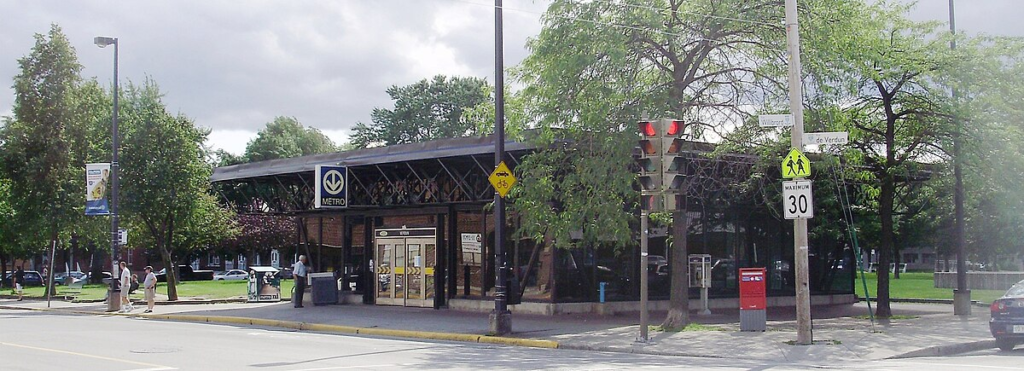
Verdun connects to downtown via Wellington Street, Verdun Avenue, and three metro stations (Verdun, De l’Église, LaSalle). No matter where you are in Verdun, you are never more than a 10–15-minute drive or metro ride from downtown Montréal.
What is it like to live in Verdun?
Verdun is a riverside community that attracts people looking for a high quality of life close to downtown Montréal.
The area offers a mix of urban convenience and riverside calm. From the historic triplexes and lively cafés of mainland Verdun, to the modern condos and green spaces of Île-des-Sœurs. The borough appeals to those who want walkability, community, and access to nature without leaving the city.
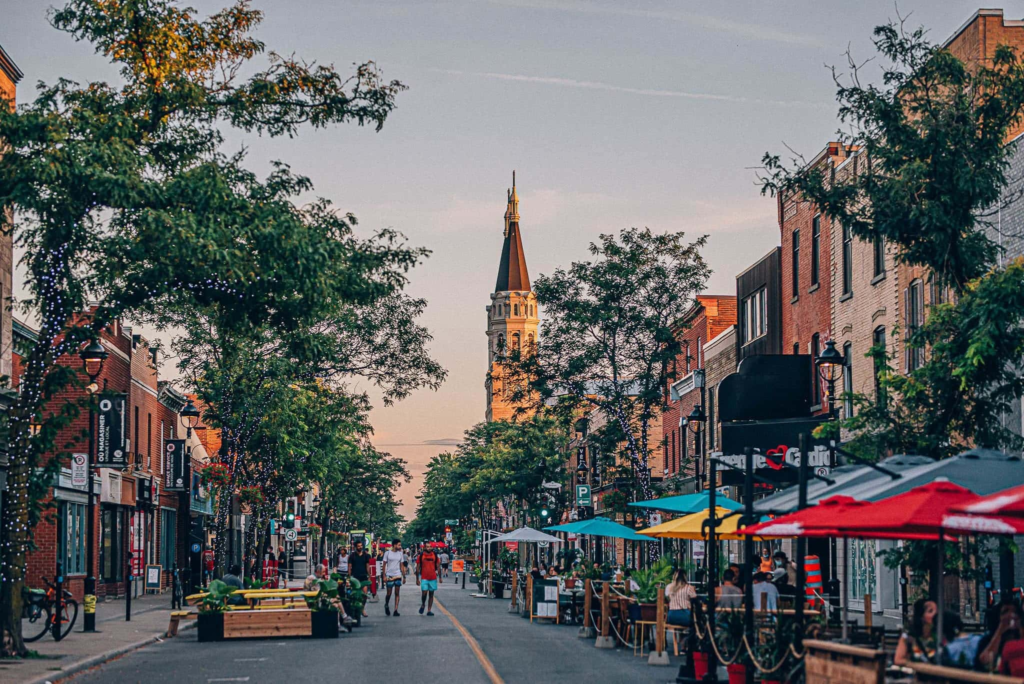
What is the best neighbourhood in Verdun, Montreal?
Verdun divides into 3 official districts:
- Wellington – De-l’Église District (central Verdun)
- Desmarchais – Crawford District (West End of Verdun)
- Île-des-Sœurs (Nun’s Island) District
Each district attracts its own type of resident. From young professionals and renters in Wellington–De-l’Église, to families in Desmarchais–Crawford and high income earners on Île-des-Sœurs.
Wellington–De-l’Église
Wellington–De-l’Église is the central district of Verdun. It stretches roughly between the Verdun metro station and De l’Église metro station, following Rue Wellington, Verdun’s main commercial street.
Home to roughly 35,000 residents, Wellington–De-l’Église is the largest of the three districts in terms of population. This is about half of Verdun’s total population. The majority of residents here are renters (around 70%). They live mainly in century-old brick triplexes, duplexes, and low-rise apartment buildings that give Verdun its classic Montreal look.
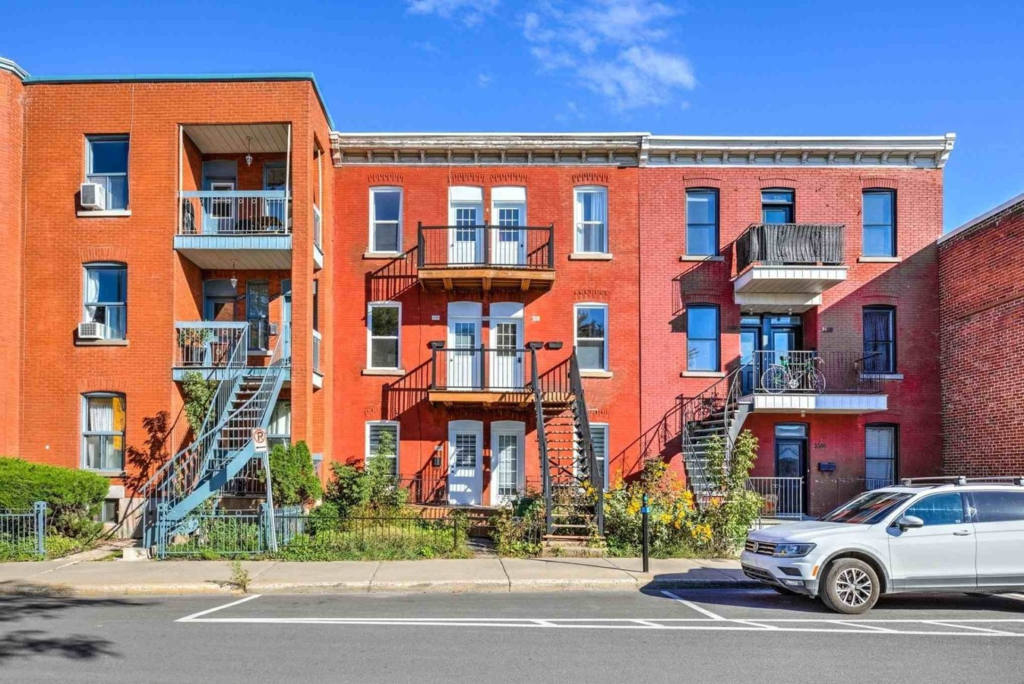
In Wellington–De-l’Église, the median household income is approximately $63,000, which is below the city-wide average. This reflects the area’s mix of working-class roots and younger working professionals.
In recent years, Wellington–De-l’Église has undergone rapid gentrification. This has been driven by an influx of young professionals and young families attracted by the neighbourhood’s riverfront parks, proximity to downtown, and revitalized main street (Rue Wellington).
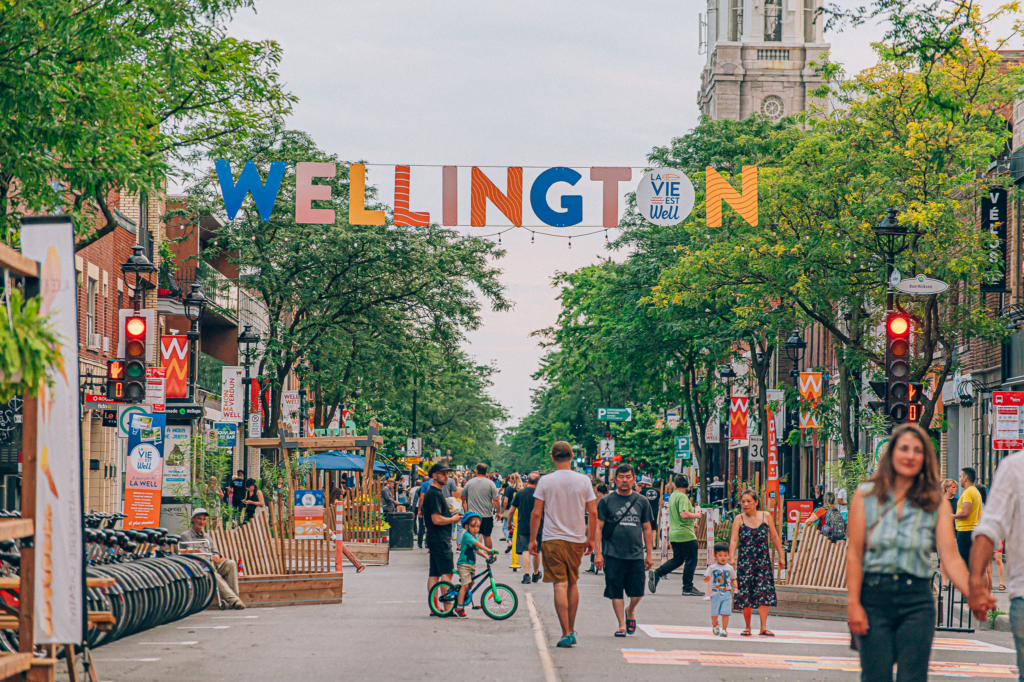
Rue Wellington, which runs through the heart of the Wellington–De-l’Église sector, is what most people now picture when they think of Verdun. It is the neighbourhood’s main commercial artery and a lively pedestrian hub lined with cafés, restaurants, and local boutiques. This area becomes a pedestrian-only street during the summer months (June to September).
As you move away from Wellington Street, the cafés and shops give way to quieter, tree-lined residential streets. These streets evenutally merge into Desmarchais–Crawford.
Desmarchais–Crawford
Desmarchais–Crawford sits at the western edge of Verdun, bordered by LaSalle and the St. Lawrence River. It is quieter and more residential than the centre of Wellington–De-l’Église. The district offers a family-oriented and suburban feel while still being minutes from downtown Montreal.
It’s home to roughly 20,000 residents, many of whom are anglo-phones and have lived in the area for generations. The housing stock here is a mix of post-war single-family homes, duplexes, and modest triplexes. Most of the properties here were built between 1945 and 1975.
Compared to central Verdun, buildings in Desmarchais–Crawford tend to have larger lots. They also have basements, and driveways, reflecting the shift in Montreal’s postwar urban planning toward car-friendly living.
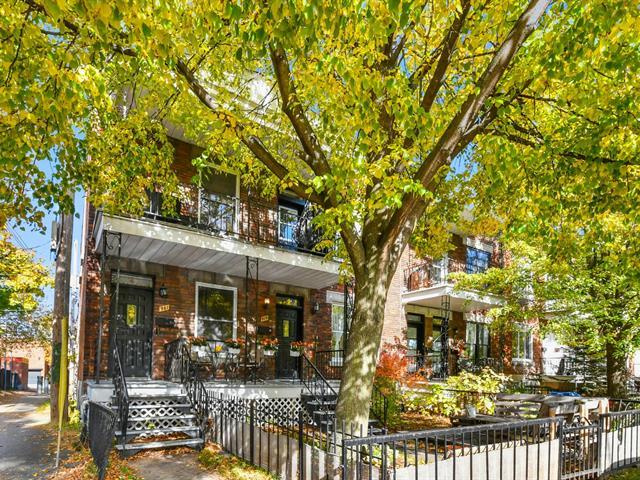
The median household income in Desmarchais–Crawford is slightly higher than in Wellington–De-l’Église, at around $68,000. Furthermore, homeownership is more common. About 55% of residents are homeowners, making it one of Verdun’s more stable, long-term communities. The area attracts young families and middle-income professionals looking for affordability, green spaces and access to good schools.
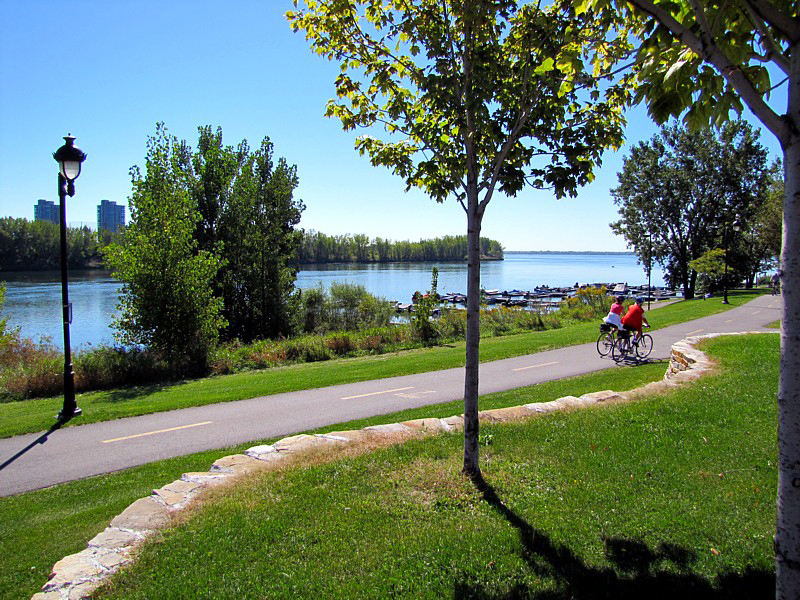
A defining feature of this district is Crawford Park. This is a green, riverside park with bike paths, playgrounds, an outdoor swimming pool, tennis courts and open views of the St. Lawrence.
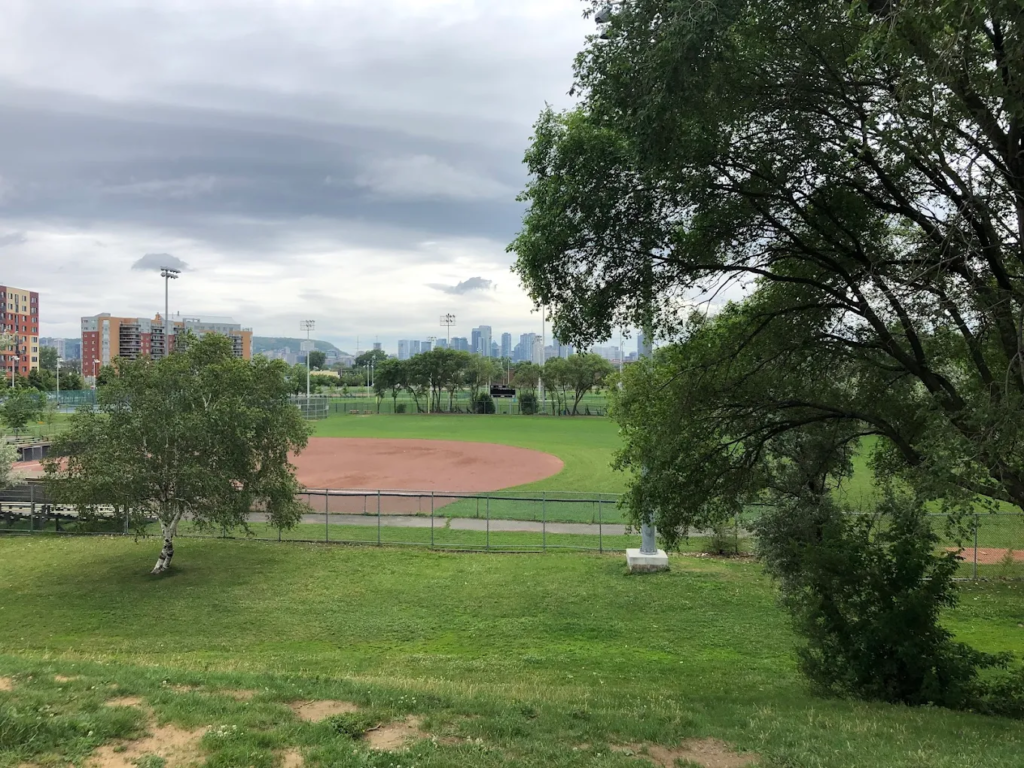
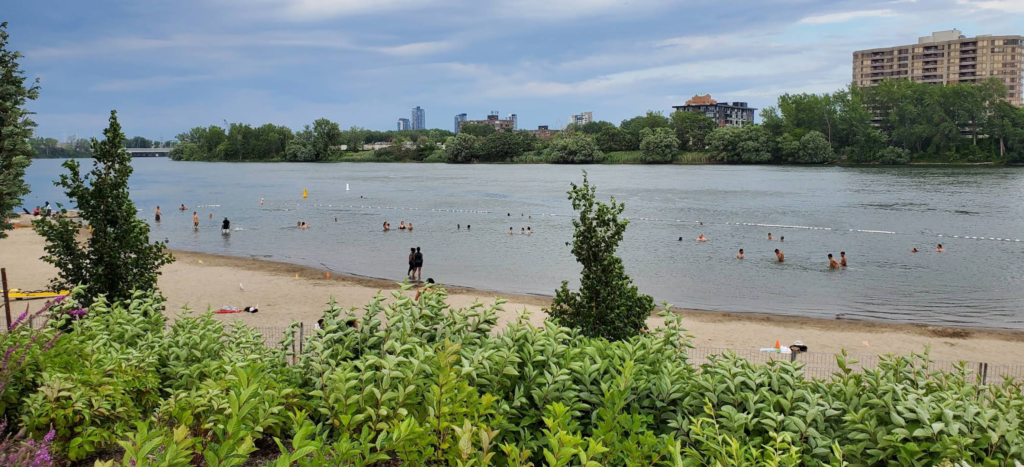
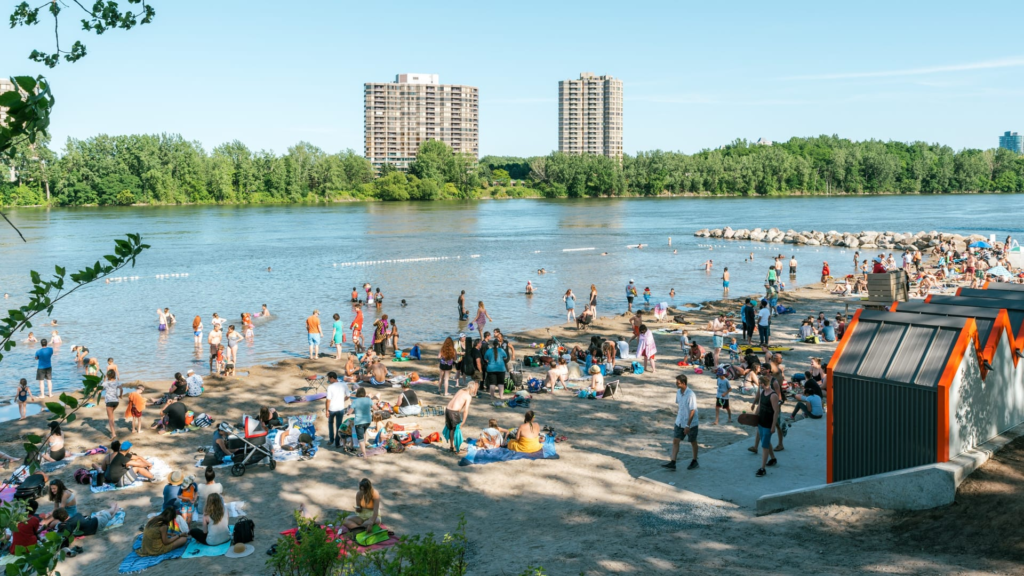
In the summer months, many locals head to the Park to sunbathe, picnic, and enjoy the waterfront views. Swimming in the St. Lawrence is best done at designated spots like Verdun Beach, where lifeguards are on duty during the season. However many locals will also swim, paddle board or jet ski next to the Verdun pier.
Lastly, the park’s riverfront bike path leads all the way west toward the Lachine Rapids in La Salle. Here you can sometimes spot surfers carving the standing waves that form in the fast-moving current.

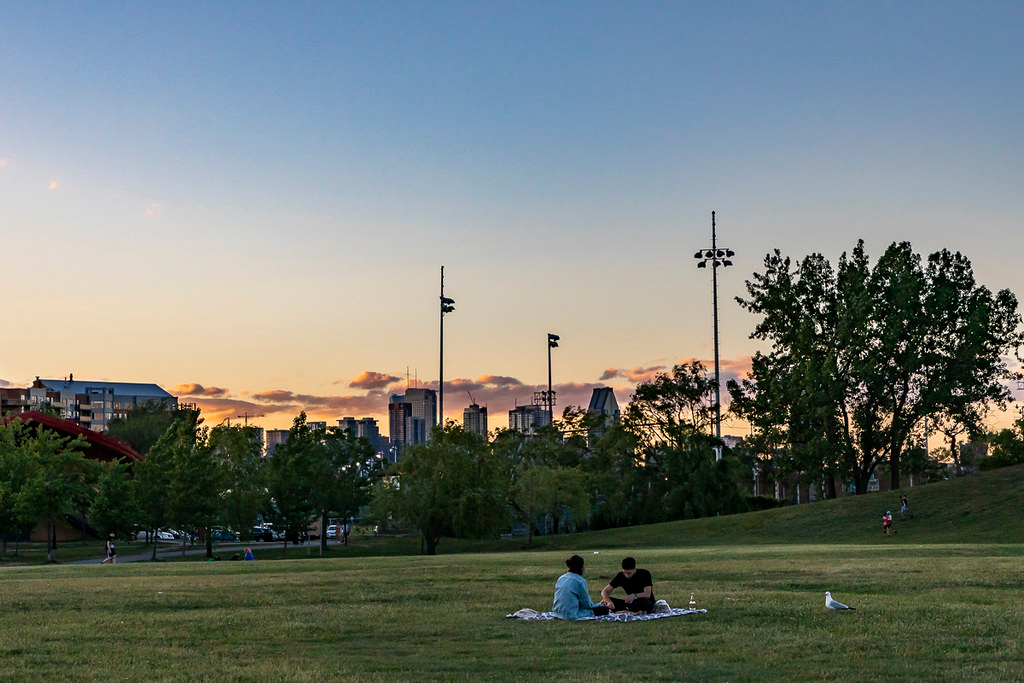
On summer evenings, you will see lots of locals walking their dogs, jogging, or watching the sunset in Crawford Park. It is certainly one of Verdun’s best areas, a peaceful corner that balances urban access with the calm of a traditional Montreal neighbourhood.
Île-des-Sœurs (Nun’s Island)
Île-des-Sœurs, also known as Nun’s Island, forms the Eastern most district of Verdun. It is a self-contained island community connected to the rest of Montreal by the Champlain Bridge.
Île-des-Sœurs is a world apart from the historic streets of central Verdun. It is a modern, master-planned neighbourhood known for its waterfront luxury condos, green spaces, and upscale urban living.
Nun’s Island is home to roughly 15,000 residents (less than one third of Verdun’s population). It is one of Montreal’s most affluent areas. The median household income exceeds $100,000, well above the city average. Most residents in the area are professionals, executives, or retirees, and over 70% are homeowners living in high-rise condominiums. The Island also features a small number of luxury townhouses, or newer mid-rise developments.
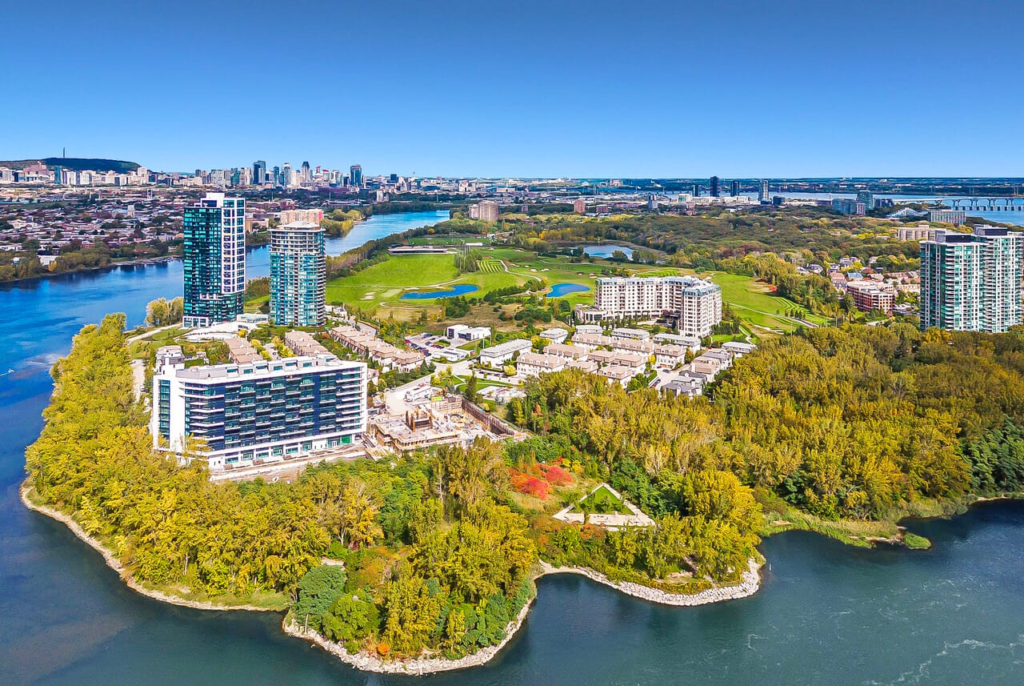
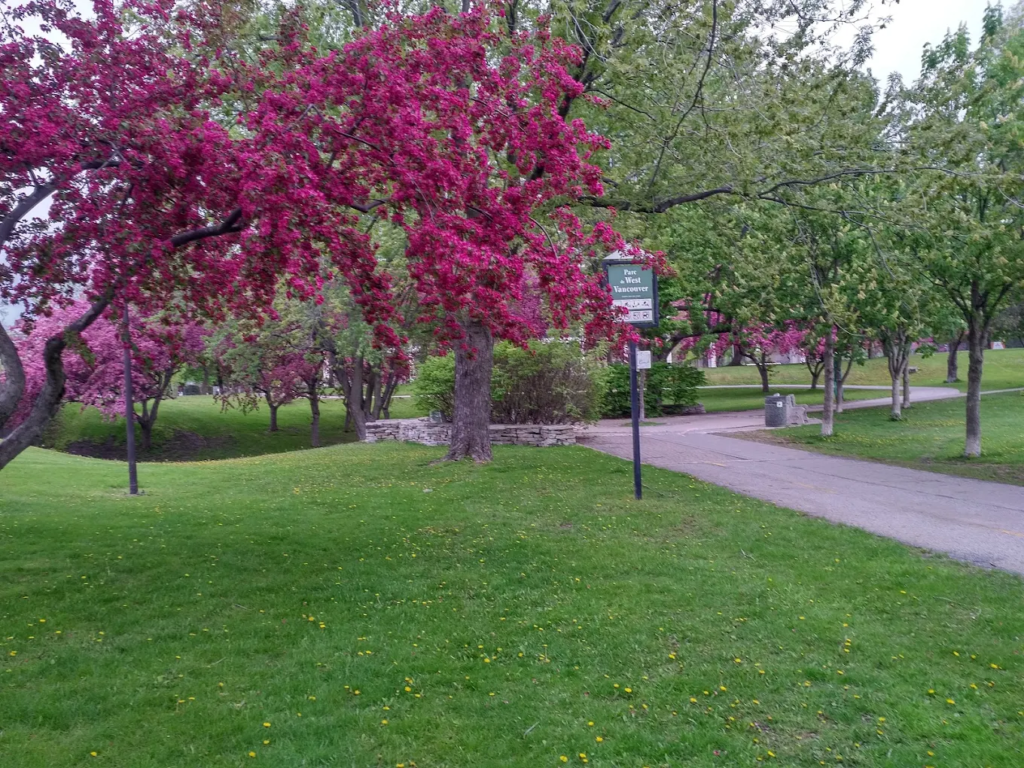
The Island’s layout is designed around parks, walking paths, and water views. Landmarks like Parc West Vancouver, Lac des Battures, and Parc de la Fontaine offer access to the outdoors. In addition, the Island provides shops, restaurants, and cafés in Place du Commerce that cater to daily needs.
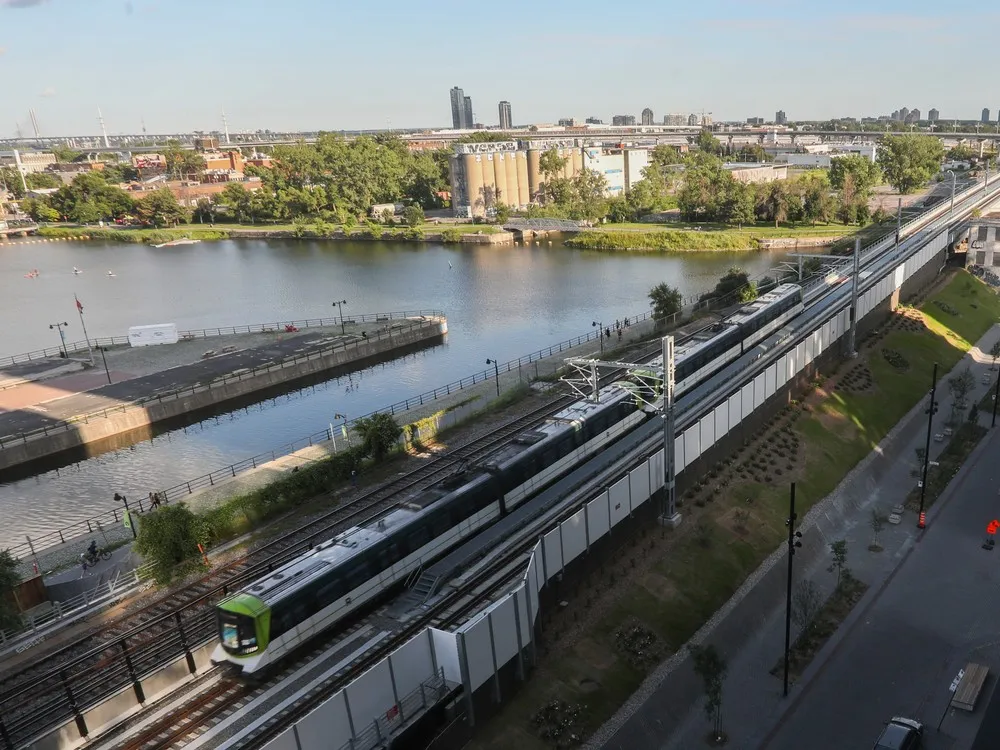
In recent years, the Pointe-Nord sector has become a hotspot for new luxury developments and eco-conscious architecture. The arrival of the REM light-rail station in 2023 has transformed the commute. Residents of Nun’s Island can now get to downtown Montreal (Gare Central) in just six minutes.
Île-des-Sœurs is often described as “suburban living with a downtown view.” It combines tranquility and privacy with unmatched access.
What are the best schools in Verdun?
In Quebec, there are two school systems: the French language system and the English language system. There are also public and private French and English language schools.
For a complete list of the public French schools in Verdun, visit Centre de Services Scolaire Marguerite-Bourgeoys, and filter for Verdun. Meanwhile, for a complete list of the English schools in Verdun, visit the The Lester B. Pearson School Board.
The quality of each school is usually assessed based on provincial exam results, officially called “épreuves ministérielles” (Ministry exams). These standardized exams are administered by the Ministère de l’Éducation du Québec (MEQ), and the results are published through the MEQ’s public data dashboards. The Fraser Institute also provides a ranking for secondary schools / high schools in Verdun.
There are ten French speaking primary schools and two English speaking primary schools in Verdun. Meanwhile, there is one French speaking secondary school, Monsignor Richard and one English speaking secondary school, the Beurling Academy High School. Monsignor Richard is ranked above average by the Fraser Instiute whereas Beurling Academy is ranked slightly below average.
What is the daycare waitlist like in Verdun?
In Verdun many local child-care centres (CPEs) are relatively small and have limited slots. For this reason, the daycare waitlist is relatively long. This is especially the case for full time, subsidized slots.
In order to get a place, many parents register their children on the Childcare Services Registration Portal 12+ months before they anticipate needing the place. There is even the option to register your child before they are born.
As of November 2025, subsidized daycares cost $8.25 per day. Whereas private daycares charge their own rates, normally between $50 – $100 per day. It is worth noting however, that the Quebec government subsidize private daycares, paying between 65% – 70% of the daycare fees for the parent. For example, let’s say that you go to a private daycare that costs $50 per day. This means that in a month, the fee for the daycare will be roughly $1,050 (21 days at $50 per day). However, with the money back from the government, this price can be reduced to $315 or $15 per day.
Final Thoughts: A good time to move to Verdun
Verdun property prices have surged over the past 5 years.
This has been driven by a new wave of gentrification and strong public and private investment into the area. The area that has seen the fastest growth in property prices is Wellington–De-l’Église. Desmarchais–Crawford and Île-des-Sœurs have seen more steady growth.
Whilst the median price of homes in Verdun–Île-des-Sœurs is around $557,000, roughly 30% higher than the island-wide median, this figure is skewed upward by the luxury condos on Île-des-Sœurs. In reality, mainland Verdun remains far more affordable than nearby districts such as Saint-Henri, Griffintown, or the Plateau. It’s also significantly easier to access than areas like the West Island, thanks to its metro stations and proximity to downtown.
Verdun also offers a good selection of primary and secondary schools, including bilingual and French immersion options within walking distance.
As such, if you’re looking for a neighbourhood that’s both family-friendly and minutes from downtown, we recommend mainland Verdun. It is a vibrant, riverside community that combines value, lifestyle, and accessibility better than almost anywhere else in Montréal. Most importantly, right now it is still affordable!
Need an expert local realtor?
ImmoVision connects you with verified realtors who deeply understand the Verdun–Île-des-Sœurs market. From the pitfalls of older buildings to the best school zones. Our experts help you navigate Montréal’s property market confidently, so that you can find the best deal for you.