Quebec has 7 different types of houses each that contain many different sub-types. The diagram below provides an overview of the different types of house in Canada.
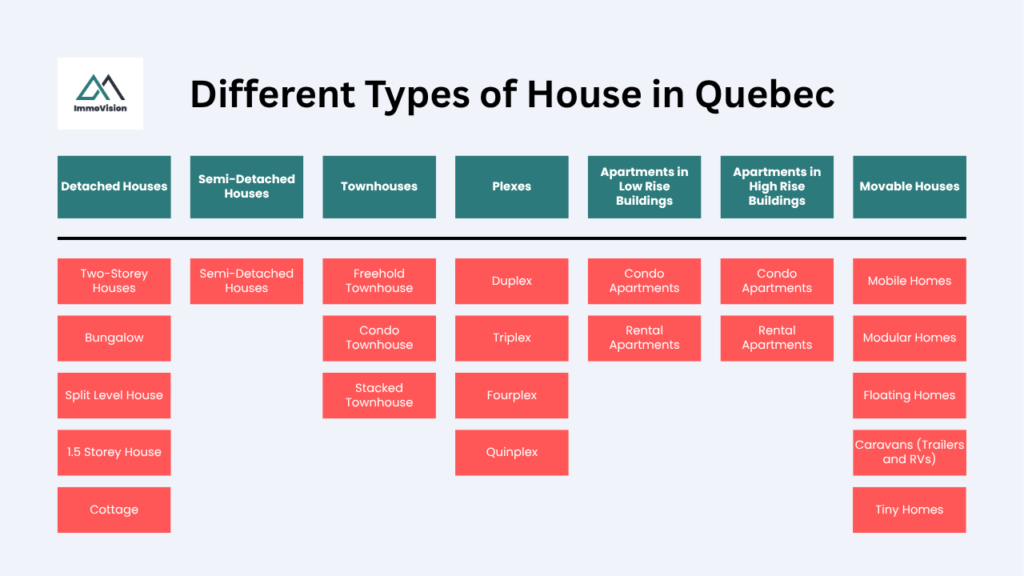
In this article, we break down how each type fits different lifestyles, budgets and locations. We also give expert advice on choosing the right one for you.
Key things to know about the different types of houses in Quebec
– The total housing supply, along with projected future demand for each type of house in Quebec, directly affects prices. For example, limited land and rising construction costs have pushed up prices for detached homes, while increased condo and rental development has helped stabilize prices in denser urban areas.
– Each housing type has its own pros and cons, depending on lifestyle and budget. A downtown high-rise condo might be perfect for young professionals seeking convenience and low maintenance, while stacked townhouses or plexes appeal more to families looking for extra space at a lower cost.
– According to the 2021 Census, most Québec dwellings were single-detached homes (around 45%), followed by apartments in buildings with fewer than five storeys (about 37%), and smaller shares of duplexes, triplexes and condos in taller buildings.
– Since then, new condo construction has slowed while purpose-built rental and mid-density projects have increased. This is particularly the case in Montréal, Laval, and Québec City. (Housing Supply Report Fall 2025)
– If these trends continue, the next five years will likely bring denser housing, more rentals, and creative “missing middle” developments (like stacked townhouses and small plexes) as cities push to balance affordability, sustainability, and limited land.
1. Detached Houses
A detached house (sometimes called a single-family home) is a stand-alone residential building that does not share any walls with another property.
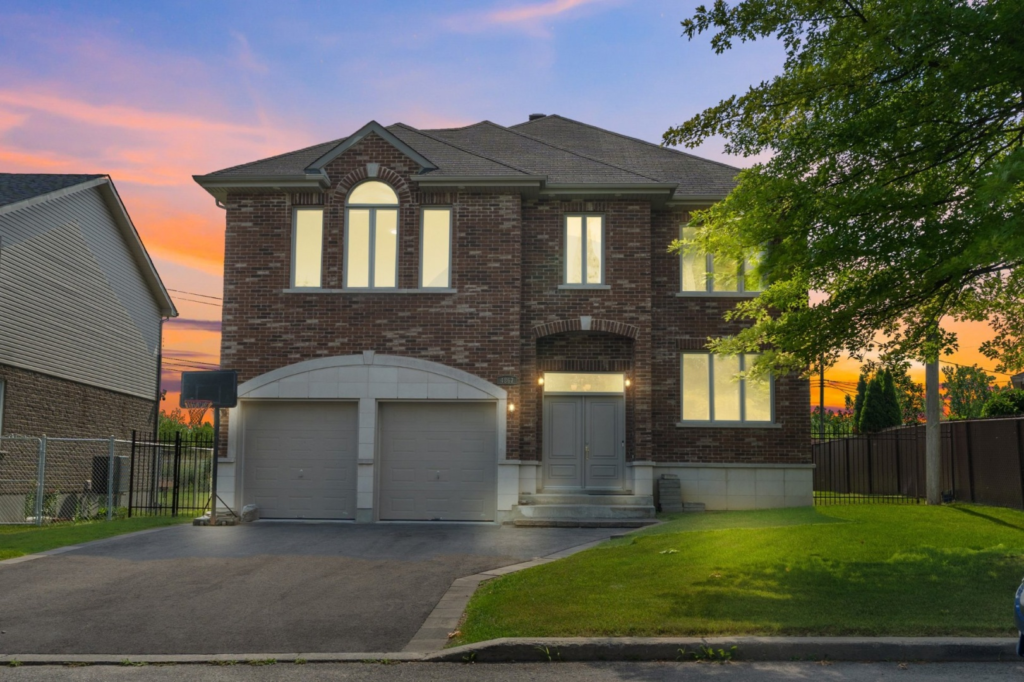
The owners of a detached house in Quebec own both the home and the land it sits on. This means they’re free to develop or modify the property as long as any construction complies with local zoning and neighbourhood regulations.
Detached homeowners are also entirely responsible for the maintenance of their property. There are no shared walls and no shared fees. If something breaks, the owner must cover the repair costs, or risk the home falling into disrepair. Furthermore, because detached houses sit on privately owned land, they also tend to carry higher property taxes, reflecting both the land value and the independence of the lot.
That being said, if properly maintained, detached homes typically appreciate faster than other property types. Land is finite and in cities where space is scarce, detached homes become increasingly valuable over time.
Still, owning a detached house is as much a lifestyle choice as it is a financial one. Homeowners trade convenience for autonomy, taking on the ongoing responsibility of managing and maintaining their property, from the roof to the foundation, and everything in between.
There are 5 types of detached houses in Quebec. These are:
Let’s take a look at the key features of each now.
Two-Story Houses
Two-storey houses are the most common type of detached home in Quebec. As the name suggests, the living spaces are divided between two full levels. Typically two-storey houses have shared areas like the kitchen, dining room, and living room on the main floor and bedrooms upstairs.
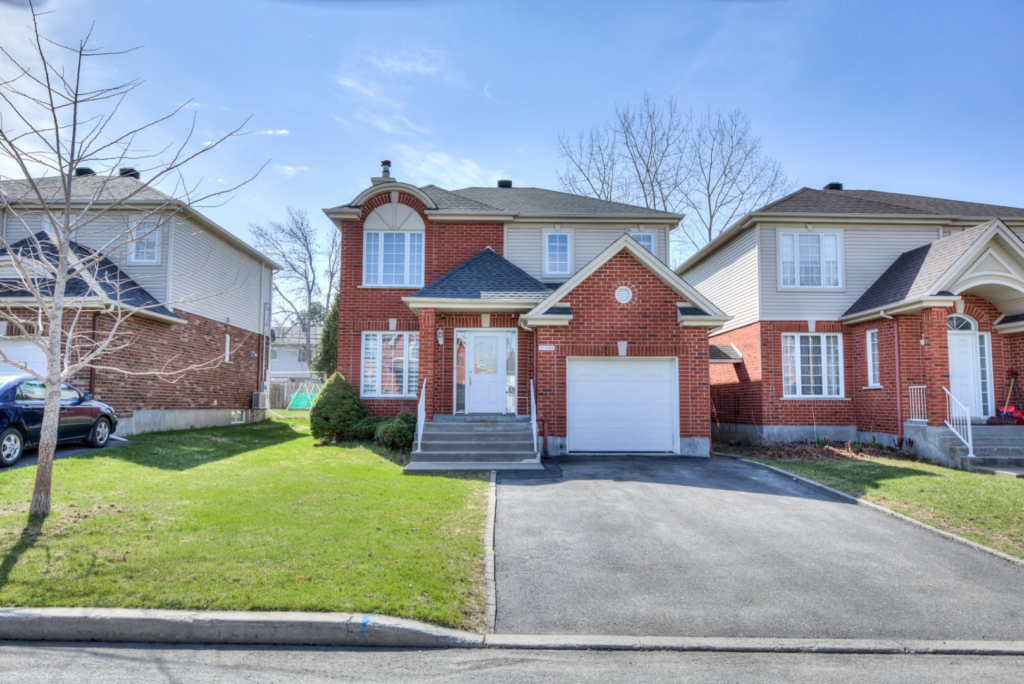
What many people don’t realize is that the popularity of two-storey homes isn’t just aesthetic, it’s economic.
Building upward instead of outward makes more efficient use of land, which is one of the most expensive parts of homeownership in urban Quebec. This design allows families to gain more interior space on smaller lots, while keeping heating costs lower than in sprawling single-level homes.
Many also include a basement, which in cities like Montreal can legally be converted into a rental suite or multigenerational living area. However, to do this legally, the basement must meet local building code requirements, including proper egress windows (large enough to climb through in an emergency), sufficient ceiling height and safe ventilation.
Bugalow
A bungalow is a detached house with all main rooms on a single level, offering easy accessibility and an efficient layout. This is especially for people who prefer to avoid stairs. Some bungalows also include a finished attic or loft space under the sloped roof, often used as a guest room, office, or extra storage.
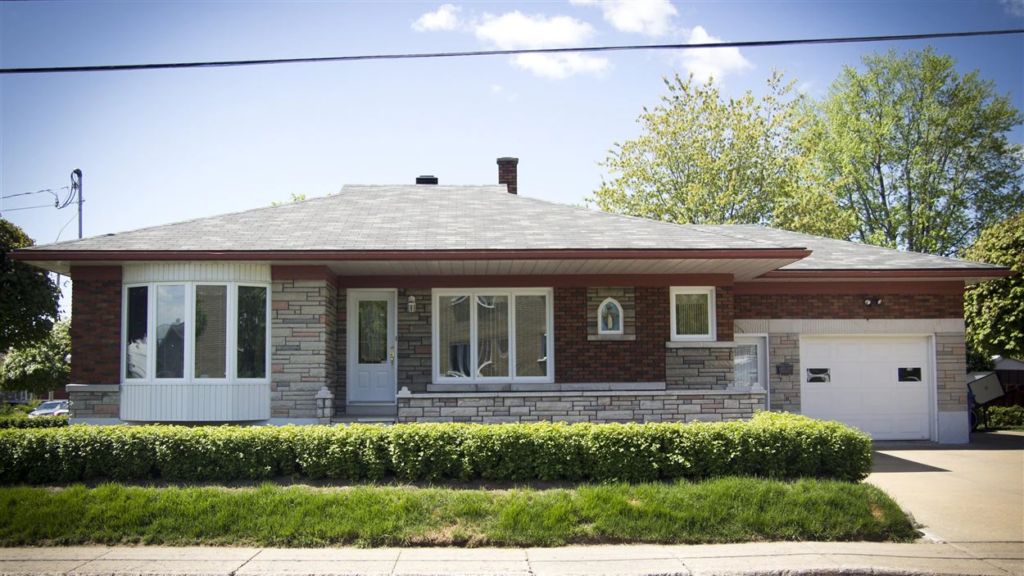
While bungalows are an older architectural style and less common in dense urban areas, they remain highly sought after for their aging-in-place potential. This means they can easily be adapted for seniors or people with mobility challenges.
Most bungalows in Quebec also have basements, though their condition varies. This is because the main living area sits close to ground level and so older bungalows are sometimes prone to moisture or drainage issues, making a proper foundation inspection and waterproofing check especially important when buying.
Interestingly, many places in Quebec are now revitalizing bungalows through “bungalow flips” or vertical additions”, where owners add a second storey to increase square footage without needing a new lot, turning classic single-storey homes into modern two-storey builds.
Split level house
A split-level house has floors set at multiple staggered heights, connected by short flights of stairs instead of one long staircase. The main level typically contains the living, dining and kitchen areas, with a half-flight of steps leading up to the bedrooms and another down to a family room or basement.
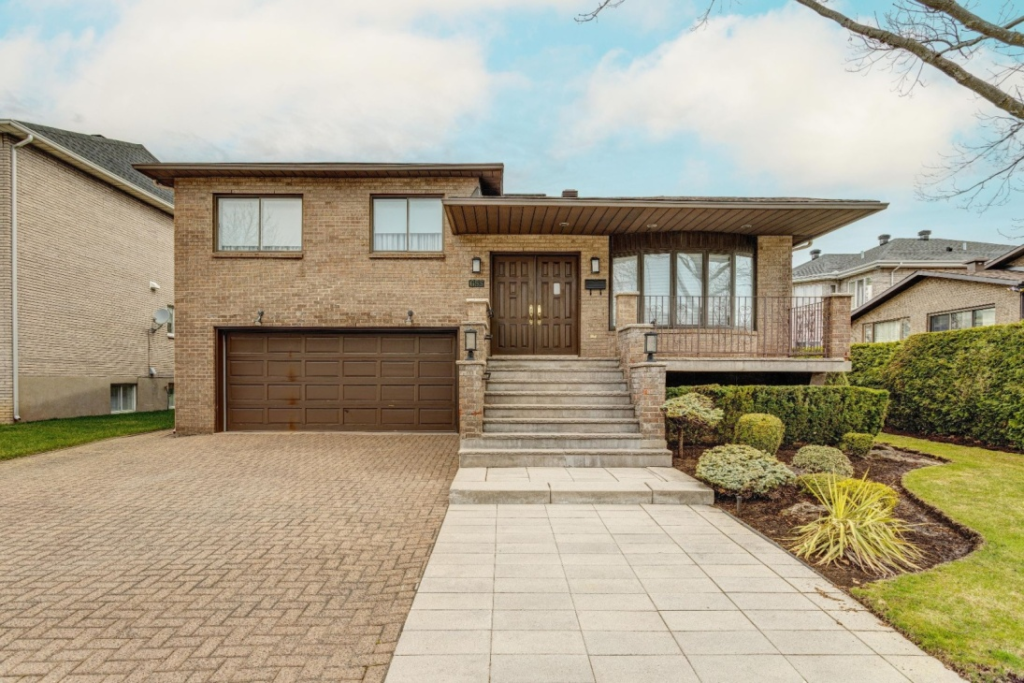
This design became popular in Quebec during the 1950s –1970s suburban boom because the house design offered more space and separation of rooms on smaller, sloped lots. This made it an early form of efficient land use before two-storey homes became standard.
Split-levels often feature integrated garages, low-pitched roofs and multiple attics. This gives them a distinctive mid-century look. While rarely built today, they’re still valued for their unique layouts and strong sound separation between floors, an overlooked perk for families with teenagers or home offices.
The two most common types of split-level house in Quebec are side splits and back splits.
| Side Split | Back Split |
| One side of the house is divided into two levels, usually with the garage or family room on the lower level and bedrooms above. Entry is typically at the central main level housing the living and dining spaces. | The rear portion of the house is split into two levels, often suited to sloping lots. From the front, it may appear as a single- or two-storey home, but the back reveals a lower basement and upper bedroom level. |
1.5 Storey House
A 1.5-storey house has two levels, but the upper floor covers only part of the main level’s footprint. The rest of the space beneath the roof is left open or used for storage. The upper level typically includes one or two bedrooms tucked under the sloped roof, often with dormer windows that add light and character.
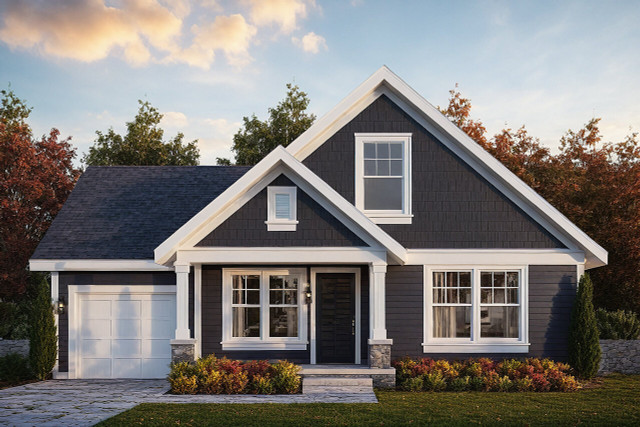
This design became popular because it offers the extra space of a second floor without the full cost of building one. The smaller upper level keeps construction and heating costs lower than a true two-storey home, while still giving more living area than a bungalow.
However, there are trade-offs. The sloped ceilings can limit usable floor space and make furniture placement tricky. In addition, older 1.5-storey homes sometimes lack modern insulation in the roof cavity, something to check during inspection.
Still, these homes remain beloved for their cozy proportions and storybook charm, especially in older neighbourhoods where character architecture is prized.
Cottage
A cottage in Quebec traditionally refers to a seasonal or recreational home located close to nature by a lake, river, or in the countryside. These homes are typically smaller and simpler than primary residences, designed for short stays and relaxation rather than year-round living.
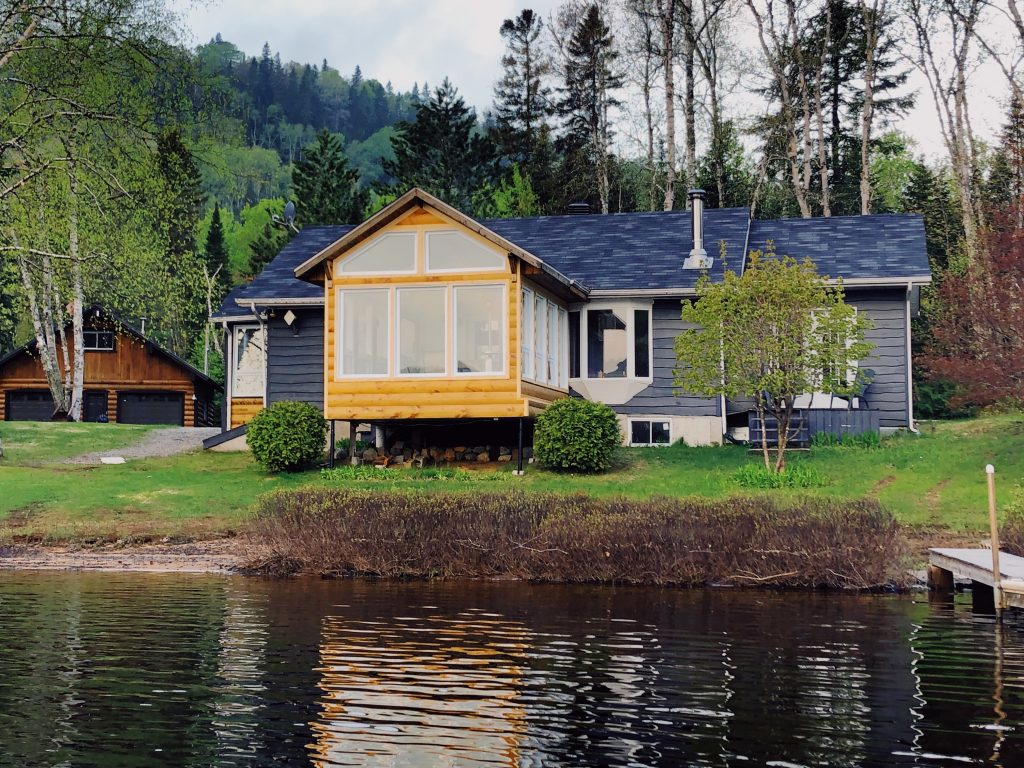
Historically, cottages were rustic family retreats, often passed down through generations and built with minimal amenities. Think wood stoves, outdoor plumbing and screened porches. But today, the term “cottage” has broadened. Many new cottages are large, modern and fully winterized. They are designed to blend comfort and luxury while still offering a connection to the outdoors.
Cottages are now an increasingly popular investment and lifestyle choice. Some owners use them seasonally, while others rent them out on platforms like Airbnb to offset costs. However, buyers should keep in mind that seasonal access roads, septic systems and local zoning restrictions can affect both usability and financing.
2. Semi-Detached Houses
A semi-detached house is one where two homes share a single common wall, but each has its own separate entrance, yard and utilities. This type of house is common in older suburbs and inner city neighbourhoods in Quebec (Montreal’s Plateau or Notre-Dame-de-Grâce, “NDG”).
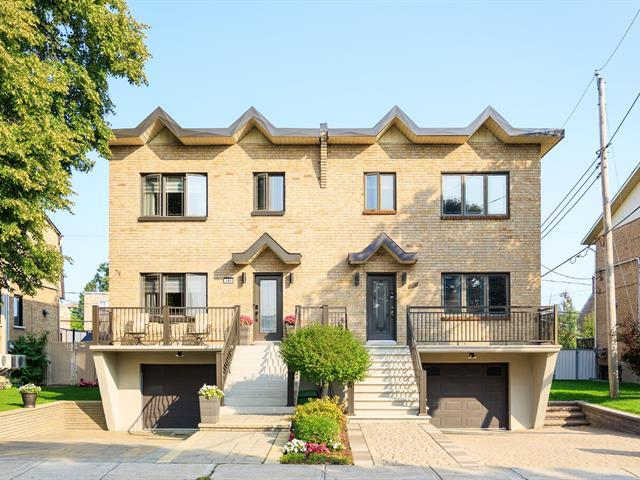
In Quebec, semi-detached houses sit on their own lot, with a shared dividing wall in the middle. Owners are responsible for their own side of the property (roof, foundation and exterior maintenance). As with detached houses, owners of these dwellings own the land on which the building sits. This type of house tends to be more affordable than a detached house however, the shared wall means that it is also slightly less private.
3. Townhouses
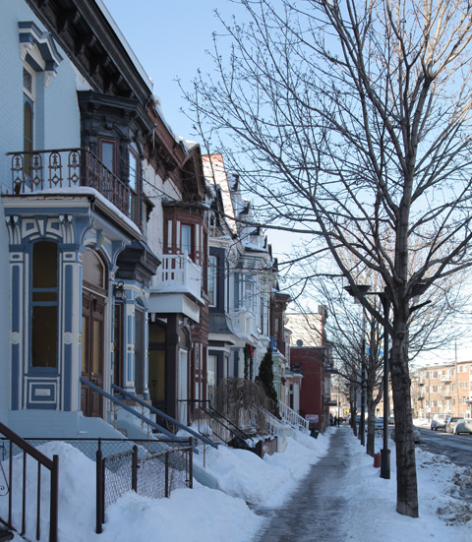
A townhouse (or rowhouse) is a two or three storey dwelling attached to other units on either side with a shared wall called a party wall.
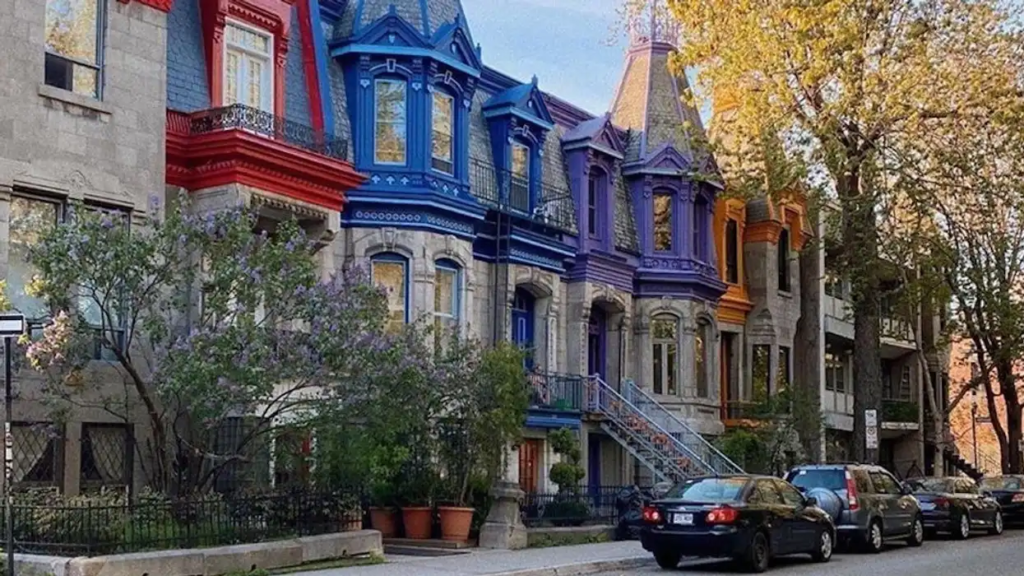
In Quebec real-estate, the term townhouse is commonly used interchangeably with row house to describe all attached dwellings that share side by side walls. This is because the only difference between a row house and a townhouse is the design. Row houses are older and have a more uniform style whereas townhouses are a more modern evolution of the same term.
In Quebec, modern townhouses are often developed in clusters or planned communities, sometimes called Planned Unit Developments (PUDs). These communities typically include shared amenities such as playgrounds, green spaces, or pools, managed by a Homeowners’ Association (HOA) that charges monthly or annual fees for upkeep and sets community rules.
Townhouses offer a middle ground between condo living and detached homes in that they are more affordable than detached or semi-detached houses but still provide private ownership, multiple floors, and often small front or back yards. While outdoor space is limited, many newer designs compensate with rooftop patios or balconies that add light and usable space.
In major Quebec cities like Montreal, luxury townhouses are becoming a popular alternative to detached homes. This is primarily because this type of house is already well integrated into downtown neighbourhoods where land is limited but demand for family-sized housing remains high.
Essential townhouses make it possible to own a home, with private space in walkable, transit-connected locations where detached homes would be unaffordable or physically impossible to build. Think Montréal’s Pointe-St-Charles, Verdun or Saint-Henri.
In Quebec, this type of house has three subtypes:
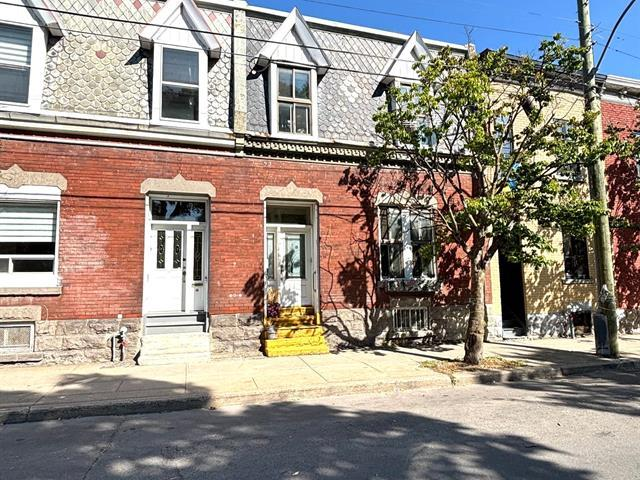
Freehold townhouses
Owners of a freehold townhouse own both the home and the land it sits on outright, just like with a detached or semi-detached house. There is no condo association or HOA and therefore, the owners of this type of house have full responsibility for maintenance and insurance. That being said, in practice because freehold townhouses have a shared “party” wall, many repairs must be coordinated between neighbours.
Condo townhouses
Condo townhouses are individually owned units within a shared property development.
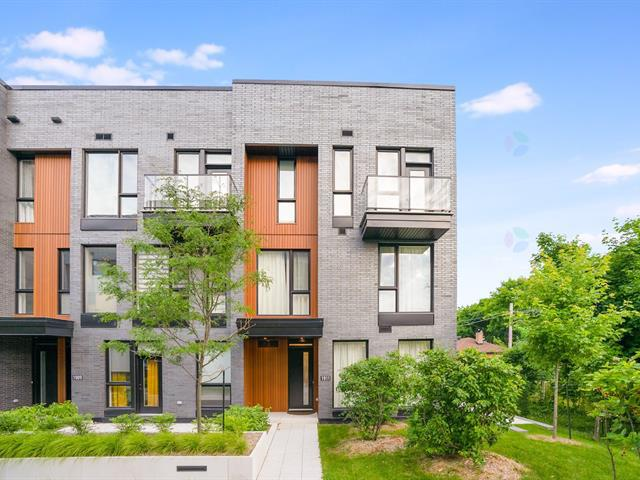
Unlike freehold townhouses, owners of condo townhouses do not own the land on which they are built. The land is owned by a condominium complex and the homeowners own a percentage of the land through a condo corporation.
In practical terms, this means that owners of this type of house pay a monthly maintenance fee that covers the upkeep of these spaces and common amenities. This kind of property is ideal for anyone who wants the benefits of a townhouse, but without having to pay to deal with general responsibilities like lawn mowing or snow removal.
Stacked townhouses
In Quebec, stacked townhouses are multi-storey condo units, quite literally townhouses built on top of each other. For example, you might have two two-storey homes stacked vertically in the same building, each with its own private entrance and balcony or terrace.
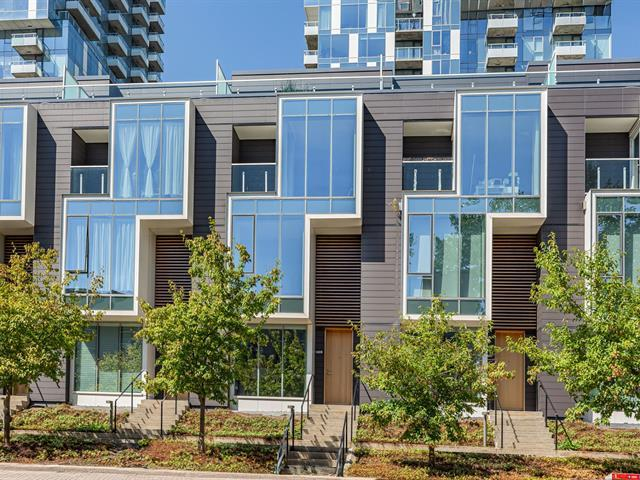
Each townhouse in the stack has its own front door and living space, giving it more of a “home” feel than a typical apartment. The difference between a condo and a stacked townhouse isn’t legal, it’s architectural and lifestyle-based.
As with other shared property types, owners of stacked townhouses jointly own the land through a condo corporation, which manages the shared spaces and exterior. Owners pay a monthly maintenance fee that covers things like snow removal, landscaping, roof and exterior repairs and building insurance. These costs are usually lower than maintaining a detached home and require far less effort in terms of personal upkeep.
Stacked townhouses offer the feeling of a two-storey home at a fraction of the cost and are growing in popularity across cities in Quebec. They’ve become a key part of the Canada’s “missing-middle” housing strategy. This is because they bridge the gap between high-rise condos and single-family homes, giving downsizers, young families and middle income earners an affordable place to live within existing neighbourhoods.
In short, stacked townhouses combine the independence of a small home with the affordability of a condo. Supported by new zoning reforms and housing policies, they’ve become one of the fastest-growing housing types in urban Quebec.
4. Plexes (duplex, triplex, fourplex, quinplex)
Plexes are multi-family residential buildings that contain two (duplex), three (triplex), four (fourplex) or five (quinplex) separate dwelling units under one roof. Each unit typically has its own entrance, kitchen, and utility meter, allowing for independent living within the same structure.
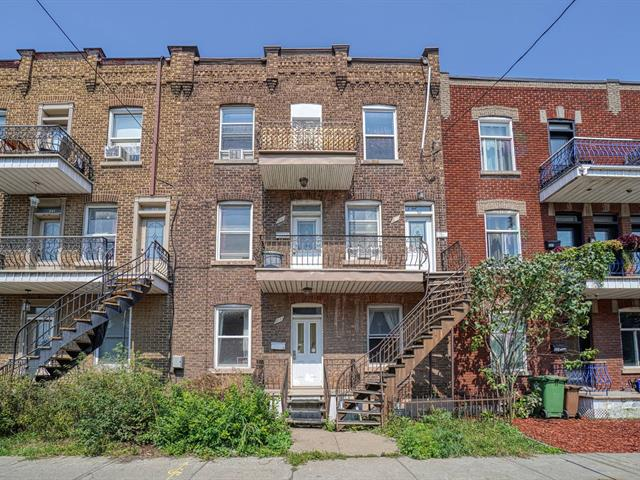
As with stacked townhouses, each unit normally has its own front door with higher up floors being accessed via a staircase on the outside of the building. However, unlike the stacked townhouses or low rise / high rise condos, plexes are normally registered as one immovable. Legally, this means that the entire structure, including the land beneath it, is treated as a single property, even if it contains multiple apartments.
Because of their consolidated nature, plexes are especially popular among real estate investors. Managing one property title instead of several keeps maintenance, insurance and tax costs more consolidated, while offering the flexibility to live in one unit and rent out the others for steady income.
Even though plexes are treated as a single immovable, they can be divided and sold as separate units but only after completing a legal conversion process. However, this process involves professional fees, municipal approvals and notarial work. Furthermore, it is not always permitted in every zoning area. For this reason, most plex owners keep the property as a single investment and generate income by renting out the units rather than selling them individually.
5. Apartment in low-rise building (fewer than 5 storeys)
Low-rise apartment buildings are multi-unit residential structures with one to four floors, often found in quieter residential areas or along mixed-use city streets. These buildings usually don’t have elevators and offer fewer shared amenities than mid- or high-rise towers but they make up for it with smaller communities, lower costs, and easier access.
Units in low-rise buildings come in a wide range of layouts from studios and one-bedroom apartments to lofts, family-sized units and even penthouses. Most have a shared main entrance and individual interior doors leading to each apartment.
In Canada, low-rise apartments fall into two main ownership categories:
- Condo apartments, where each unit is individually owned, and
- Rental apartments, owned by a landlord or company.
Condo apartments (low rise buildings)
Condos (or condominiums) are individually owned housing units within a larger shared property or building. As with other shared housing types, condo owners don’t directly own the land or structure. Instead, each owner holds a percentage share of the overall property through a condo corporation, which manages and maintains common areas such as the roof, elevators, hallways and grounds.
At the same time, owners are fully responsible for maintaining their own units and for paying property taxes on them. This balance between private ownership and shared responsibility is what defines condominium living.
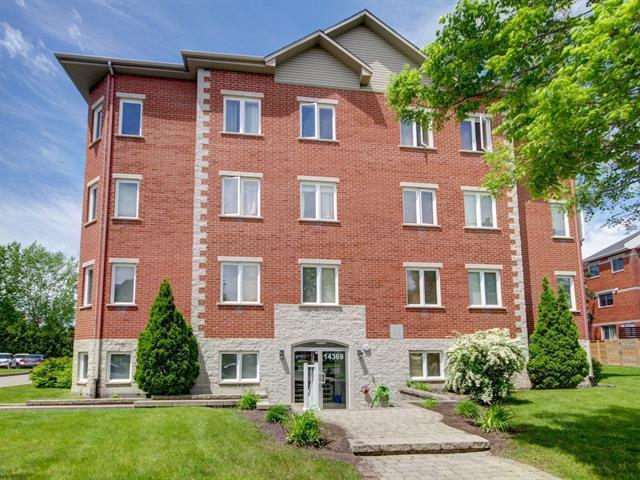
Over the past decade, cities like Montreal saw a condo boom fueled by cheap mortgages, investor demand and pro-density urban planning. More recently, however, government initiatives have shifted toward incentivizing the construction of rental housing in response to growing demand and a nationwide shortage of long-term rental units. As we’ll see next, these new purpose-built rentals differ from condos in one crucial way.
Rental apartments (low rise buildings)
From the outside, rental apartments in low rise buildings look identical to condos in low rise buildings. However, there is one crucial difference – who owns the building.
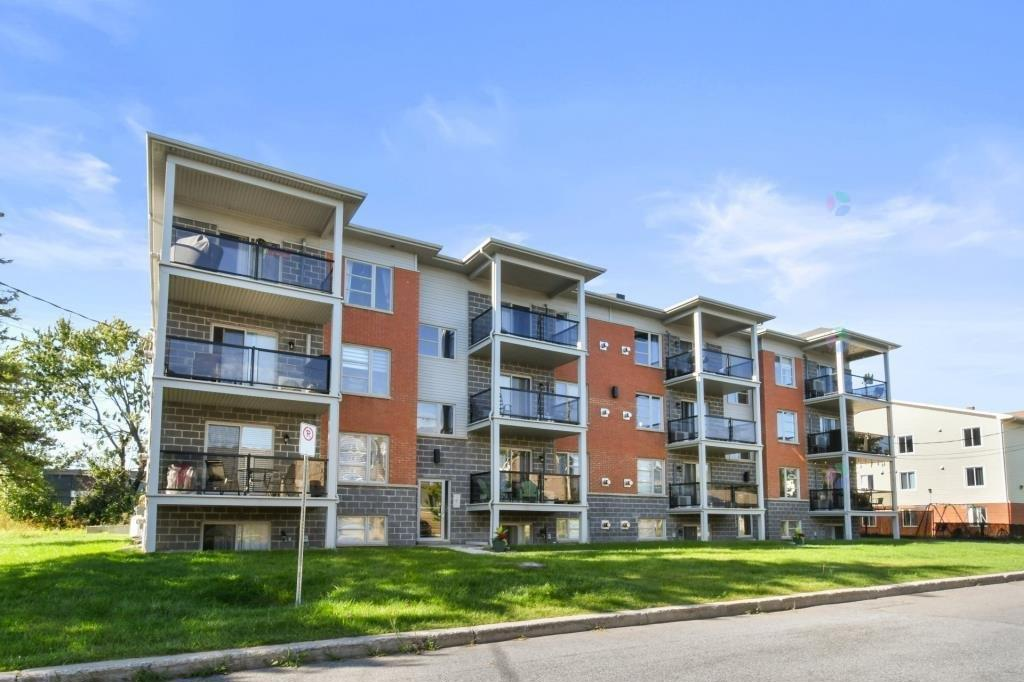
The primary difference between a condo and rental apartment is:
- In a condo, each unit is individually owned, sometimes by an investor who rents it out to earn side income.
- In a rental apartment, the entire building is owned by a single landlord or company that rents out all the units and manages the property as one investment. For example, large operators such as InterRent REIT or CAPREIT develop and manage purpose-built rental buildings across Quebec, designing them specifically for long-term rental use rather than resale.
This distinction matters because it affects how the property is managed and how stable it is for tenants. A rented condo can be sold at any time, potentially forcing the tenant to move, while a purpose-built rental remains part of the long-term rental market, offering greater security, consistent management and standardized maintenance.
In a purpose-built rental building, the owner or property management company handles all repairs, maintenance and building services, often with on-site staff. For tenants, this provides a low-maintenance and flexible living option, ideal for those who want to live in the city without the financial or upkeep responsibilities of homeownership.
Finally, low-rise rental buildings tend to have fewer amenities and lower maintenance costs compared to mid- and high-rise apartments, making them a more affordable option for urban renters seeking space, convenience and value.
6. Apartment in mid and high-rise building (more than 5 storeys)
Mid- and high-rise apartment buildings are large multi-unit residential structures with five or more storeys, commonly found in urban centres and near major transit hubs. Designed to house many residents efficiently, they often feature elevators, enhanced security systems, and shared amenities such as gyms, rooftop terraces or lounges. These shared amenities are all managed by on-site staff or a property management company.
Just like low-rise apartments, these buildings can be either condominiums or purpose-built rentals, depending on how they’re owned and managed. Condos are individually owned units within a shared building, while purpose-built rentals are owned by a single landlord or company that rents out every unit as part of one long-term investment.
Because of their density, amenities and downtown locations, mid- and high-rise buildings are now the dominant form of new housing construction in cities like Vancouver, Montreal and Toronto.
Mid and High Rise Condo Apartments
Like their low-rise counterparts, mid- and high-rise condos consist of individually owned units within a larger building, along with shared ownership of common areas such as hallways, elevators and amenities.
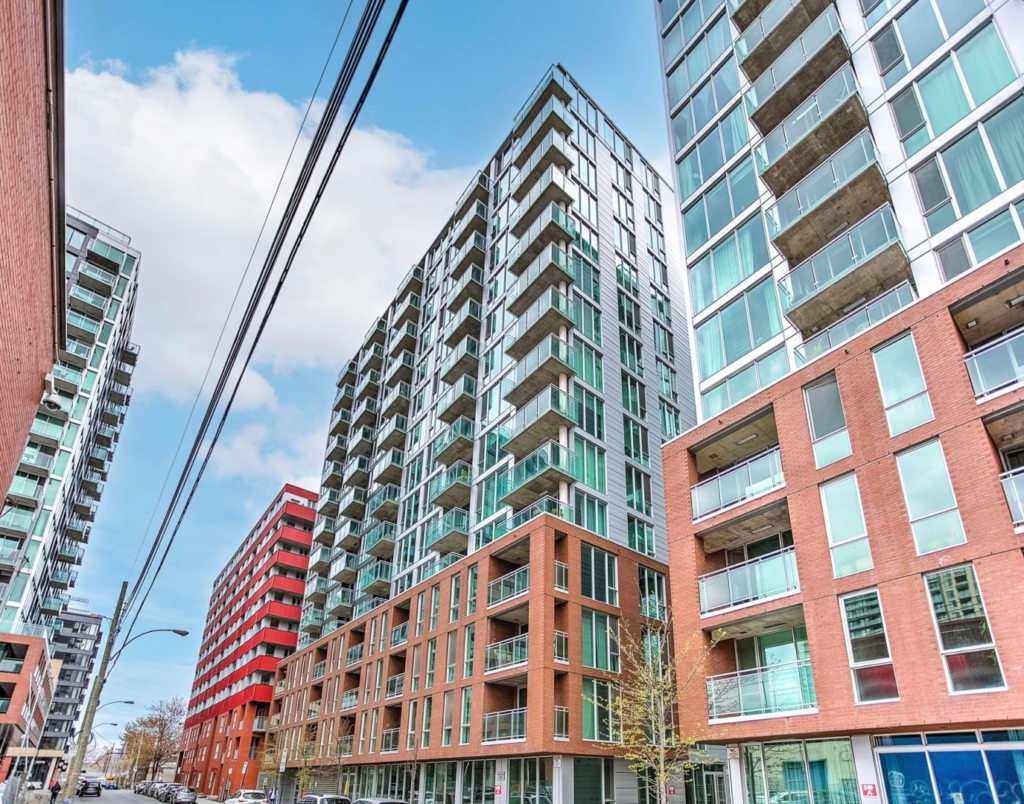
These taller complexes are usually built in central urban areas and often feature a full suite of conveniences from fitness centres, pools and underground parking to rooftop terraces, lounges, cafés and even retail shops on the lower floors.
Condo owners are responsible for maintaining their own units and paying property taxes individually. They also contribute to the condo corporation through monthly maintenance fees which cover building insurance, upkeep and shared services. In high-rise buildings, these fees tend to be higher than in low-rise developments due to the added amenities and staffing costs.
In recent years, high-rise condos have become the most common form of urban homeownership — especially in Greater Montréal, including cities like Montreal, Brossard and Longueuil, where land is limited and prices for detached homes have soared. For many buyers, they offer a balance between ownership and convenience. This is since they provide access to city living without the maintenance burden of a standalone house.
All that being said, since 2023, rising interest rates and slower investor demand have led to a noticeable cooling in new condo construction. As a result, developers are increasingly turning toward purpose-built rental projects, marking a shift in how urban housing supply is being added across Quebec.
Mid and High Rise Rental Apartments
Mid- and high-rise rental apartments are large residential buildings with five or more storeys, designed and operated specifically for long-term rental use.
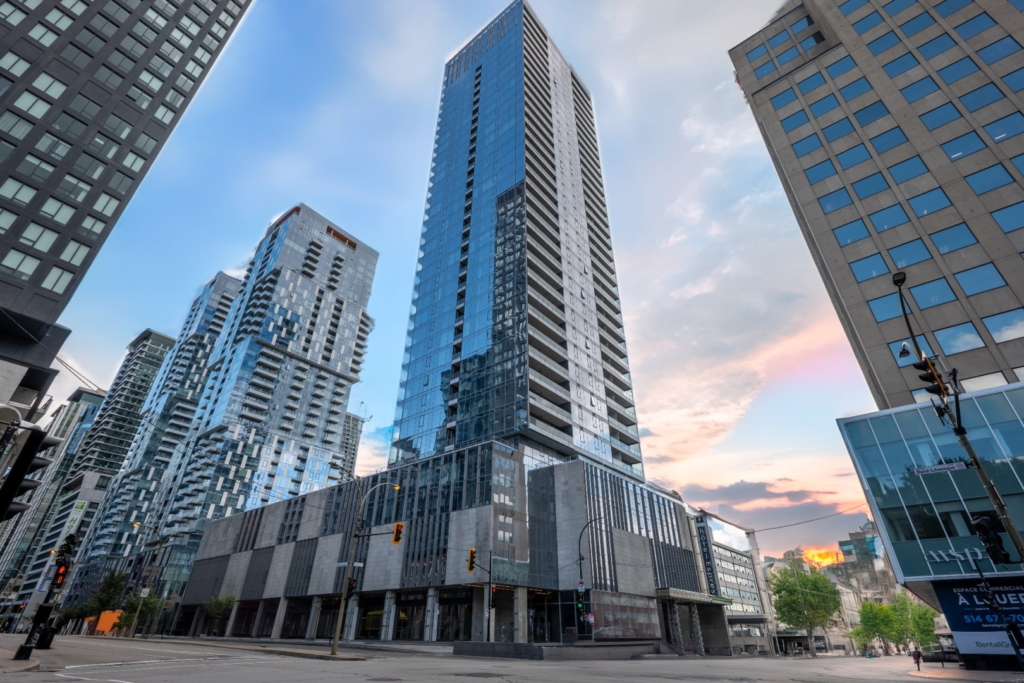
Like high-rise condos, this type of house often include modern amenities such as elevators, fitness centres, security systems, underground parking and sometimes pools or shared lounges. However, unlike condos, these buildings are owned and managed by a single landlord or property company. This owner is responsible for maintaining both the individual units and the common areas, managing leases and setting building-wide rules for tenants.
This unified ownership model ensures consistent maintenance, standardized services and more predictable tenancy compared to rented-out condo units. In cities like Montreal and Brossard, mid- and high-rise rentals have become an increasingly important part of the housing mix. This is because of new government incentives that have encouraged developers to build purpose-built rental towers instead of condos, a shift aimed at improving long-term rental supply and affordability in urban markets.
7. Movable houses
Movable houses, sometimes called manufactured homes, include any home that can be relocated or assembled off-site rather than built permanently on a foundation.
In Québec, these housing types offer affordable and flexible living alternatives, especially in rural regions and recreational areas where land is more accessible.
The main types of movable houses found in Québec include:
In this section, we look at what makes each one unique, how they are built, where they’re allowed and what kind of opportunity they represent for buyers.
Mobile Homes
A mobile home is a factory-built dwelling on a steel chassis. It is designed to be transported and installed on a residential lot or within a mobile home park.
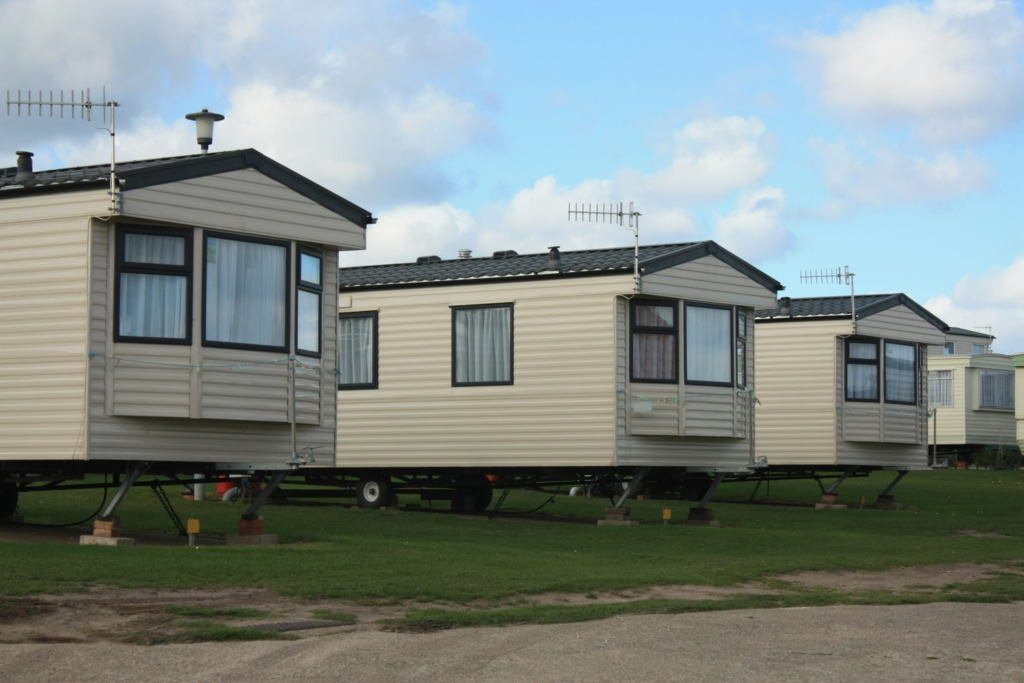
In Quebec, owners typically own the home but rent the land, making it one of the most affordable housing options. Mobile homes tend to cost about 50% less than a traditional house.
Built under CSA Z240 standards, mobile homes are single-storey, fully equipped and insulated for year-round use. However, they usually have shorter lifespans (30–50 years) and depreciate over time.
This type of house is especially popular among retirees and down-sizers, with many parks in the Laurentians, Mauricie, and Eastern Townships offering quiet and low-cost living. Some mobile home parks even have age restrictions (55+), but many are open to all ages.
Modular Homes
A modular home is a factory-built house constructed in multiple sections (modules) that are assembled on-site on a permanent foundation, such as a basement or concrete slab.
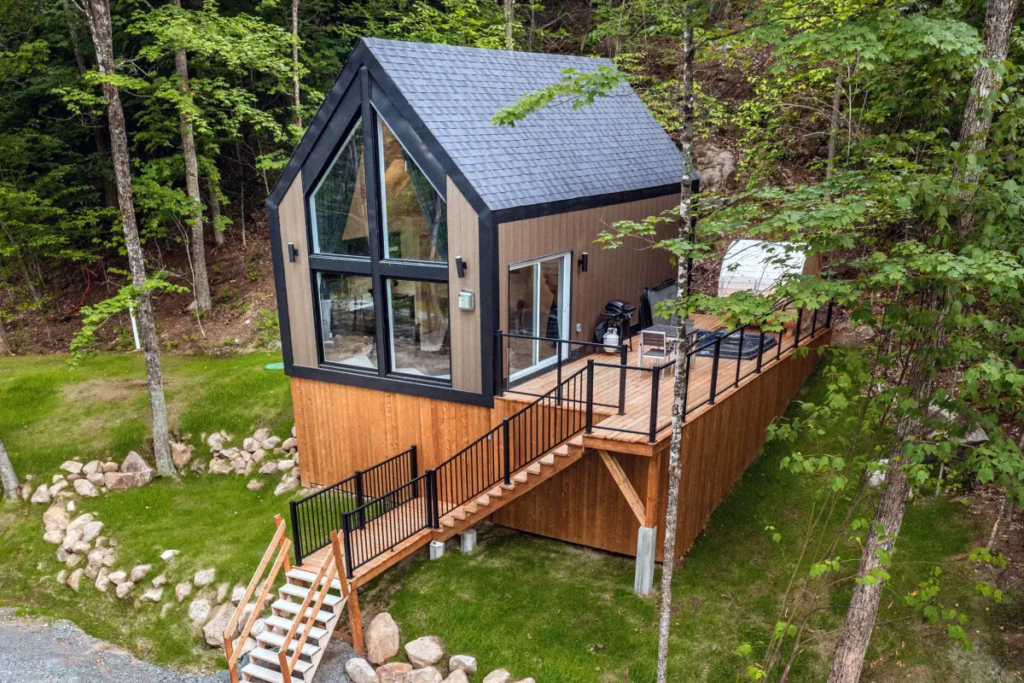
Once installed, it meets the same building codes as any conventionally built home. In Quebec, this means that the structure will comply with the Code de construction du Québec and the Régie du bâtiment du Québec (RBQ).
Unlike mobile homes, which are built on a steel chassis and designed to remain movable, modular homes are not meant to be relocated once installed. Because modular homes are considered real property, owners own both the home and the land it sits on. That means they can build on private lots, access traditional mortgage financing and benefit from property appreciation over time. Furthermore, with the correct maintenance, these types of house will last as long as a traditional house.
In Quebec, you can find a lot of modular homes in areas like the Laurentians, the Eastern Townships, and Lanaudière, where land is more affordable, lots are large enough for factory-built installations and zoning bylaws make modular construction possible.
Floating Homes
A floating home is a dwelling built on a floating platform rather than on land.
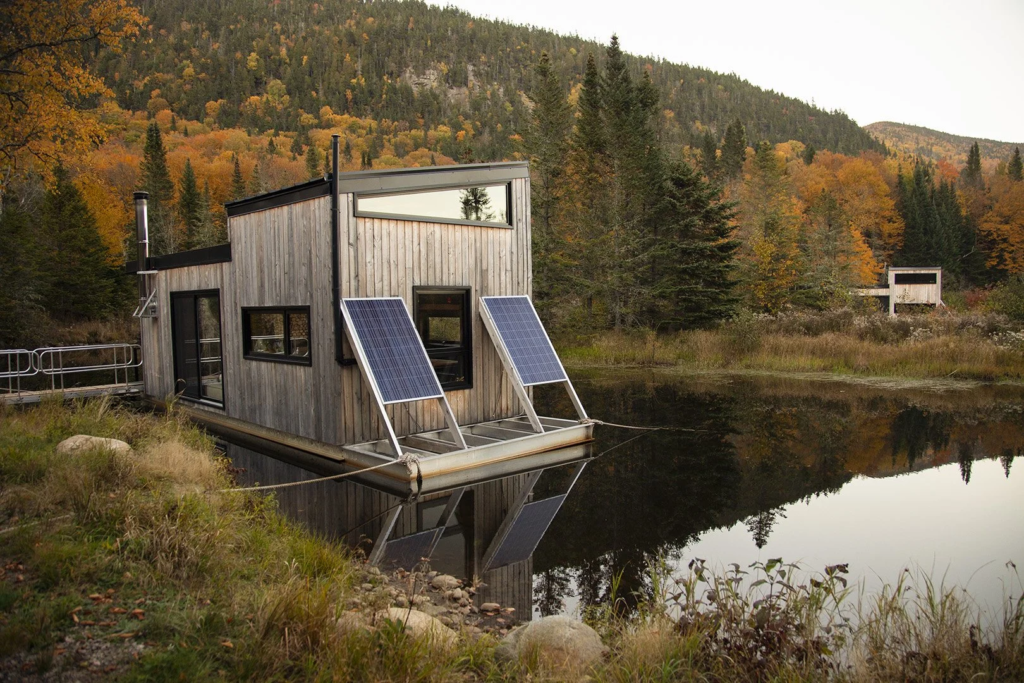
Unlike houseboats, which are designed for navigation, floating homes are anchored in one place and connected to municipal utilities such as water, sewage and electricity. They are considered residential properties and not vessels.
In Quebec, floating homes are most often found in marinas and waterfront communities in regions like Lanaudière, Mauricie, and the Laurentians, as well as around Montréal’s Lachine Canal and the Port of Québec.
Floating homes are typically smaller than traditional houses (often 600 – 1 200 sq ft) and built with marine-grade materials to withstand humidity and freezing conditions. Many are modular in design, assembled off-site and craned into the water, much like a modular home on land.
Floating homes appeal to buyers seeking affordable, low-impact waterfront living without the upkeep of a rural property. More specifically, they tend to attract retirees and environmentally conscious owners, but come with challenges. These include exposure to humidity and freezing temperatures, as well as limited mooring space. Moreover, because they are built on water, banks see them as higher-risk, and mooring fees can vary widely by location.
Caravans (Trailers and RVs)
Caravans, also known as travel trailers or RVs, are movable dwellings designed for mobility rather than permanent residence. In Quebec, and around the world, they’re popular among seasonal travellers, holiday makers, retirees and outdoor enthusiasts who value freedom and affordability over space.
While some use them for vacations, others live in them full-time in campgrounds or RV parks. Caravans offer flexibility and low housing costs but come with trade-offs like limited space, winterization needs and restricted zoning for year-round living.
Tiny Homes
Tiny homes are compact dwellings, typically between 200 and 400 square feet, designed to maximize utility in a minimal footprint.
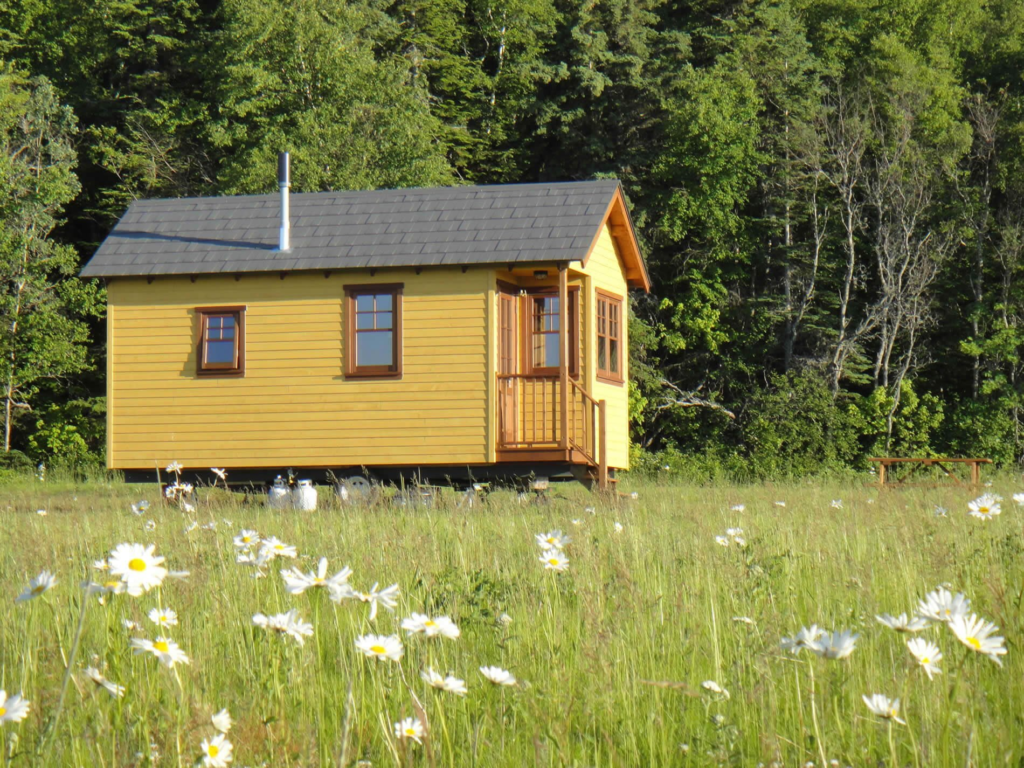
In Quebec, they appeal to buyers seeking affordable, minimalist living or alternative vacation properties. You will find this type of house often placed on private lots, leased land or in dedicated tiny-home communities.
Tiny Homes offer very low maintenance and energy costs, but they also come with trade-offs. These include, limited space for belongings or guests, zoning and permitting hurdles (especially in urban areas) and sometimes higher cost per square foot. As they blur the line between dwelling and recreational unit, financing and resale can also be more complex than for traditional homes.
Conclusion: There is a different type of house in Quebec for everyone
In Quebec, there truly is a home type for everyone. From downtown condos and townhouses to modular, mobile or countryside detached homes.
More and more people are realizing that lifestyle choices need to be balanced with financial goals. This article outlined the main types of homes across the province, each with its own pros, cons and ideal buyer profile.
At ImmoVision, we recommend speaking with a qualified real estate professional before making any major decision. Markets evolve, new housing options emerge, and the best realtors take time to understand your full story before giving advice.
If you’d like to connect with a fully vetted, client-first realtor who specializes in your situation, book a call with us today.