
A flooded basement is one of the most expensive and disruptive problems a homeowner can face. It often costs thousands in repairs and lost belongings. In many cases, the root cause is simple: a failing or missing sump pump.
In Montreal, most homes go on the market during the spring and summer. Warm, dry weather can easily hide serious issues like drafts, leaky foundations, rising groundwater, and overwhelmed drainage systems.
The real test comes months later, during the first freeze-thaw cycle of late fall. As heavy snowfall begins to melt, water percolates into the soil surrounding the home and quickly builds up around the foundation. Without a properly functioning sump pump, this water has nowhere to go. Pressure builds against the foundation walls, and eventually, water finds its way inside.
Sump pumps resolve this problem by collecting excess groundwater and pumping it safely away from the foundation before it can seep inside. However, understanding how sump pumps work, which type is right for your home, and how to install and maintain them properly is essential to ensuring long-term protection.
In this guide, we’ll cover everything you need to know about sump pumps. If you are looking for an answer to a particular question, click on the table contents on the left of this page to navigate to the section that interests you the most.
Don't take on hidden risks alone
What is a sump pump?
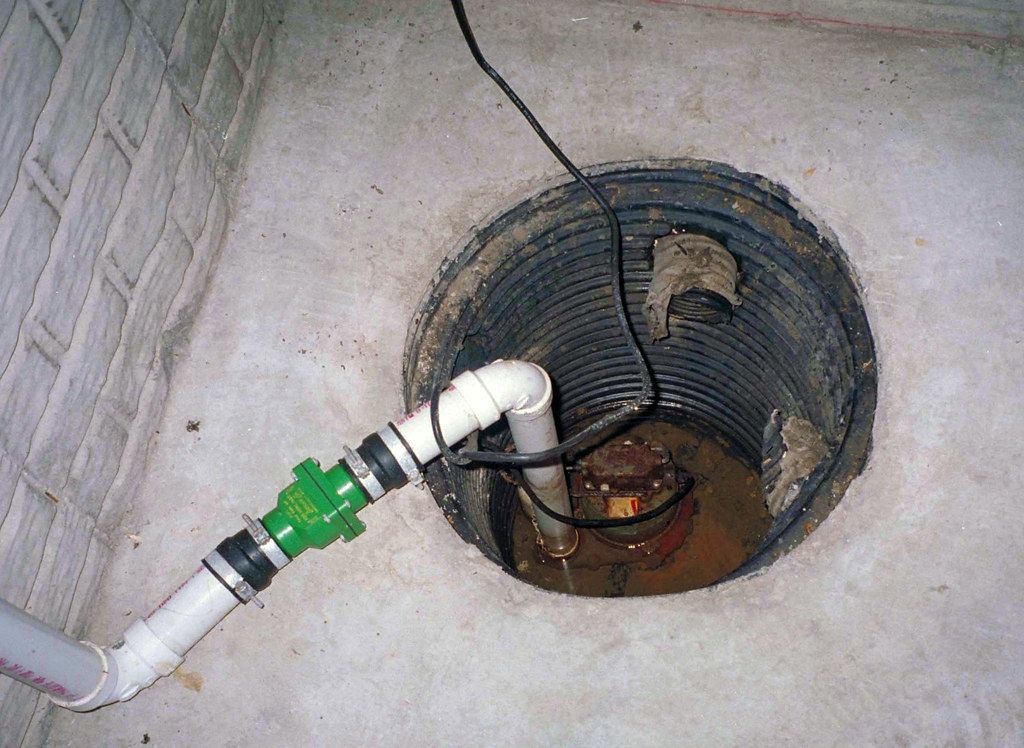
A sump pump is a device used to remove water that collects below or around the foundation of your home. Its main purpose is to prevent flooding and water damage by pumping the water out and directing it away from the house to a safe drainage area.
How does a sump pump work?
During a rainstorm, or when snow melts, water will saturate the soil beside your house. This water will perculate down through the soil, through an area that geologists call the the “unsaturated zone”. This water will then enter the saturated zone below the house, and cause the water table to rise. When this happens, water will start to accumulate beside the foundation which can flood your basement.
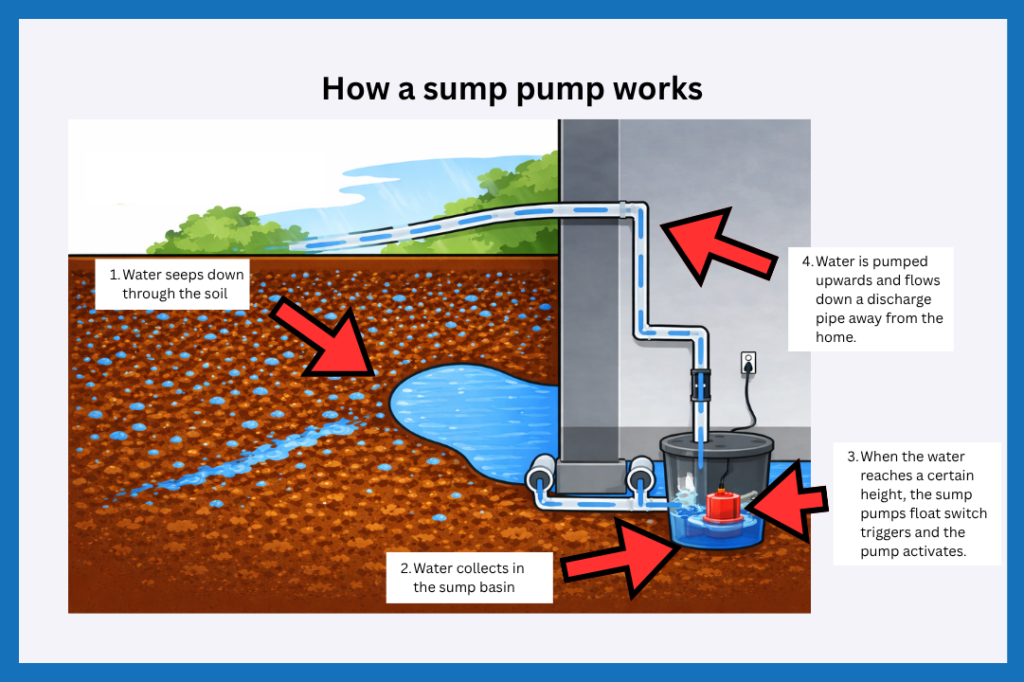
To help mitigate this risk, below your house is a network of pipes that direct the water that sinks through the unsaturated zone towards your sump basin. Once this happens, the water collects in your sump basin and this basin collects enough water, the sump pumps float switch triggers and the pump activates. The pump then pushes the water upwards through a discharge pipe and moves it safely away from your home.
What are the key components of a sump pump?
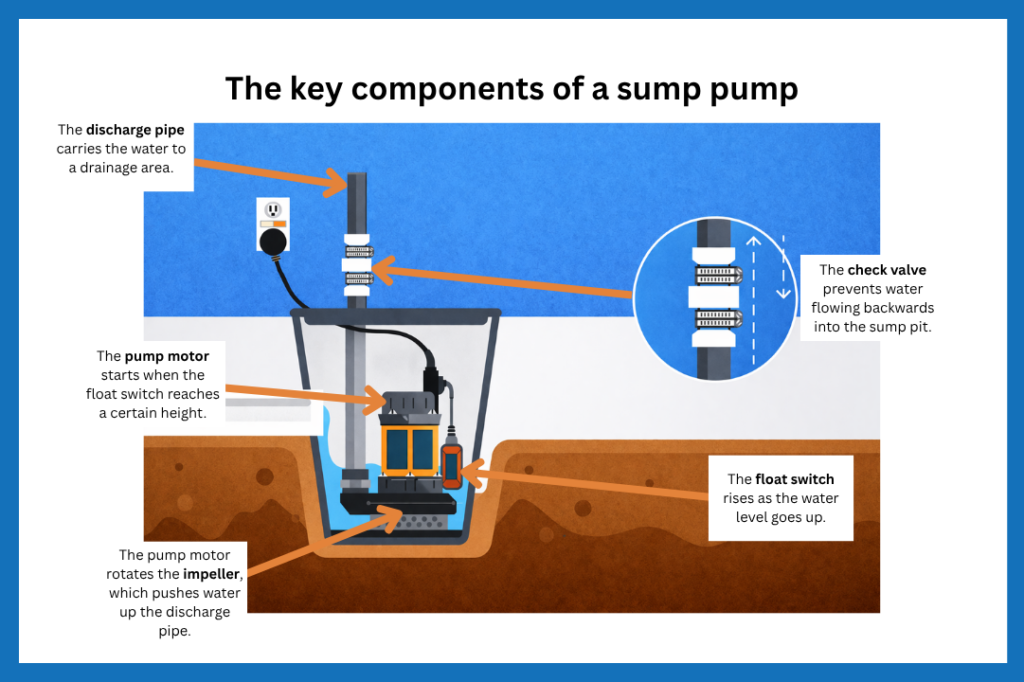
A typical sump pump consists of several key components:
- Sump basin (pit) – A sump basin is a hole excavated at the lowest point of the basement where water from drainage pipes collects. The hole may be lined with concrete, plastic, or fiber glass to prevent collapse, and it usually has a cover on top to prevent accidental falls.
- Float switch – A sensor that is attached to the sump pump. This detects the water level in the sump basin and turns the pump’s motor on or off automatically.
- Pump motor – The pump motor is the driving force behind the sump pump. When activated by the float switch, it powers the pumps impeller.
- Impeller – The impeller is a critical component of a sump pump, designed as a spinning, fan-like blade inside the pump housing. When the sump pump motor turns on, the impeller rotates rapidly, using centrifugal force to move water from the sump basin into the discharge pipe.
- Discharge pipe – The pipe that carries water from the pump to the outside of the house or to a drainage area.
- Check valve – Prevents water from flowing back into the sump basin after being pumped out.
Do I need a sump pump?
Quebec’s Construction Code does not mandate that every home have a sump pump. As such, many homes, particularly those built before the 1980s, often rely solely on exterior drainage systems (such as weeping tiles, French drains, or grading) to manage groundwater. However, a history of no water problems does not guarantee that issues will not arise in the future.
According to the National Research Council of Canada (NRC), a sump pump should be installed whenever a foundation sits below the level where water can naturally drain from the property. For example, even if a French drain runs around the perimeter of a home, a foundation dug below that drain’s level may still require a sump pump. In Quebec, most homes have basements, crawl spaces, or other foundations dug below the frost line. As a result, these foundations are typically below the natural drainage level and are at some risk of water intrusion. Even shallow, frost-protected foundations can still be at risk of flooding if the water table rises high enough.
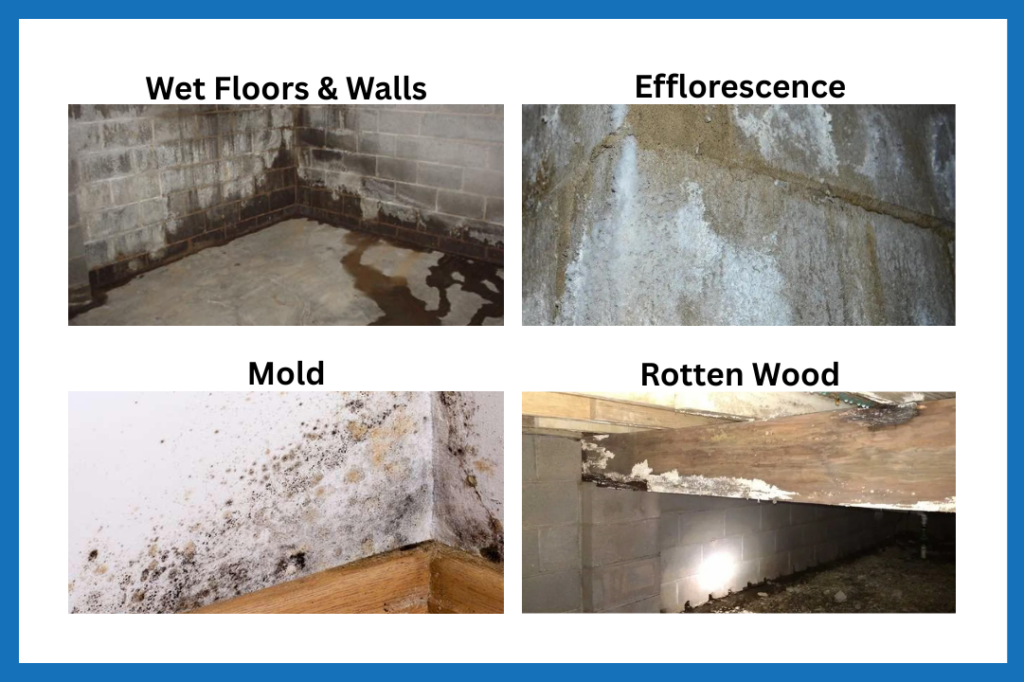
There are some early signs that you need a sump pump or that an existing sump pump is inadequate or failing. These include, water around the perimeter of your basement, wet floors or walls, efflorescence, mold, musty odors, rotting wood and leaking window walls. Even if your basement doesn’t fully flood, excess moisture creates a damp environments that can lead to mold, which leads to unhealthy living conditions for you and your family.
Where should a sump pump discharge?
The Construction Code of Québec does not specify an exact distance that water must be discharged from a home. However, you should discharge the water far enough away from the foundation to prevent it from seeping back toward the foundation of your home. Ideally, this will be toward natural drainage points such as a swale, a ditch, or a sloped portion of the yard leading away from the foundation. Note, the Québec Plumbing Code prohibits discharge of the sump pump into storm drainage or the sanitary sewer system.
Municipal zoning bylaws often set requirements for where sump pump water can be discharged and how far it should be discharged from your property. For example, in Ville de Mont‑Royal, municipal rules require that water be discharged at least 1.5 m away from the foundation. Because these requirements vary by municipality, it is always best to confirm the rules with your local city or town hall before installing a sump pump discharge system.
Note
Because local regulations and drainage conditions vary across municipalities, it is strongly recommended to work with a local real estate broker who is familiar with Quebec’s plumbing and stormwater requirements.
Different types of sump pump
There are many different types of residential sump pumps, however the two most popular types are: submersible and pedestal sump pumps.
Submersible sump pumps
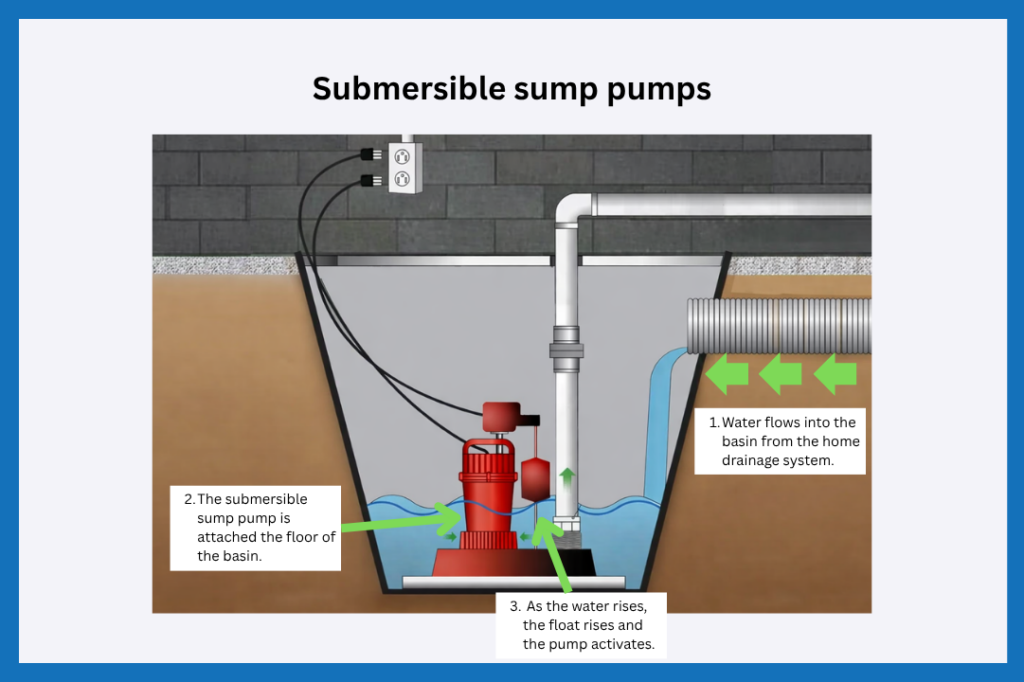
A submersible sump pumps are the most common type of sump pump. You will place this type of pump directly into the sump basin. When water flows into the basin, this will cause the water level to rise in the basin. When this happens, the float that is attached to the side of the pump will rise and, when it reaches a certain level, the pump will activate, its motor will start and, it will pump the water up and out of the basin.
Pedestal sump pumps
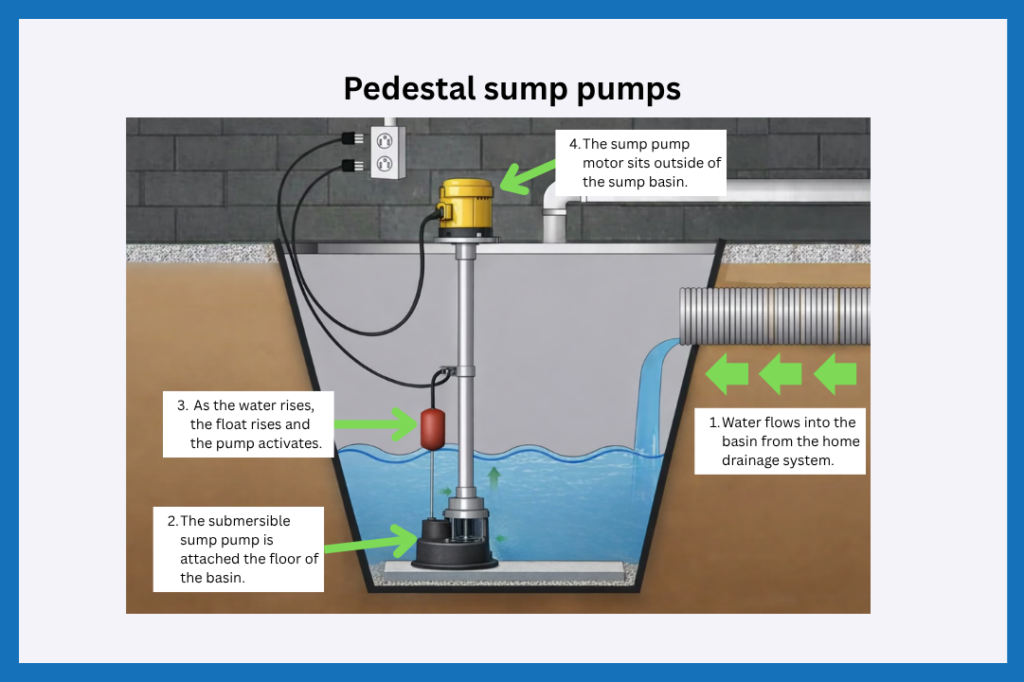
A pedestal sump pump is characterized by a long vertical shaft. On one end of the shaft is the motor, and on the other end is the pump impeller. In this design, the motor sits outside the sump basin, while the pump and impeller sit inside the basin. When water flows into the basin, the water level rises, causing the float near the pump at the bottom to rise as well. Once the float reaches a set height, it triggers the motor above the basin to turn on, spinning the impeller at the bottom. The impeller then pushes the water up through a discharge pipe and out of the sump basin.
What is the best type of sump pump for my home?
While submersible and pedestal pumps are the two main types of residential sump pumps, choosing the right pump for your home involves more than just selecting a style. To protect your basement from flooding, you need to consider several key factors that determine whether a pump will perform reliably under real-world conditions. The most important criteria to evaluate are:
Pump sizing
Each sump pump comes with its own reference chart, or pump curve, that explains how much water it can pump. The pump curve explains this in terms of GPM (Gallons Per Minute), which tells you how many gallons of water the pump can move in one minute. The GPM is relative to the head, which is the vertical distance of piping that the water must travel through before it is discharged. The higher the vertical head, the harder the pump will have to work and so, the lower the GPM will be. This is why the pump curve slopes off at higher heads.
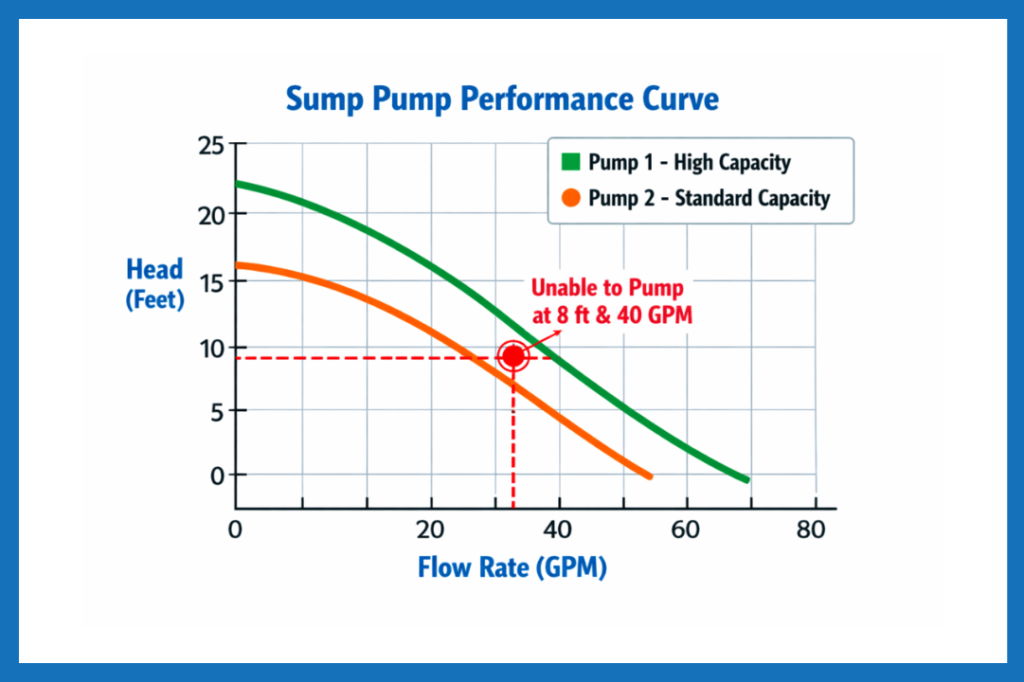
The pump curve above shows an example of what the relationship between GPM and head might look like on a typical sump pump. There are two lines plotted on the graph, each line is the pump curve for a different type of sump pump. As you can see, if we have a pipe with a hight of 8ft, but we need a GPM of 40, pump two cannot be used, since it would not be able to pump the water high enough to get it to run through the pipes.
Pump features
Beyond flow rate and overall power, the pumps features will determine how reliable the sump pump is. Reliability is key, since if the pump stops working and the basin is filling up with water, the water level will continue to rise until the basin overflows and water floods your basement.

The key features that ensure sump pump reliability are:
- Back up power operations: A sump pump runs off a wired connection to the wall of your home. This means that in the event of a power outage, for example during an ice storm or severe weather, the sump pump will stop running unless there is a backup power source in place. Because of the frequency of power outages in Quebec, particularly those caused by interruptions from Hydro-Québec, you should have a backup sump pump or a battery-powered system to ensure your basement remains protected even when the main pump loses power.
- Check valve: When your pump is running, it will push water up the discharge pipe, however, as soon as it shuts off, the water that is still in the discharge pipe will try and flow back down into your sump pit. This can cause the pump to cycle repeatedly, waste energy, and reduce its lifespan. A check valve is a one-way valve installed in the discharge pipe that prevents water from flowing back into the sump pit.
- Alarm system: If your sump pump stops working or water rises faster than the pump can handle, you want to know immediately. An alarm system will alert you to the problem so that you can take action quickly, start your backup system if you have one, and prevent potential flooding in your basement.
Build quality
In addition to the sump pump features, reliability is also determined by build quality. Sump pumps tend to be either made of cast iron or plastic. The cast iron ones tend to be more durable that the plastic ones and have a longer shelf life.
You should also consider the quality of the critical components, such as the impeller, shaft faseners and shields and bearings. Look for non-clog or vortex impellers, which are less likely to jam on debris. Some pumps use reinforced plastic impellers; metal impellers are stronger but may corrode. For the motor, you should make sure that the rating is between 1/3 horse power to 1 horse power which is sufficient for most residential pumps. Motors should also be sealed and water-resistant to prevent corrosion from moisture. Thermal overload protection is a nice feature, since it will shut off the pump if it overheats.
Lastly, nobody wants to hear their sump pump running constantly throughout the day and night. Well-built pumps often include vibration-damping mounts or rubber feet, which help reduce noise by minimizing vibrations as the pump operates. Less vibration not only makes the system quieter, but also typically results in reduced wear and tear on the pump over time.
Backup systems
There are two main types of backup systems for sump pumps: a battery-powered backup and water-powered backup.
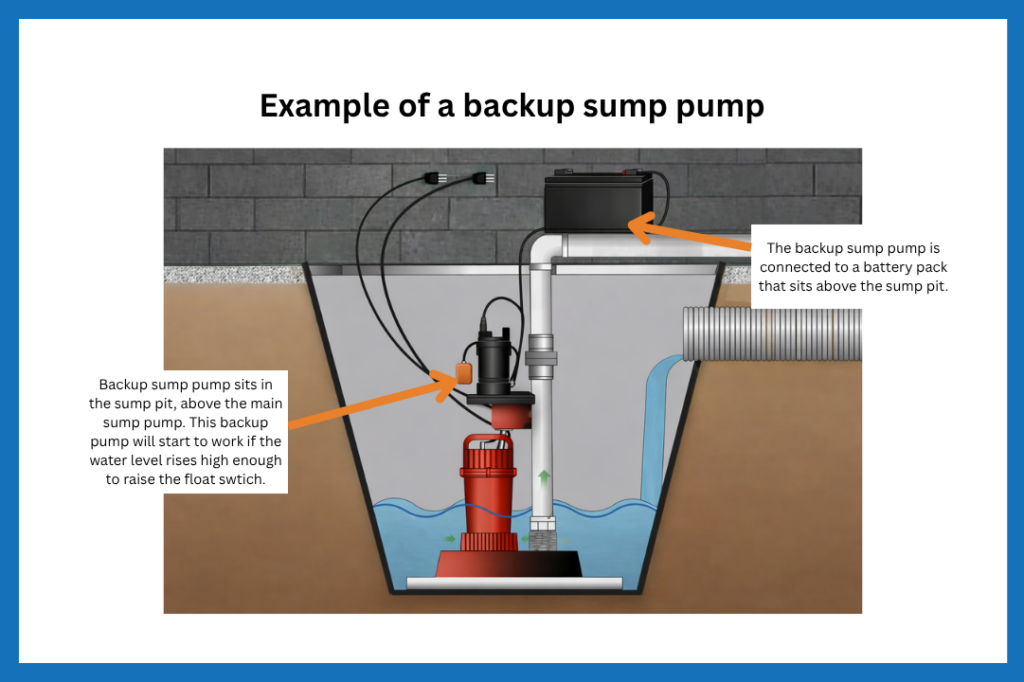
A battery-powered backup sump pump is a secondary pump installed above your primary sump pump. If the water level rises beyond the primary pump’s capacity, the backup pump automatically activates. It runs off a pre-charged battery, which you can maintain and replace as needed. Depending on the battery size and water flow, the system can operate for several hours, keeping your basement protected during a power outage.
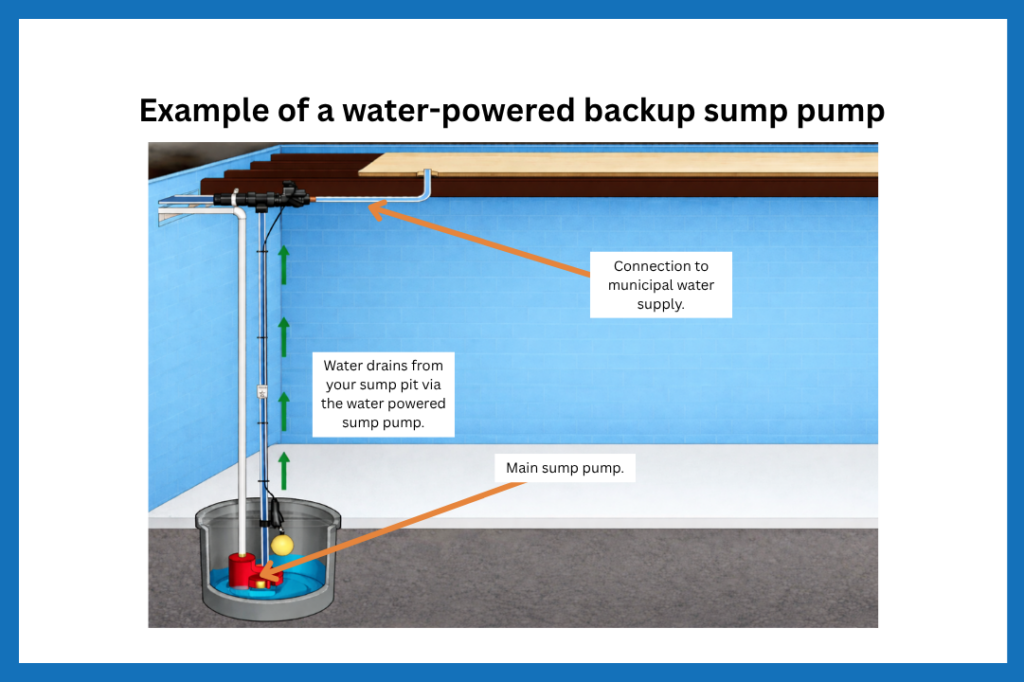
A water-powered backup sump pump is also a secondary pump that is installed above your primary sump pump. If the water level rises beyond the primary pump’s capacity, the float switch for your water-powered backup will activate automatically. This will start the backup system, using your home’s water supply to create suction and remove excess water from the pit.
Types of sump pump switches
A sump pump switch system is the mechanism that controls when the pump turns on and off. It detects the water level in the sump basin and automatically activates the pump when the water reaches a certain height, then shuts it off once the water has been removed. Without a switch system, the pump would either run continuously or not run at all, and so this component is critical to preventing flooding and avoiding unnecessary wear on the pump.
There are several different types of switch, each with its own pros and cons. In this section we will look at the following types of sump pump switch.
Tether switch
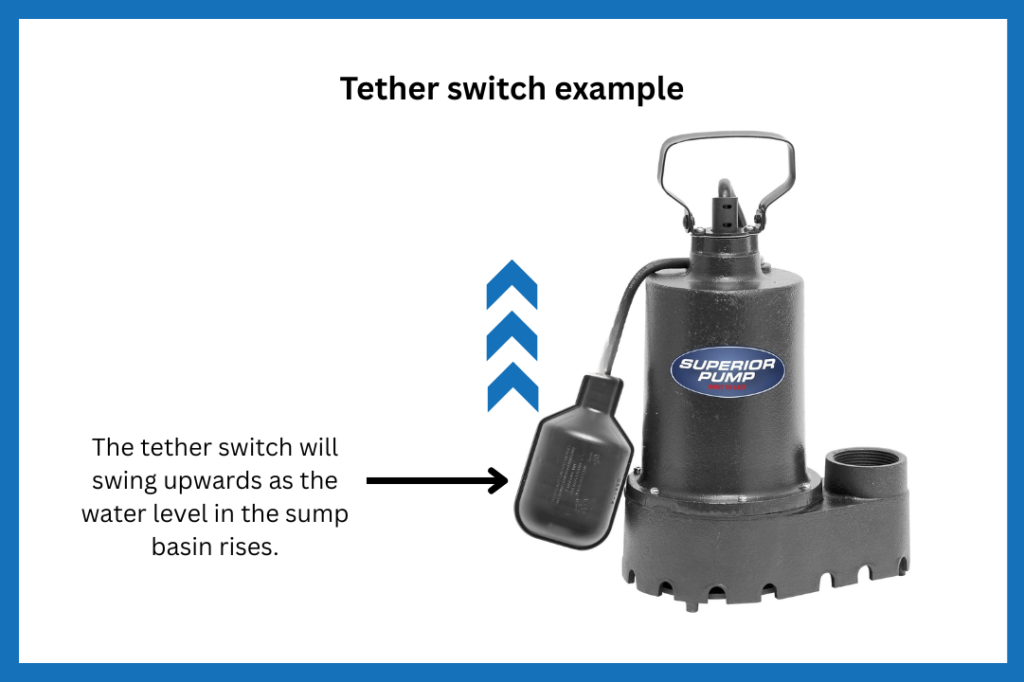
A tether switch is one where a float is attached to a cord that swings upward as the water level rises. This type requires a wider sump basin to operate properly. This switch has a very large range of motion, which means that the pump will run longer during each cycle before shutting off. The disadvantage of this is that pumps can shift over time, and if the float gets too close to the walls of the basin, the tether may be unable to rise properly, preventing the pump from activating.
Vertical float switch
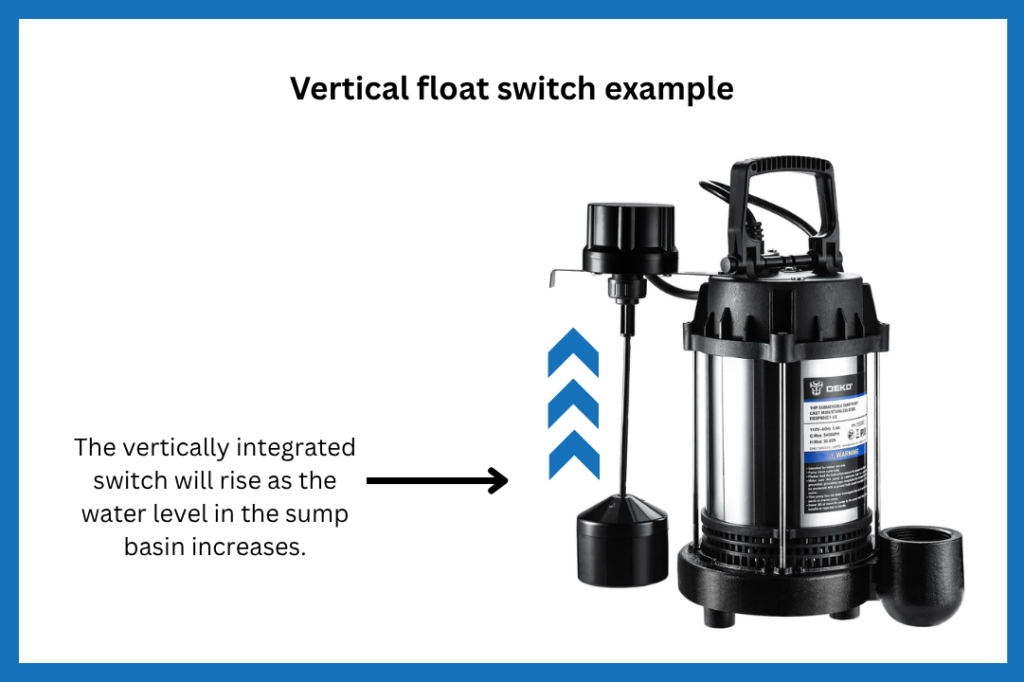
A vertical float switch is one where the float moves straight up and down along a rod as the water level rises. This type requires less space and is well suited for narrow sump basins. This switch has a smaller range of motion, which means that the pump will turn on and off more frequently, resulting in shorter cycles. The advantage of this is that it is less likely to become obstructed by the walls of the basin; however, the increased cycling can lead to more wear on the pump over time.
Note
Pressure switch
A pressure switch is one where the pump is activated based on the water pressure at the bottom of the sump basin, rather than using a floating mechanism. As the water level rises, the pressure increases, and once it reaches a certain threshold, the pump is triggered to turn on.
This type of pump switch requires very little space and is well suited for narrow or enclosed sump basins. Because there is no external float, there is less risk of the switch becoming obstructed by the walls of the basin or tangled with debris. However, pressure switches can be more sensitive to buildup or sediment over time, which may affect their reliability if not properly maintained.
Electronic or sensor based switch
An electronic or sensor-based switch uses sensors to detect the water level in the sump basin. The pump will active automatically when the water reaches a set point. This type requires minimal space and can be used in narrow or compact basins. Because it relies on electronic detection rather than a mechanical float, it is less prone to getting stuck or obstructed by debris.
Cost of sump pump installation
For a standard retrofit of a sump pump, with minimal complications the price will range from ~$3,500 – $6,000 in Quebec.
This will include purchasing the pump itself, the sump basin and lid, associated plumbing components (pipes, valves, connectors, and check valves), any float or sensor system, and a battery backup or alarm system if desired. Installation also involves digging the sump pit, connecting the drainage system (such as a French drain or discharge line), and hiring a qualified electrician to wire and maintain any backup or alarm components. Note that the main cost is the labour.
If you already have the sump pit and drainage system set up, and you are just looking to replace an existing sump pump, you should be looking to pay between $1,000 – $2,500. This will include the full replacement, including the new pump, any necessary hardware such as check valves or float switches, and professional installation. It may also include a warranty and regular annual checkups.
Note
While homeowners are allowed to perform this work themselves, they are responsible for ensuring it complies with applicable building codes and regulations. Improper installation can lead to flooding, insurance issues, or system failure, so using a licensed professional is generally recommended.
How long do sump pumps last?
Most sump pumps last about 7–10 years, but that range can shift quite a bit depending the quality of the sump pump, how frequently they are used and how well they are maintained. Quality wise, cast iron models tend to last longer than cheaper plastic models. And, frequency of use is really determined by if you live in a location with a high water table.
To help extend the life of a sump pump, regular maintenance is important. This includes cleaning debris from the sump pit, testing the pump periodically, and checking that the float switch is operating properly. Installing a battery backup will also allow you system to continue functioning during a power outage. This means that the pump won’t be forced to handle excessive water buildup all at once when power is restored, reducing strain on the motor. Proper installation plays a major role as well issues like an incorrect discharge angle or a missing check valve can reduce efficiency and shorten the lifespan of the pump.
If you notice any of the following signs, it may indicate that your sump pump is nearing the end of its life: unusual noises (such as grinding or rattling), frequent or continuous cycling, slow drainage, or visible signs of wear such as rust or corrosion.
Do I need a battery backup sump pump
Your sump pump is typically plugged into a standard electrical outlet. However, if there is a power outage, the pump will stop working and the water level will continue to rise in the sump basin, which can eventually lead to basement flooding.
To address this, you can install a secondary (backup) sump pump slightly above the primary pump and connect it to a pre-charged battery backup system. This means that if the water level rises and the primary pump is unable to operate, such as during a power outage, the backup pump will automatically activate and begin pumping water out. This will help to prevent flooding.
When do I need to get my sump pump repair
There are a few tell tale signs that you need a sump pump repair. The main ones are:
- Unusual noises – grinding, rattling, or humming can indicate worn or damaged components
- Frequent cycling – the pump turns on and off too often, even during light water flow
- Failure to start – the pump doesn’t activate when the water level rises
- Continuous running – the pump runs non-stop, which may point to a stuck switch or improper sizing
- Visible rust or damage – corrosion can affect performance and lead to failure
- Strange odors – musty or burning smells may signal electrical or mechanical issues
- Poor performance – water drains slowly or not at all from the sump pit
Note
Sump pump alternatives
There aren’t truly reliable replacements for a sump pump system when it comes to actively removing water from a basement, especially in areas prone to heavy groundwater or flooding. However, there are several complementary solutions that can help reduce the amount of water reaching your foundation and improve the overall effectiveness of your system. These include installing a French drain to redirect groundwater, using a dry well to manage excess runoff, improving grading and landscaping to direct water away from the home, and applying waterproofing measures such as exterior membranes or interior sealants. While these methods can significantly reduce moisture issues, they are generally most effective when used alongside a sump pump rather than as a complete substitute.
Frequently asked questions
Final remarks
In Quebec, a sump pump is a critical part of your home. It helps to protect against groundwater infiltration and seasonal flooding. Given the region’s climate, including heavy rainfall and spring snowmelt, excess water can quickly accumulate around a home’s foundation. A properly functioning sump pump system helps manage this risk by actively removing water before it can enter or damage the structure. The lack of a proper sump pump system, with adequate backups, can literally cost you thousands of dollars in water damage and repairs.
If you are looking to buy a home in Quebec, you should check the seller’s declaration to see if there are any issues or disclosures about the sump pump. Often, if the sump pump needs replacing, the seller will either agree to pay for the replacement or reduce the price of the house to cover the cost of a new system. Meanwhile, for home sellers, it is important that you are transparent with buyers about the condition of your sump pump system, otherwise you risk being held responsible for a latent defect months after the sale.