I lived on Rue Ropery in Pointe-St-Charles for 5 years, between 2020 – 2025.
In this article I break down what it is like to live in Pointe-St-Charles, the pros and cons and what is the current state of the real-estate market in Pointe-St-Charles. More specifically I will cover.
- Where is Pointe-St-Charles located?
- What is the history of Pointe-St-Charles?
- What is it like to live in Pointe-St-Charles?
- Pointe-St-Charles demographics
- Pointe-St-Charles commute
- Is Pointe-St-Charles safe?
- What are the schools like in Pointe-St-Charles?
- What is the Pointe-St-Charles real-estate market like? (Q4 2025)
- Final thoughts
Where is Point-St-Charles located?
Pointe-Saint-Charles (often called “The Point”) is a neighbourhood in Le Sud-Ouest borough of Montreal. It sits just south of the Lachine Canal and west of the Old Port/downtown core.
What is the history of Pointe-St-Charles?
The area that is today called Pointe-St-Charles was first acquired by Charles le Moyne in 1654, and is named in his honour. Throughout its early history, the land here was occupied by various religious communities. These included the Sulpicians, the Congrégation de Notre-Dame, and the Grey Nuns. These religious groups chose the area for its proximity to Montréal yet quieter, more rural setting. This made it ideal for the development of farms, convents, and religious estates.
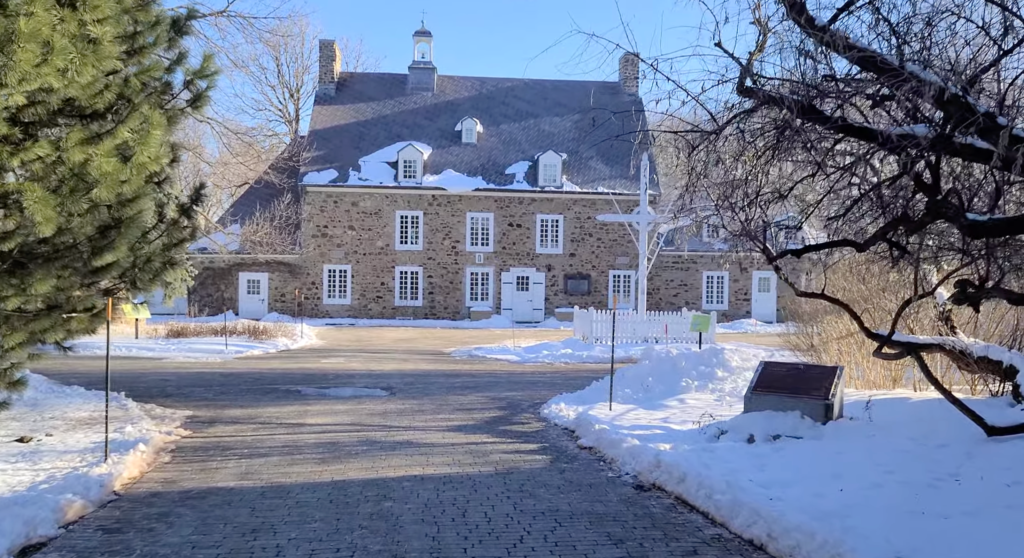
Today, you can still see remnants of these early settlements today in Pointe-St-Charles. Most notably, Maison Saint-Gabriel, a 17th-century farmhouse originally operated by the Congrégation de Notre-Dame. This is now a museum located next to Marguerite Bourgeoys Park, right in the heart of Pointe-St.-Charles (within walking distance to downtown).
After the New France era, Pointe‑St‑Charles underwent a dramatic transformation. With the expansion of the Lachine Canal in the mid-1800s and the arrival of the railways, the area shifted from farmland to heavy industry. At this time, factories, rail yards and working-class housing sprang up rapidly.
Like the rest of the area around the Lachine Canal, Pointe-St-Charles entered a long period of decline after 1959, triggered by the opening of the St. Lawrence Seaway. The new shipping route bypassed the canal entirely, leading to its closure and a wave of factory shutdowns that stripped the neighbourhood of much of its industrial economy.
During this era, Mayor Jean Drapeau advanced a program of “urban renewal”. This program essentially targeted older working-class districts Jean Drapeau viewed as “obsolete”. Entire neighbourhoods in the Sud-Ouest borough including Griffintown, Saint-Henri, Little Burgundy, and parts of Pointe-St-Charles, were marked them for demolition. The idea was to displace families, bulldozer these neighbourhoods and make way for modern infrastructure and large-scale redevelopment projects.
While areas like Griffintown were almost completely razed, Pointe-St-Charles survived due to strong community resistance. Tenant groups, local activists, and neighbourhood organizations. These groups fought to protect affordable housing, block demolitions, and maintain essential services. The photograph below shows two community groups in Pointe-St-Charles that met in the in the old No. 15 fire station to organize resistance to City Hall displacing 140 families and bulldozing parts of their community to make way for a new highway.
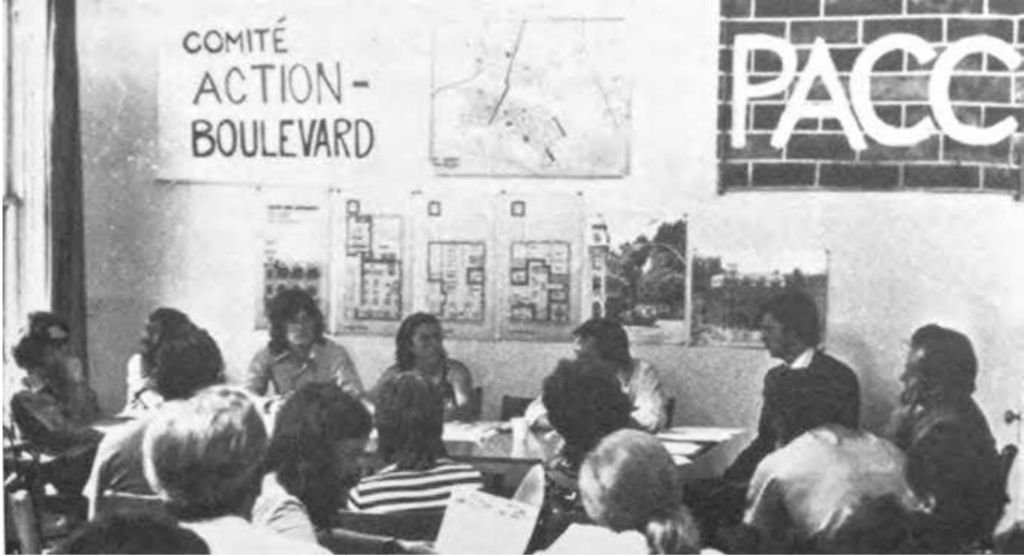
This wave of neighbourhood resistance ultimately allowed residents to reclaim and repurpose key buildings for community use, rather than losing them to private developers. One of the most important victories was the transformation of the old No. 15 fire station, shown above, into a public library and community hub. Today, this library hosts a wide range of programs, including homework help, early-childhood initiatives, senior activities, and even breastfeeding clinics for new mothers. The community library built in the converted fire station is pictured below.
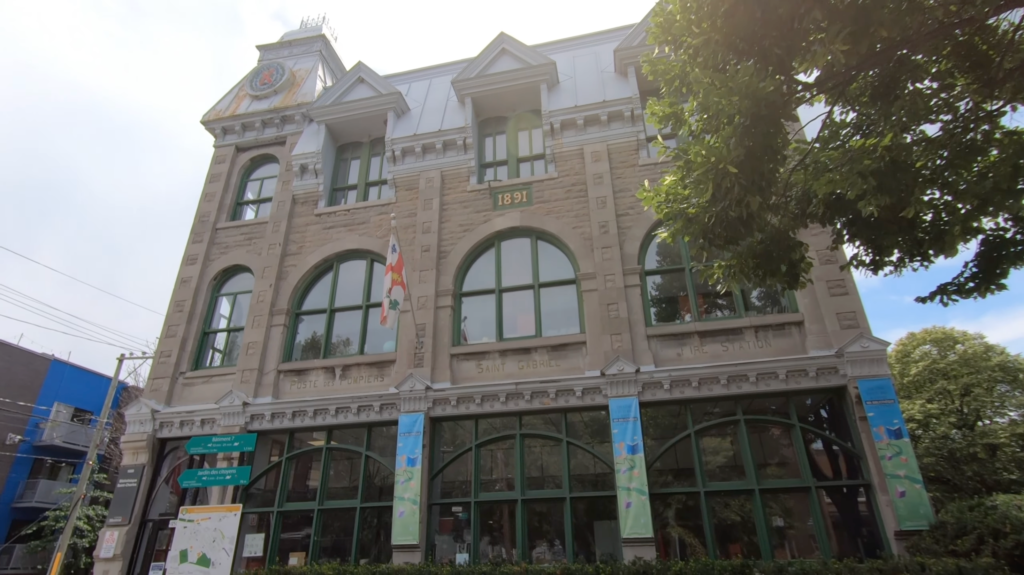
This activism forged a deeply rooted sense of solidarity that still defines the neighbourhood today. You can see this through community programs and institutions such as the Pointe-Saint-Charles Community Clinic, Share the Warmth, and the Saint-Columba House. These are long-standing community organizations offering everything from health care and food security to youth programs, advocacy, and social supports.
Today, this activism is still at large, with residents of Pointe-St-Charles now fighting against the new wave of gentrification in the area. For instance, the community fought to block the development of a casino in the Point in 2005.
What is it like to live in Pointe-St-Charles?
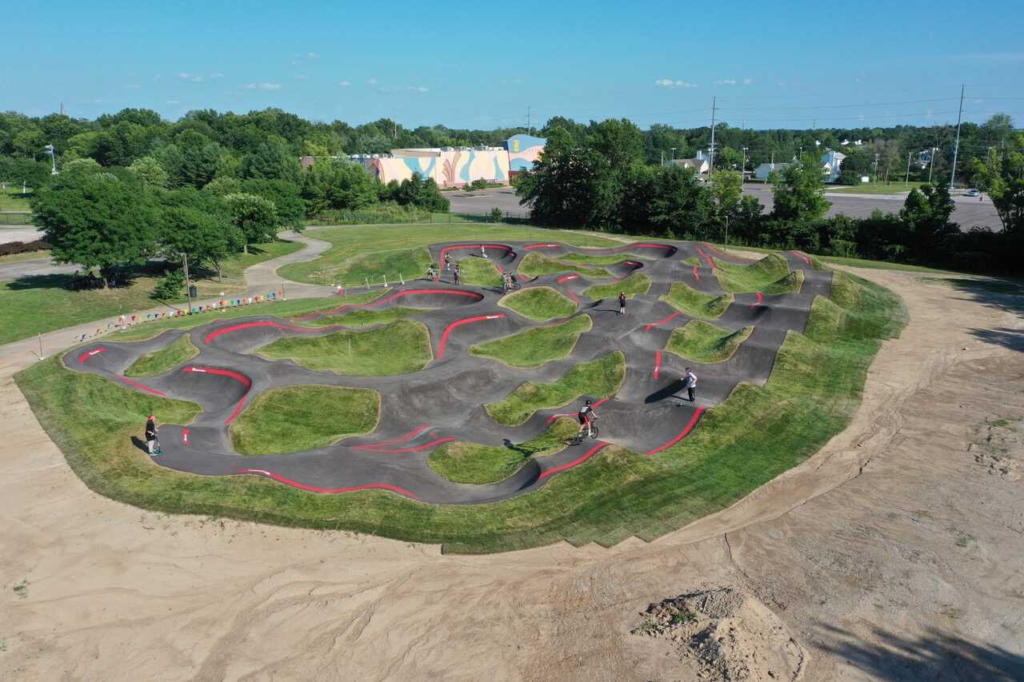
Pointe-Saint-Charles has one of the strongest community identities on the Island of Montréal. As a resident you will feel it the moment you spend time here. There are several parks that are always full of families, outdoor wading pools for children, a pump track, two baseball fields and lots of independent cafe’s and restaurants.
There are also lots of community-run events. To find out what is on, you can visit the library on Rue d’Hibernia (the site of the old fire station) or, community centres such as Familles En Action that provides things to do for small children.
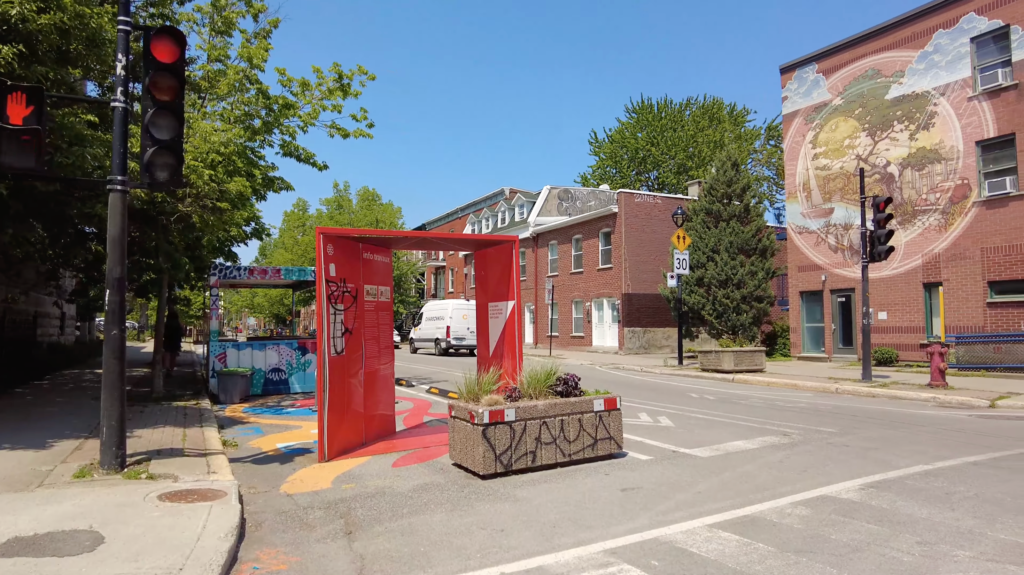
Living in Pointe-St-Charles you will also get neighbourhood flyers slipped through your door inviting you to vote on neighbourhood issues. Unlike the transient feel of nearby high-rise districts like Griffintown, the Point is a place where people put down real roots. Throughout Pointe-Saint-Charles, you will also find community-driven public art, murals, and street furniture created through local neighbourhood initiatives. These help to foster identity, creativity, and a strong sense of place.
The housing stock reinforces a “lived in” feel. Long rows of century-old vertical townhouses with quirky layouts, back alleys filled with young children, and front steps where neighbours sit and talk on warm summer evenings.
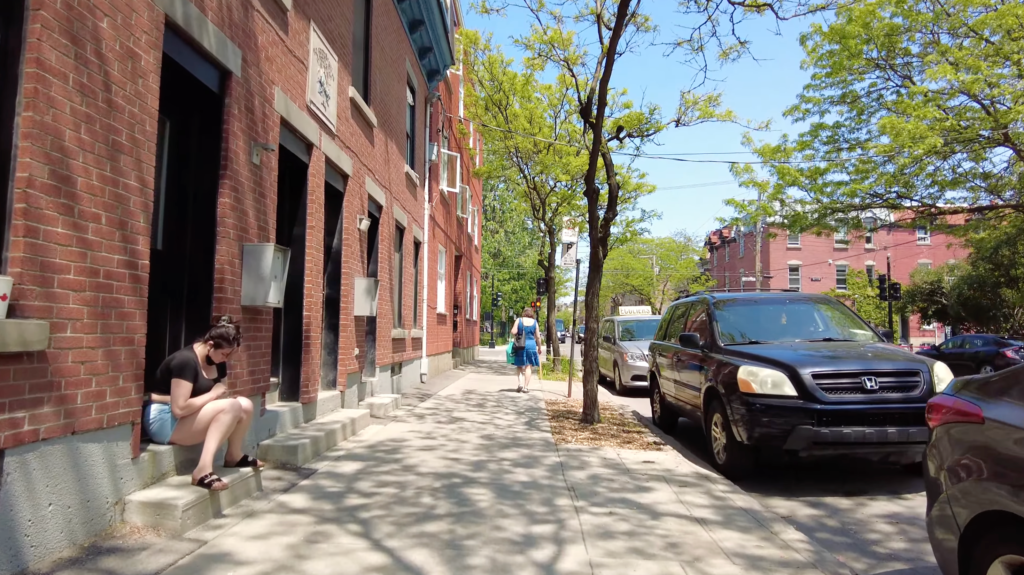
Daily life here is incredibly walkable, with supermarkets, bars and restaurants. all within walking distance. This means that if you choose to involve yourself with the community, you will get to know people who live in the area very quickly.
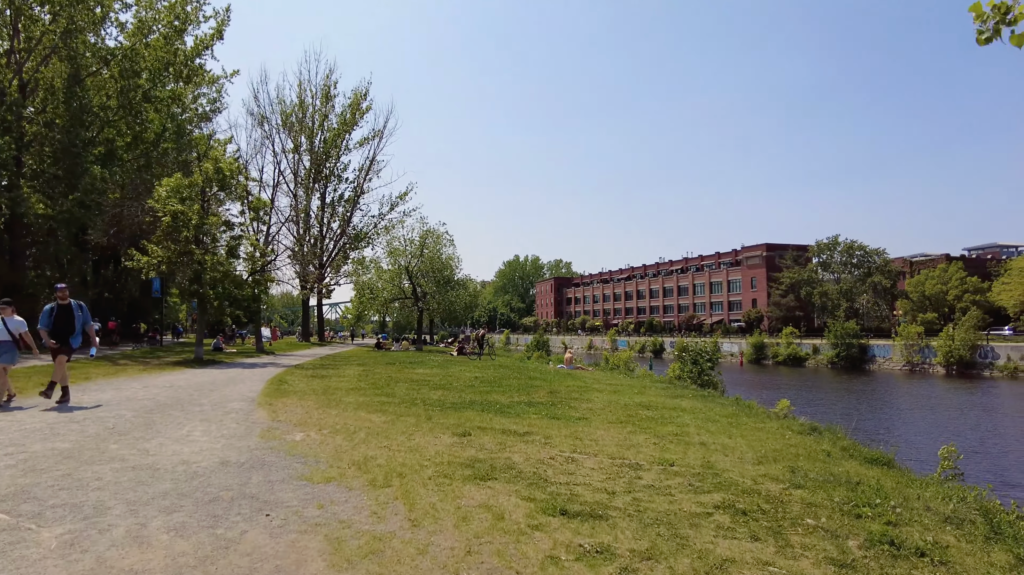
Centre Street acts as the neighbourhood’s social spine. It is lined with independent cafés, bakeries, bars, and restaurants. Around Charlevoix Metro, you will also find a cluster of lively local spots including Sunday evening karaoke nights in Taverne le Chic Regal. And in summer, the Lachine Canal is just minutes away, making it easy to step out of the house, slip on sandals, and be sunbathing by the water or meeting friends on a patio in no time.
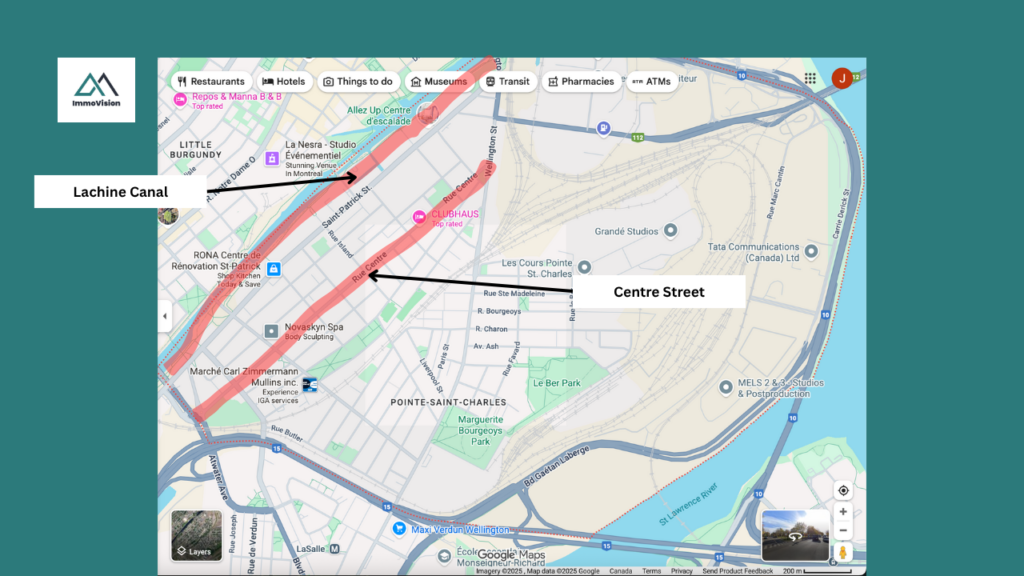
The location is another huge advantage. From the Point, you have easy access Montreal’s historical Old Port, the revitalized Wellington Street in Verdun, and the riverfront running and cycle path that runs all the way to LaSalle.
Pointe-St-Charles demographics
What truly distinguishes Pointe-St-Charles is its housing mix.
Historically, nearly 40% of the housing stock was non-market or social housing. This was one of the highest rates in Montréal. However, through gentrification this has lowered to around 27% in 2021. This has created a rare mix of long-time working-class residents, newer middle-class professionals, and families who remain rooted thanks to strong community institutions. The result is a neighbourhood that is bilingual (although more Francophone than Anglophone), socially diverse, and deeply community-oriented.
Economically, the neighbourhood sits in the moderate-income range. The median household income is around $72,788, and the median employment income is just over $45,700. Immigration and cultural diversity are present but not dominant.
Age-wise, the area has an unusually high share of residents aged 25–39 (over 31%). These young residents give the neighbourhood an energetic, youthful feel. At the same time, families with children form a noticeable part of the community (about 14.6% are ages 0–14). Meanwhile seniors make up a smaller share (10.9%). Households tend to be small, almost half are single-person homes, and the average household size is just 1.9 people. This statistic reflects the blend of singles, couples without children, and young families.
Pointe-St-Charles commute
In this section, we take a look at what it’s like to commute in Pointe-St-Charles using three main modes of transport:
Car
Owning a car in Pointe-St-Charles is generally much easier than in denser areas like Griffintown or downtown. Most streets offer on-street parking, the density is lower, and many homes, especially townhouses and duplexes, include laneways or small parking pads. Street parking restrictions apply in winter months, but overall, finding a spot is rarely a major challenge.
The neighbourhood is also exceptionally well-connected to major roadways. From Pointe-St-Charles, you can reach:
- Highway 15 (Décarie / Champlain Bridge)
- Highway 10 (Autoroute Bonaventure)
- Route 112 / Wellington connecting Verdun, the South Shore, and central Montréal
Because of its location just south of downtown, you can drive to Griffintown, Saint-Henri, Verdun, Westmount, the Old Port, and downtown in just a few minutes. You also have access to Communauto, which is a Montreal car-sharing service that lets you rent vehicles by the minute, hour, or day. Many residents prefer this because it removes the cost and hassle of owning a car while still giving them on-demand access to one whenever they need it.
Public transport (metro and bus)
If you don’t drive, Pointe-St-Charles still offers reliable and well-distributed public transit options. In terms of metro, rhe neighbourhood is centred around the Charlevoix metro station (Green Line), which is usually a 5–15 minute walk from most addresses. There is also LaSalle metro (Green Line) which right on the eastern edge of the neighbourhood and Lionel-Groulx Interchange which is about 15 minutes walk from Pointe-St-Charles and offers a Metro (Orange and Green lines) plus a direct bus link to the airport.
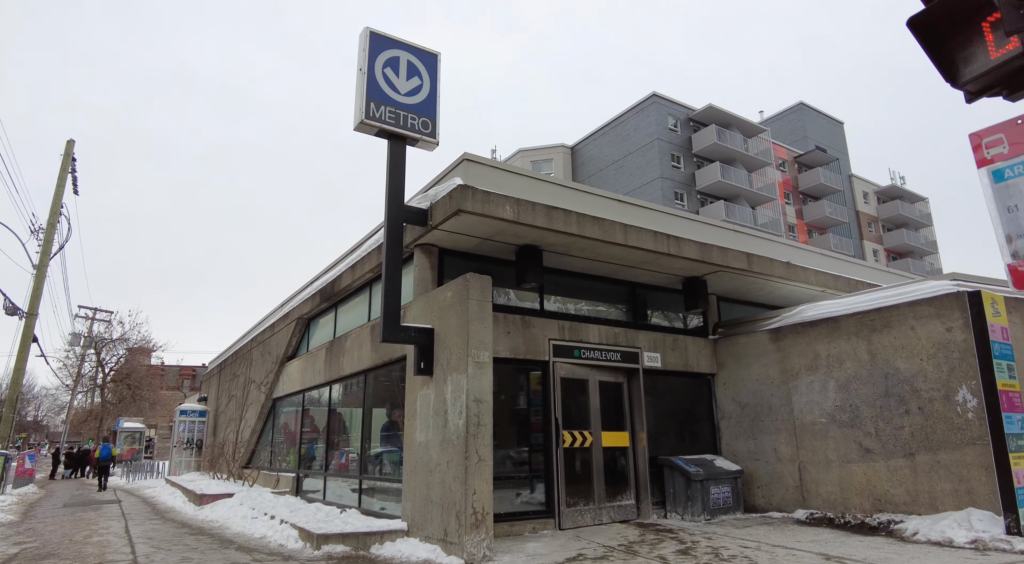
Multiple bus routes run through the area, especially along Centre Street, Rue Charlevoix, and Wellington. These buses connect you directly to:
- Atwater Market
- Saint-Henri / Lionel-Groulx interchange
- Verdun and LaSalle
- Griffintown and the Old Port
Public transit here is not as dense as in Griffintown, but it is very practical, especially if you’re near Charlevoix or Centre Street.
Bike
Pointe-St-Charles is one of the best cycling neighbourhoods in Montréal. This is especially if you live close to the canal. The Lachine Canal bike path runs along the northern edge of the neighbourhood, giving you car-free access to:
- Old Port (10 minutes)
- Saint-Henri & Atwater Market (5–10 minutes)
- LaSalle (15–20 minutes)
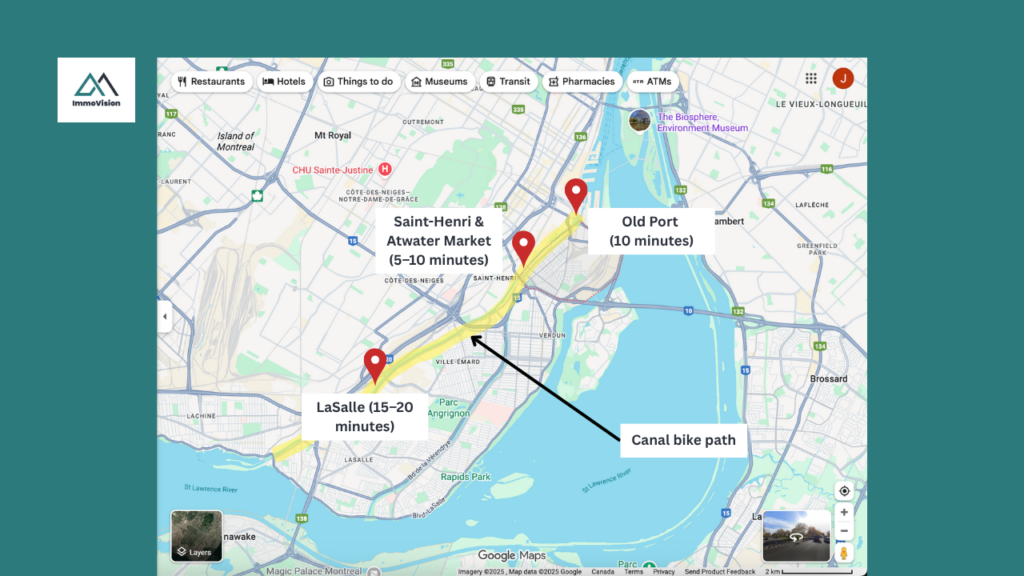
There are also BIXI stations all throughout the neighbourhood. These are places where you can use an app to rent and drop off BIXI bikes. This includes near parks, metro entrances, and Centre Street. For many residents, especially younger households and parents , cycling is the fastest and most enjoyable way to get around.
Because the Point is flat and compact, biking is often quicker than driving for short trips and, unlike in some parts of the city, you aren’t constantly navigating heavy traffic.
Is Pointe-St-Charles safe?
Pointe-Saint-Charles wasn’t always seen as a safe neighbourhood. For much of the 20th century, especially after the decline of industry in the 1960s and 1970s, it had a reputation as one of the toughest working-class districts in Canada. Poverty was high, factories were closing, and many blocks suffered from neglect. But that reputation belongs to a very different era. Today the picture is far more nuanced.
According to the SPVM’s 2021 crime report for PDQ 15 (the police district that covers Pointe-Saint-Charles, Saint-Henri, and Little Burgundy), the area sees around 42 crimes per 1,000 residents, roughly 14% higher than the Montréal median. Most of this difference comes from typical inner-city issues such as property crime and minor disturbances.
More encouragingly, long-term trends show a 19% drop in total crime since 2012, and vehicle thefts are actually below the city median. In practical terms, Pointe-Saint-Charles today feels like a lively, urban neighbourhood. It is safe to walk (day or night) but still carrying the usual city-core caution around bikes, unlocked cars, or late-night rowdiness that’s often found around bars.
What are the schools like in Pointe-St-Charles?
Pointe-Saint-Charles has a small but well-established school network, with both French and English options right in the neighbourhood.
The main francophone elementary school, École Jeanne-LeBer, sits at the heart of the Point and has roughly 300 students. For families eligible for English schooling, St. Gabriel Elementary and has roughly 220 students.
Because Montréal’s school system is strictly zoned, parents should confirm eligibility by searching their exact address, not just the fact they live in Pointe-Saint-Charles. French-language zoning in the area is handled by the Centre de services scolaire de Montréal (CSSDM), while English-language eligibility is administered through the English Montreal School Board (EMSB).
Both boards offer address-lookup tools that tell you precisely which elementary or high school a child can attend. The best approach to find a school is to enter your address on the school board website. You will then want to visit the school and also check local reviews.
Overall, Pointe-Saint-Charles offers some good schools and is well suited to families who value a walkable, neighbourly environment.
What is the Pointe-St-Charles real-estate market like? (Q4 2025)
The table below summarizes the approximate property prices for single-family homes and divided condos in Pointe-Saint-Charles, along with broader benchmarks from the surrounding Sud-Ouest and Montréal Island.
| Neighbourhood / Area | Property Type | Price (Approx.) | Notes |
|---|---|---|---|
| Pointe-Saint-Charles | 1 bed condo unit | ~$400,000–$500,000 | Typical range; some sources note ~$400k for older or smaller condos with upside after renovations. (Samcon) |
| Le Sud-Ouest (overall) | 1 bed condo unit | ~$559,000 (Q1 2025) | Centris map data for Sud-Ouest sector; slight YoY variation. (Centris) |
| Montréal Island | 1 bed condo unit | ~$429,000 (Oct 2025) | WOWA island-wide median. (WOWA) |
| Montréal Island | Single-Family Homes | ~$632,000 (Oct 2025) | WOWA island-wide median. (WOWA) |
Pointe-Saint-Charles remains one of the more accessible neighbourhoods for buyers who want to live near downtown Montreal. It offers a mix of new, renovated and old properties. Buyers should expect to pay a premium for newer canal-adjacent buildings on Mullins, Wellington, and St-Patrick, and a relative discount for older interior stock on streets like Bourget or Bourgeoys. Furthermore, if you like to travel, renting these units for short term leases is very easily. This can be great if you want to get away for a couple of months in the winter.
The most limited type of properties in the area is the multi-storey, freehold townhouses. This makes them the highest priced and fastest rising property prices in the area. Multi-storey condo townhouses also sell at a premium, though they are more common than true freeholds. Renovated plexes can also be expensive, but pricing varies widely depending on size, level of renovation, and income potential.
Buying or selling in the Point can be complex, especially given the neighbourhood’s mix of older housing stock and newer waterfront developments. Many of the older homes come with typical Montréal construction risks such as block foundations, moisture issues, aging plumbing or electrical. Therefore buyers should ensure that potential repair costs are properly reflected in purchase price during the negotiation.
While the broader Montréal market continues to rise at about 9% year-over-year, Pointe-Saint-Charles still offers selective opportunities for buyers who understand the micro-markets within the neighbourhood. Values can fluctuate significantly from one street or building to the next. Therefore it is essential to rely on a realtor who knows the area well and can provide an up-to-date, property-specific assessment.
Final thoughts
I have many fond memories of living in Pointe-Saint-Charles. We lived in an old-style triplex just off Centre Street, a short walk from the Lachine Canal. Everything we needed was within walking distance, and in the summer I loved being outside, walking along the cancal front, grabbing a cold beer on a terrace, or riding a Bixi over to visit my friends in Griffintown, Verdun, St. Henri or Old Port.
Of course, living in an older building came with its challenges. Our unit was tiny, the layout was awkward, and we dealt with recurring issues like leaking plumbing and mould. The lack of built-in air conditioning didn’t help, and we eventually realised that the cost of ongoing maintenance and rising property taxes simply didn’t make sense for us as a young family. That’s ultimately what pushed us toward the West Island, where we found more space for a significantly lower price.
Still, I would be lying if I said I didn’t miss the convenience and character of the Point. I’ve lived in more than 15 countries and over 60 different cities, and I can honestly say the community in Pointe-Saint-Charles is unlike anything I’ve experienced anywhere else.
Winter in a small apartment? I don’t miss that.
But the Point? Absolutely.