
I lived on the opposite Little Burgundy for 6 years.
Almost everyday I walked into Little Burgundy to do groceries, visit the Sports Centre or meet up with friends. In this article I will explain what it is like to live in Little Burgundy. More specifically I will cover:
- Where is Little Burgundy located?
- What is the history of Little Burgundy?
- What is it like to live in Little Burgundy?
- Little Burgundy demographics
- Little Burgundy commute
- Is Little Burgundy safe?
- What are the schools like in Little Burgundy?
- What is the Little Burgundy real-estate market like? (Q4 2025)
- Final thoughts
Where is Little Burgundy located?
Little Burgundy is located in Le Sud-Ouest borough of Montreal. It is bordered by Atwater Avenue to the west; Guy Street to the east; Saint-Antoine Street to the north; and the Lachine Canal to the south.
What is the history of Little Burgundy?
Historically, Little Burgundy was the eastern edge of the neighbourhood of Saint-Henri. And for most of its early history it was not considered separate. Therefore, the story of Little Burgundy begins in the late 17th century, when the area (now known as Saint-Henri) was the designated site of a tannery along the banks of the small Rivière Saint-Pierre. Several other tanneries followed, and locals referred to the cluster simply as “les tanneries.”
As the small settlements around the tanneries grew, the population was granted a parish in 1810. The parish was dedicated to Saint Henry (Henri) of Bavaria. Because of this, the area took on the name Saint-Henri-des-Tanneries. Over time, the “des-Tanneries” portion of the name faded from everyday use, and the district became known simply as Saint-Henri.
1825 – the “Harlem of the North”
In 1825 when when Lachine Canal opened, industry exploded along its banks. People poured into the area seeking work. It was during this industrial boom that the section we now call Little Burgundy began to take shape as a sub-neighbourhood of Saint-Henri. The area attracted young black men from the United States, the Caribbean and parts of Canada. During this period Little Burgundy was known as the “Harlem of the North” or the “Black City below the hill”.
These men came to Little Burgundy because it was a place where they could get jobs working on the railroads. More specifically, black men worked as primarily sleeping car porters on the railway. This was one of the few respected professions available to black men at the time. Their wives often found work as domestic servants and maids in the wealthy white neighbourhoods of Westmount and downtown Montréal
![Black sleeping car porters employed by the Canadian Pacific Railway. [Provincial Archives of Alberta/A9167]](https://immovision.ca/wp-content/uploads/2025/11/Sleeping-Car-Porters-in-Montreal.jpg)
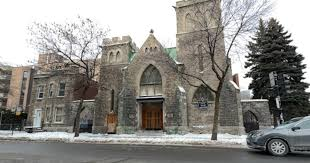
By 1929, Montreal’s population was around 1 million people which included 5,000 black people living in Little Burgundy. The pillar of this community was Union United Church. This was founded in 1907 by Black railway porters and their wives who had been excluded from “all-white” churches in Montréal. The church was a place for worship, but it also served as a community centre. Legendary jazz musicians Doctor Oliver Jones and Oscar Peterson both learnt to play music in the church.
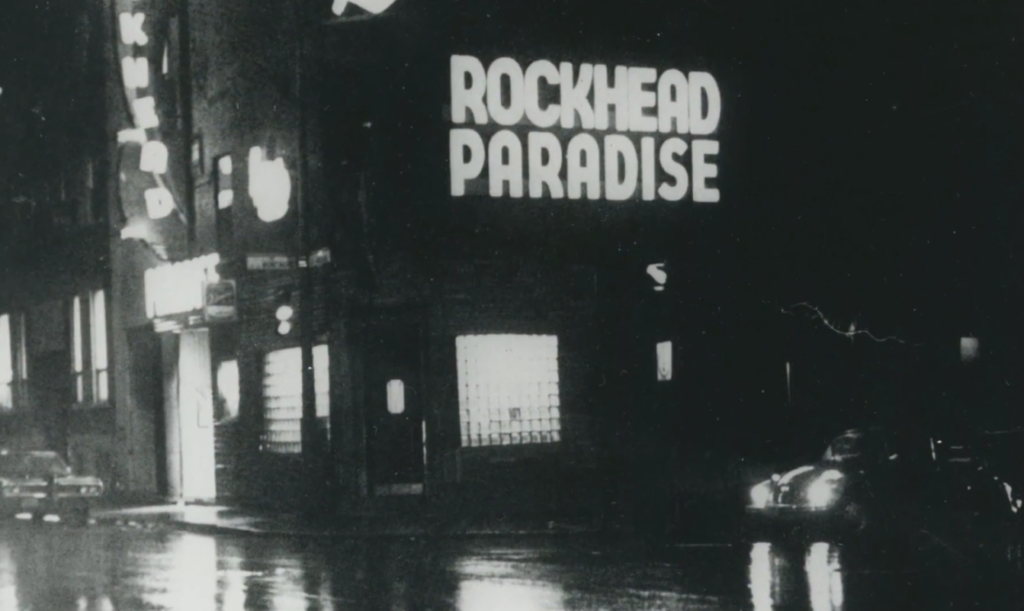
The area was also known for Rockhead’s Paradise. This was a bar founded by a black man named Rufus Rockhead in 1928. At this time the United States was under prohibition. As such, US citizens would travel to Montreal where alcohol restrictions did not apply. This era was the “Jazz era”, with a lot of Jazz created in Little Burgundy and Montreal.
1960s and urban renewal
In 1959, when the St. Lawrence Seaway opened, this impacted every neighbourhood in the Le Sud-Ouest Borough of Montreal. One by one, the great industrial employers in the area closed their doors. Some relocated and others shut for good. Manufacturing employment fell by a staggering 70% between 1967 and 1988. Working class neighbourhood like Little Burgundy emptied out and the area went into major economic decline.
Following this, the City of Montréal launched a major urban renewal program across the southwest. As part of this program, the city decided to build the Ville-Marie Expressway directly through the neighbourhood of Little Burgundy. Construction required a large portion of Little Burgundy’s Black community to leave and their homes were destroyed. This pushed families into scattered public-housing projects throughout Montréal, particularly LaSalle, Côte-des-Neiges, NDG, and the West Island.
Historians consistently describe the effect as devastating on the Black community in Little Burgundy. One source notes that Little Burgundy went from housing 90% of Black Montreal to under 2% within a generation. This brought an end “North Harlem” or “Black City below the hill” in Montreal.
What is it like to live in Little Burgundy?
After the mass demolition, the neighbourhood was reconstructed in three steps over the following decades. First, social housing was built in Little Burgundy’s northeastern part. Second, townhouses went up in the centre in the 1970s and 1980s. Finally, luxury condos were built along the Lachine Canal in the 90s.
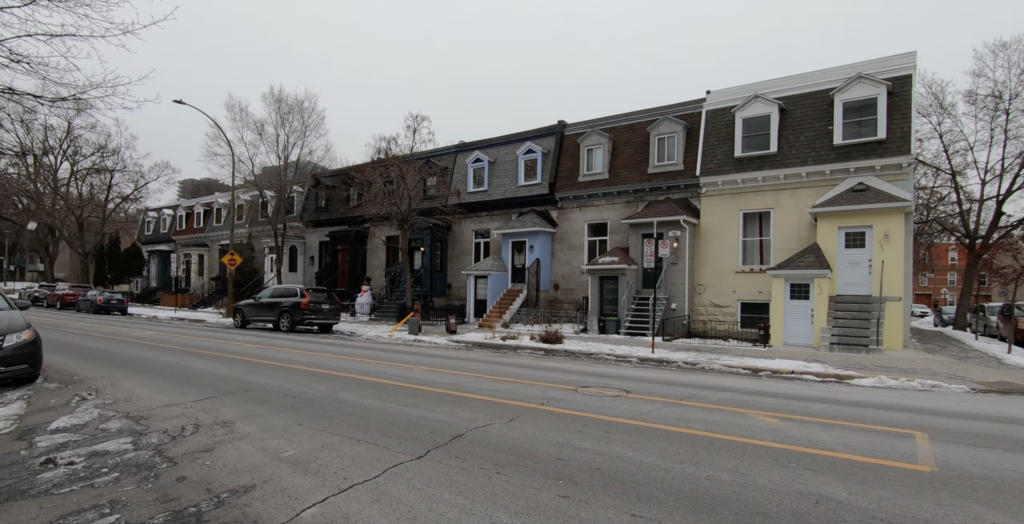
With the rebuilt houses, the neighbourhood went through a period of rapid gentrification. Many high income people moved in. Some now live in the old warehouse buildings along the Lachine Canal. The complex at 11 Rue Charlevoix for instance was once an industrial workspace, where working class men would have spent long, difficult shifts. Now this building is a collection of high-value residential lofts in one of the most desirable locations in the Le Sud-Ouest. Competition for homes here is fierce, and properties rarely stay on the market for long.
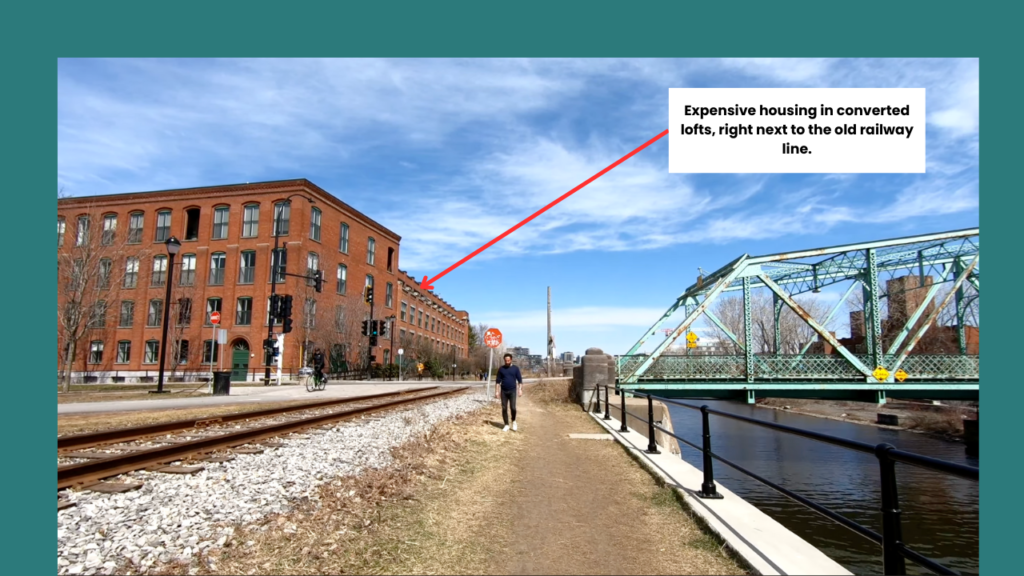
In contrast to the newer properties, there is also a substantial amount of older social housing. These buildings offer affordable rent to low income groups. For instance, you will also see blocks like Habitations Îlot Saint-Martin on Rue Saint-Martin. This creates a visible low income group in the neighbourhood, although this group is now very much in the minority.
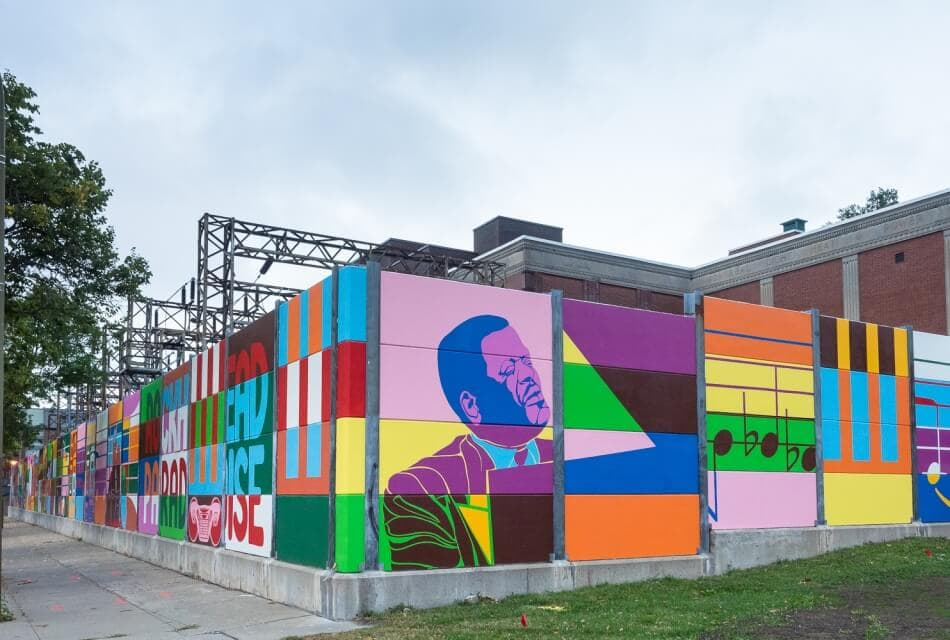
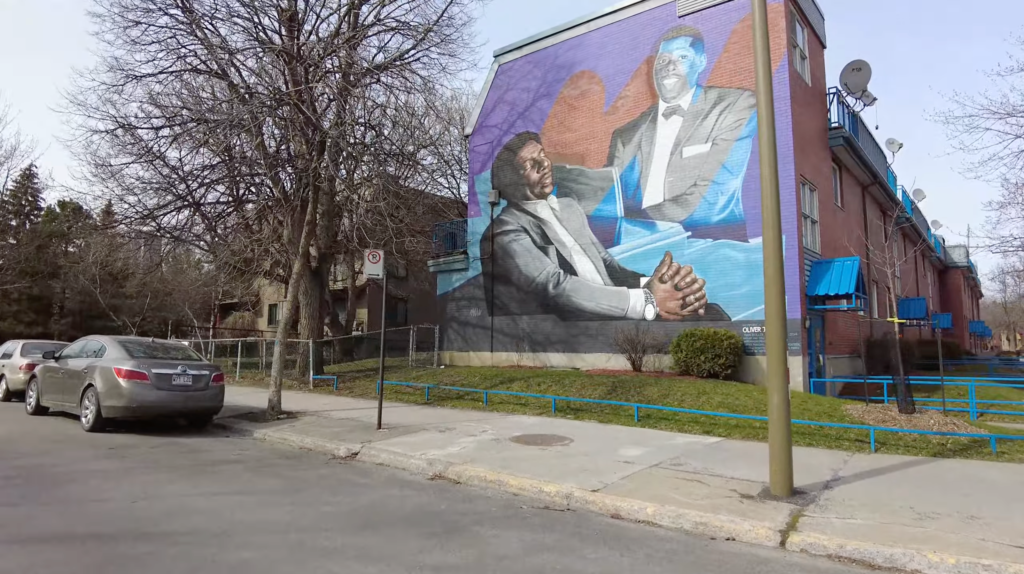
Little Burgundy’s history is still visible in the graffiti, the old brick industrial buildings, and the cultural landmarks that survived renewal. You can see murals honouring the neighbourhood’s Black heritage. In addition to adding colour to the neighbourhood, these murals also draw in tourists.
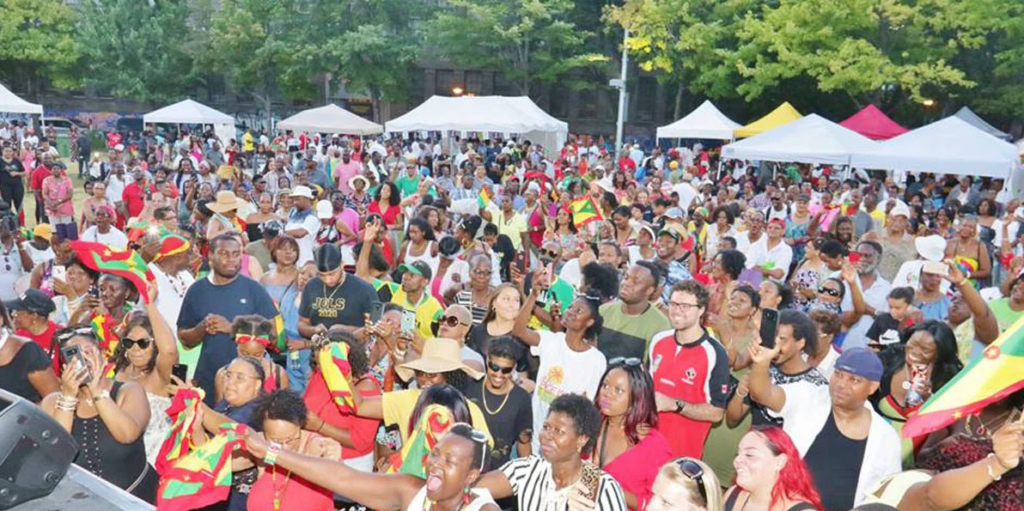
Each year, summer festivals featuring hip-hop, jazz, and Caribbean music still come to Little Burgundy. These events draw out the full spectrum of locals from residents of Le Sud-Oust Borough. And although the scene today may not resemble the jazz-club era of Oscar Peterson, or the legendary nights at Rockhead’s Pardise, these types of events remind us of the Little Burgundy’s Black working class roots.
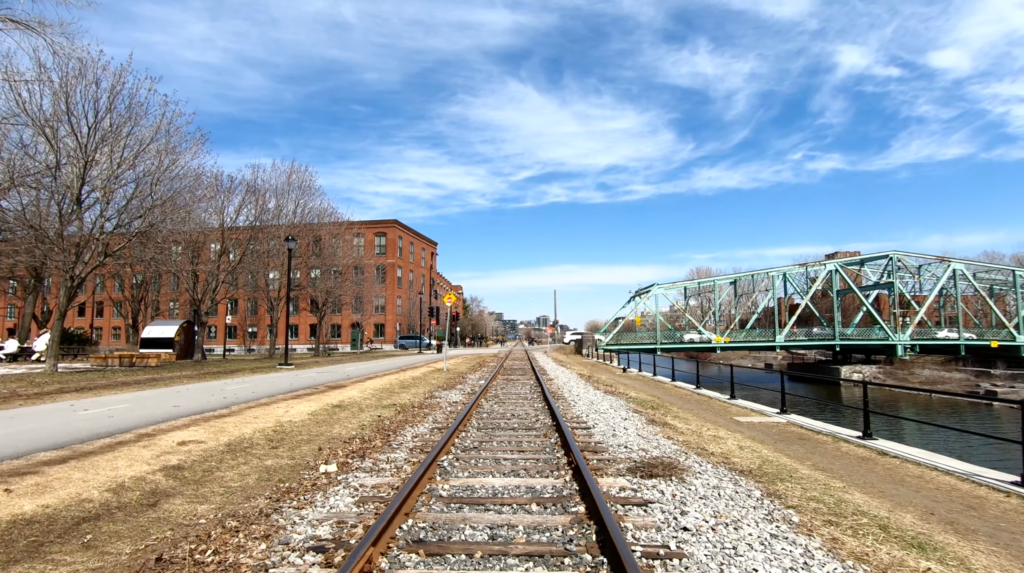
Lastly, Little Burgundy is extremely walkable, family friendly, packed full of independent cafes, bars and restaurants. It also gets very active in summer, especially along the Lachine Canal. Here you can still see the old railroad track, a reminder of a not so distant past.
Little Burgundy demographics
Between 2016 and 2021, the population of Little Burgundy’s grew by 40%. This is faster than anywhere else on the Island of Montreal where the average neighbourhood grew just 3%. This was in part due to the integration of the Griffintown sector. This contributed to roughly 50% of the population increase.
Over just five years, the number of low-income residents dropped has also dropped by 57%. Analysts link this to strong gentrification and wealthier newcomers. In 2021, about 11% of residents were low-income, but at the same time around 25% of residents were in the top 20% of incomes for the whole Greater Montréal area. This suggests that the neighbourhood has a big income gaps. As such, you will find a solid middle to upper-middle class moving in, but still a noticeable low-income population living in social housing.
In terms of age, these people tend to be young adults aged 18 to 34. They make up 38% of the population compared to 26% for Montreal. This suggests that the neighbourhood has a good number of young working professionals. By contrast, the proportions of children (0-17 years old) and seniors are significantly lower than the Montreal average. This strong presence of young adults is characteristic of central Montreal neighbourhoods, including several in the Le Sud-Ouest borough.
The area is also relatively bilingual with 62% of the residents saying that they are able to hold a conversation in both English and French. At home, only French is spoken by 38%, English by 30%, and a non-official language by 22%. The main non-French and non-English languages in the area are Bengali, Arabic and Chinese.
All of this suggest that behind the trendy cafés, and expensive properties, there is still a lot of social vulnerability. There are many single-parent households, many people living alone, and statistically more youths struggling at school than elsewhere in the city.
Little Burgundy commute
In this section, we take a look at what it’s like to commute in Little Burgundy using three modes of transport:
Car
Owning a car in Little Burgundy is generally manageable, although it depends on where you live. The newer semi-detached homes, townhouses and converted loft buildings often include private driveways, garages, or reserved parking. However, the older blocks especially near the co-ops and social-housing clusters rely heavily on street parking. This can can be competitive in the evenings.
The neighbourhood also offers excellent access to major roadways. The Ville-Marie Expressway (A-720) is less than a minute away and connects you quickly east toward downtown and the tunnel, or west toward Décarie and NDG. You’re also close to Atwater Avenue, which gives you fast access to Verdun, LaSalle, and the Champlain Bridge.
If you work downtown or in the surrounding boroughs, Little Burgundy is one of the most centrally located neighbourhoods in Montreal. This makes car commuting straightforward as long as parking is arranged. However, public transport is also highly accessible, so most residents for shorter commutes.
Little Burgundy is also serviced by the Communauto. This is a North American car-sharing company based in Quebec. It allows members to book a vehicle for a short duration (hourly or daily) as an alternative to owning a private car.
Public transport (metro and bus)
If you don’t have a car, you’re still in a great location.
Little Burgundy is very well served by public transit. The neighbourhood sits between two metro stations on the green line:
- Lionel-Groulx (Green + Orange Line transfer)
- Georges-Vanier (Green Line)
Most residents are a 5–10 minute walk from one of these stations. Lionel-Groulx is particularly valuable, since it gives you immediate transfers between Montréal’s two busiest metro lines. This is perfect for commuting downtown, to the Plateau, Rosemont, NDG, Verdun, and the South Shore via Longueuil.
Little Burgundy is also served by several frequent bus routes along:
- Notre-Dame Ouest
- Atwater
- Guy / Côte-des-Neiges
- St-Antoine
These routes give you fast connections into downtown, the Old Port, Westmount, Verdun, and Saint-Henri. You can also take a 24/7 bus service directly to the airport from right outside Lionel-Groulx (bus 747).
If you need regional or intercity access, Lionel-Groulx station connects to Gare Centrale (Montreal’s central station). From here you can find VIA Rail, Amtrak, and the REM toward the airport.
Bike
Little Burgundy is one of the best cycling neighbourhoods in Montréal. This is thanks to its direct connection to the Lachine Canal bike path, one of the most scenic and well-maintained routes in the city. From the canal, you can ride:
- East toward Old Montreal and the Old Port
- West toward Saint-Henri, Lachine, and the Lakeshore
- North into downtown via Atwater or Guy
Inside the neighbourhood itself, you’ll find bike-friendly streets, designated bike lanes, and abundant BIXI stations throughout the spring and summer. BIXI is a public bicycle-sharing system in the Montreal. It allows users to rent bikes from a network of automated stations located throughout the city. For residents who work downtown or in neighbouring boroughs, cycling often ends up being the fastest option. This is especially the case in the rush hour.
Is Little Burgundy safe?
The neighbourhood police station responsible for Little Burgundy and surrounding areas is PDQ 15. In 2021, they reported that total Criminal Code offences fell by 19% over the ten-year period from 2012 to 2021. This is compared with a -27% drop city-wide. This indicates that the crime rate is improving. However, between 2019-2021 the number of offences was virtually stable (-1%), whereas overall Montréal saw a -6% reduction. More specifically, in that period, crimes against people in the neighbourhood rose by ~8%.
All that being said, you can consider Little Burgundy as a very safe place to live. Crime rates are simply comparable to any downtown area in Montreal. However, presence of dense social housing means there is a higher baseline of call-for-service activity compared to quieter suburban zones.
What are the schools like in Little Burgundy?
Physically inside Little Burgundy, there is one French primary school École De la Petite-Bourgogne. However, there are severeal schools in the surrounding neighbourhoods of Saint-Henri and Pointe-St-Charles that service the residents of Little Burgundy. These include French schools like École secondaire Saint-Henri and English speaking schools such as James Lyng High School.
In Quebec, public school placement is determined by catchment zones. For a complete list of French-language schools available for you, visit the CSSDM school locator and search by postal code. For English-language schools, use the EMSB address lookup tool to see which schools you qualify for.
It is also important to note that Quebec has strict language laws (Bill 101). These mean that only students who meet strict eligibility requirements may attend English public schools.
Although school performance varies by individual institution, the public schools serving Little Burgundy tend to rank lower to average compared to city-wide benchmarks. Because of this, and because Little Burgundy has a relatively high number of affluent families, many residents choose private schools in nearby Westmount. One of the most popular options is St. George’s School of Montreal. This a well-regarded English-language private school, 10 minutes drive from Little Burgundy.
What is the Little Burgundy real-estate market like? (Q4 2025)
Key Takeaways
– Good condition canal-adjacent or “row + yard” type homes are often in the high-600k through seven figure range, depending on size and condition of the property.
– Plexes meanwhile usually start near the broader Sud-Ouest median (~$800k) and climb above that on the better streets.
In 2022, the median home price in Little Burgundy was roughly $468,720. However, by 2025, condos specifically in Little Burgundy (Georges-Vanier sector) are showing a median of ~$520,000, which is higher than the median condo price for the entire Sud-Ouest (~$454,000). Across Montréal as a whole, average home prices have increased roughly 6–9% per year in 2024–2025, depending on the segment.
Putting this together, it is reasonable to infer that entry level condos in Little Burgundy are now clearly “premium Sud-Ouest” stock. This means that they are above borough averages, reflecting the location (canal, Atwater Market, downtown-adjacent).
For unifamiliales and plexes, the best numbers are for the whole Sud-Ouest (median ~$726k for houses, ~$794k for plexes) but in practice, the nicest Little Burgundy streets (Workman, Charlevoix, canal-facing, renovated rows) often sell well into the $900k–$1.4M+ range, judging from current active and recent listings.
Final thoughts
Little Burgundy today is, without question, fully gentrified.
The era when it was the beating heart of Montréal’s Black working-class community is long past. While traces still exist in murals and placards, most people walk through the neighbourhood without awareness of the history. Instead, you will focus on renovated brick warehouses, canal-side townhouses, cafés, and premium real estate.
That said, Little Burgundy still contains visible pockets of lower-income residents living in social housing. These areas add contrast and remind you that this neighbourhood has layered roots. But the overall feeling is undeniably upscale.
Lifestyle-wise, Little Burgundy is the kind of place where you can easily spend most of your time close to home. You have the Lachine Canal, Atwater Market, cafés, parks, gyms, and restaurants all within a short walk. For many residents, there is simply no need to go anywhere else. And if you’re fortunate enough to buy one of the canal-facing or larger renovated heritage homes, you get the rare combination of space, and charm, in a near-perfect location. It’s no surprise the market here is so competitive.
Personally, I would have loved to buy a home in Little Burgundy and send my children to one of the English private schools in Westmount. However, I will need a lot more readers of this blog before that happens.
If your priority is affordability, strong public schools, and a more family-orientated feel, you may be better off exploring areas like the West Island. But, if you want walkability, centrality, charm, and a neighbourhood with a fascinating past and a polished present, Little Burgundy remains one of the most desirable corners of Montréal.