
- Where is Lasalle located?
- What is the history of LaSalle?
- What is it like to live in LaSalle?
- LaSalle demographics
- LaSalle commute
- Is LaSalle safe?
- What are the schools like in LaSalle?
- What is the Lasalle real-estate market like? (Q4 2025)
- Final thoughts
Where is Lasalle located?
Lasalle is a boroough of the City of Montreal. It is located in the southwestern portion of the island, along the Saint Lawrence River, just to the west of Verdun, east of Lachine, and south of Côte-des-Neiges (NDG). It’s known for the Lachine Rapids, Parc des Rapides, its riverfront trails and its mix of residential neighbourhoods and industrial zones, as well as being a short 30 minute commute from downtown (more on this later).
What is the history of Lasalle, Montreal?
The area we now call Lasalle was originally part of Mohawk territory, which spanned parts of southern Quebec, the St. Lawrence River valley, and the Mohawk River valley in present-day New York State.
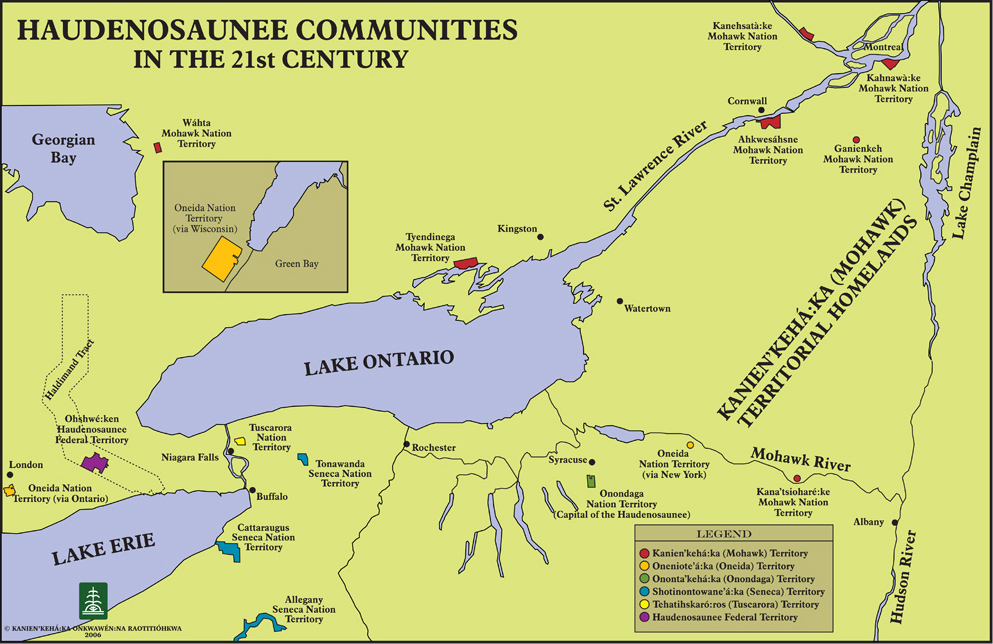
While the Mohawk used the Lachine Rapids region for seasonal hunting, fishing, agriculture, and travel, their main permanent villages were located farther south in the Mohawk Valley.
In 1667, René-Robert Cavelier de La Salle was granted the land as a seigneury by the French colonial government. At the time, the region was remote, heavily forested, and dangerous for new settlers. This was because of tensions that developed between the French and the Haudenosaunee Confederacy. These tensions were not only the result of French settlement on Mohawk territory, but also of a fierce struggle to control the beaver-rich hunting grounds and the fur trade.
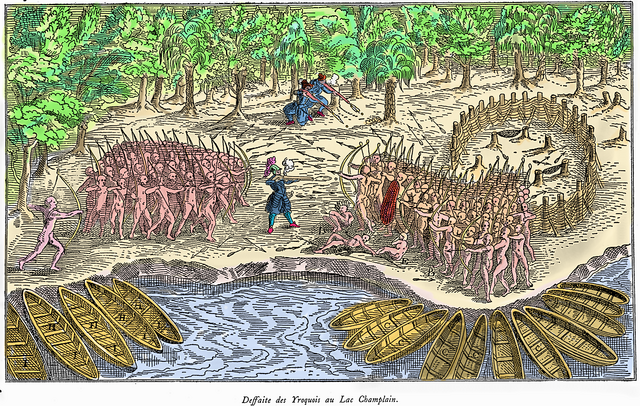
In spite of this tension, La Salle saw the site as a valuable base for exploration. He was especially attracted to the area because he believed the route westward beyond the rapids might lead to rich inland trade networks and a north western trade route to China.
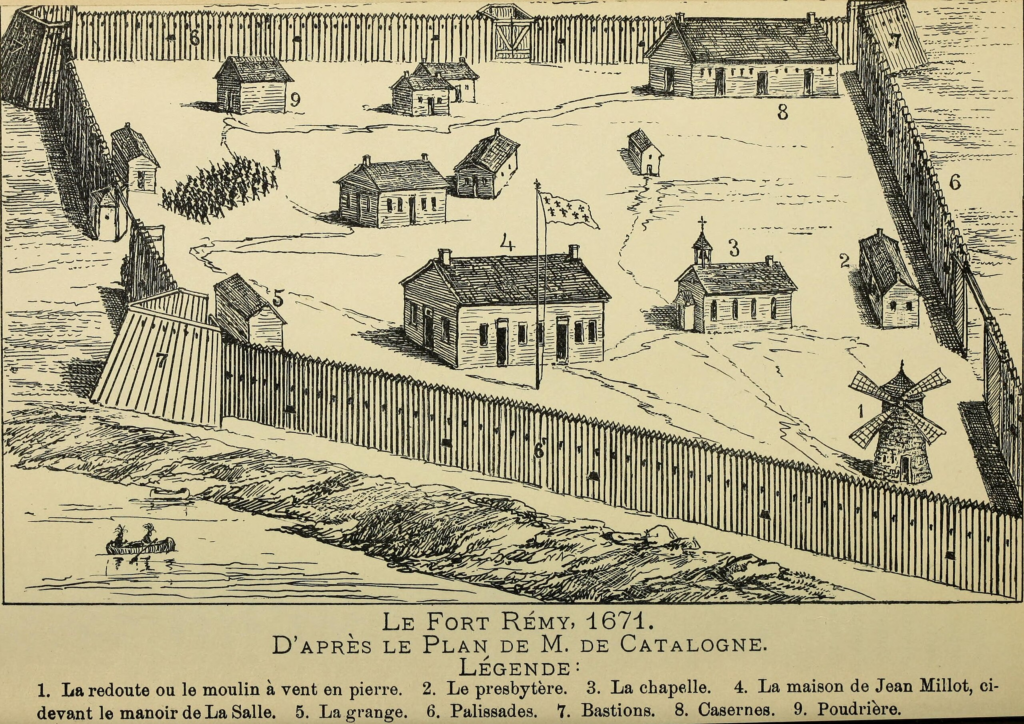
Through the 1700s and early 1800s, LaSalle grew slowly as a rural farming community. The landscape featured open fields, stone houses, and early water-powered structures such as the Fleming Mill, built in 1816. Despite its proximity to Montréal, it remained sparsely populated and largely agricultural for more than a century.
A major turning point came in 1825 with the opening of the Lachine Canal. The name ‘Lachine’ comes from La Salle’s mistaken belief that he could reach China by going west from Montréal. The Canal itself allows for allowed boats and cargo to safely bypass the Lachine Rapids, transforming Montréal into a major industrial and commercial hub.
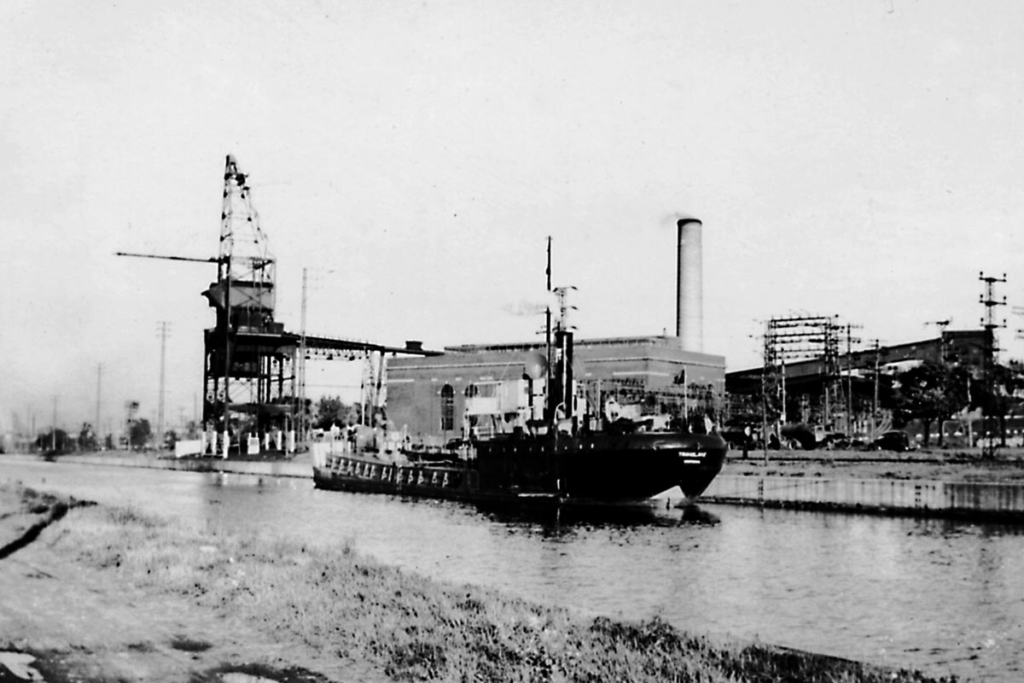
With the development of the Lachine Canal, industry arrived. Workers settled nearby, and LaSalle began its transition from farmland to an emerging industrial zone. The housing stock of this period included modest workers’ homes, early duplexes, and stone houses along the river.
Unlike neighbouring canal districts such as Griffintown which depended entirely on canal-related factories, LaSalle developed a diverse industrial base. Throughout the late 1800s and early 1900s, the borough hosted industries producing everything from alcoholic beverages and building materials to pharmaceuticals, plastics, chemicals, steel, and heating equipment. This economic diversity ensured that LaSalle continued to grow even after the canal closed to commercial shipping in 1970.
After the Second World War, Lasalle underwent a period of rapid suburban growth. New roads, rising car ownership, and expanding commercial hubs helped transform the borough into a family-oriented residential area. The housing stock of this era included bungalows, duplexes, triplexes, and low-rise apartment buildings that still characterize many of Lasalle’s streets today.
Since the early 2000s, Lasalle has continued to evolve. Former industrial areas have been redeveloped, the waterfront and Parc des Rapides have seen major improvements, and new low-rise condo developments have appeared along the river. At the same time, commercial zones like Newman Boulevard and Carrefour Angrignon have expanded into major retail anchors. Together, these investments have shaped LaSalle into the peaceful, diverse, and family-friendly borough that residents know today.
What is it like to live in Lasalle?
LaSalle is one of Montréal’s most varied boroughs. Unlike compact neighbourhoods such as Griffintown or Verdun, Lasalle stretches across a large area with very different micro-environments, housing types, and vibe. For this reason, your experience of living in Lasalle will depends enormously on where in the borough you are.
We can break Lasalle down into 5 different areas:
- Riverside LaSalle (Boul. LaSalle, Parc des Rapides area)
- Central LaSalle (around Newman Boulevard & major shopping areas)
- LaSalle Heights
- The “Old LaSalle” Streets (between Airlie, Centrale, Champlain)
- Industrial and commercial edges (North side, Highway 20 area)
Rent and property prices will be different depending on where in Lasalle you would ideally want to move to.
1. Riverside Lasalle (Boul. Lasalle, Parc des Rapides area)
Riverside LaSalle is the premium residential area of the borough. Homes here typically sell for $100,000 to $500,000 more than similar properties in Central LaSalle, and rental prices are generally $200 to $400 per month higher for comparable units. This stretch is located along the southern edge of LaSalle, running through Parc des Rapides and the surrounding riverfront green spaces
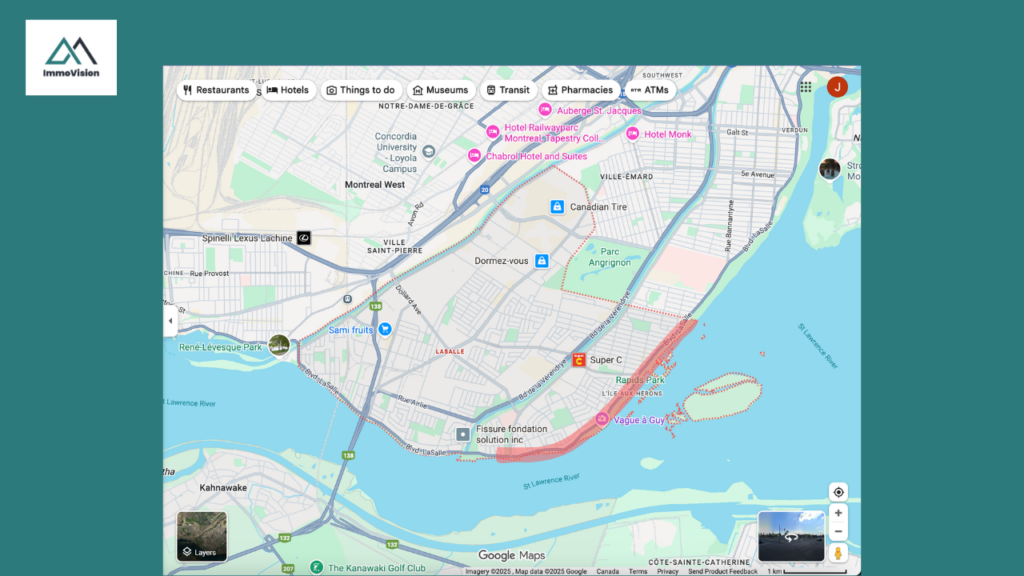
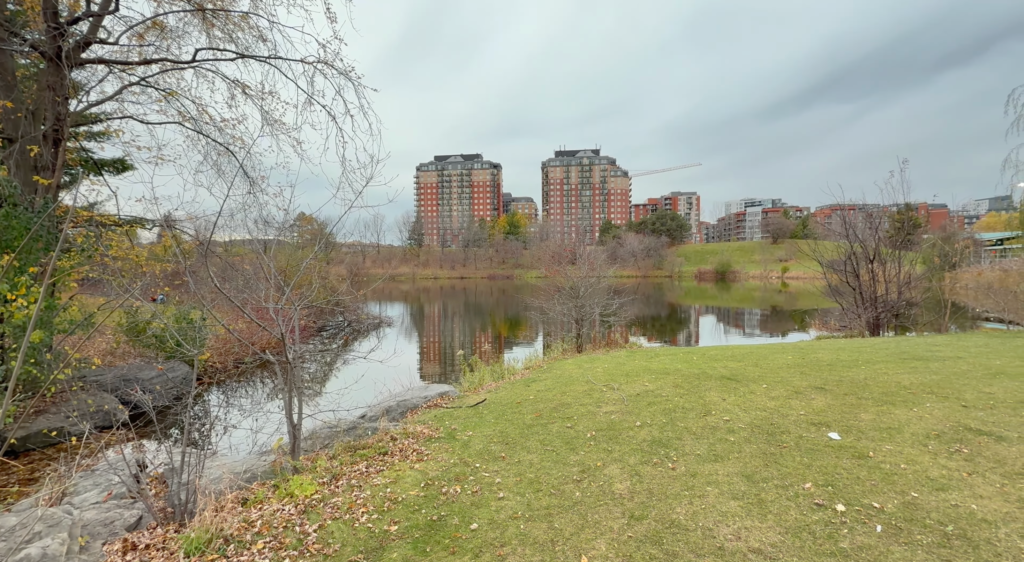
The reason that this area is the premium part of LaSalle is that it offers waterfront access, long walking paths, cycling routes, access to nature, and quiet residential streets lined with older duplexes and renovated suburban homes. The image below shows an example of some houses that open directly into Parc des Rapides.
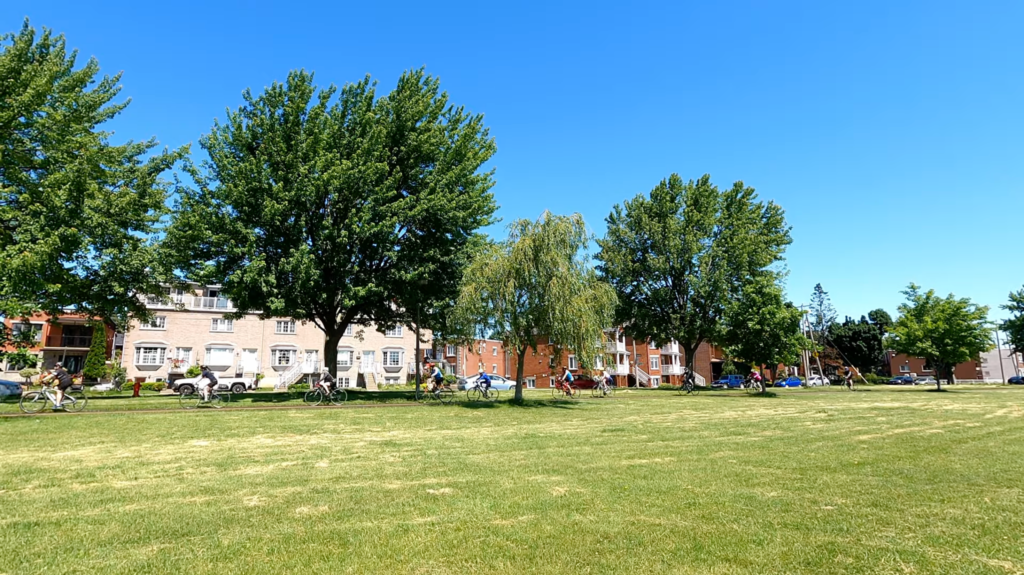
In the summer, lots of activities take place up and down the river. This includes paddle-boarding meet-ups, outdoor yoga sessions, surfing on the rapids and weekend cultural pop-up events. These recurring activities create a strong sense of community and make it easy to meet people in the area.
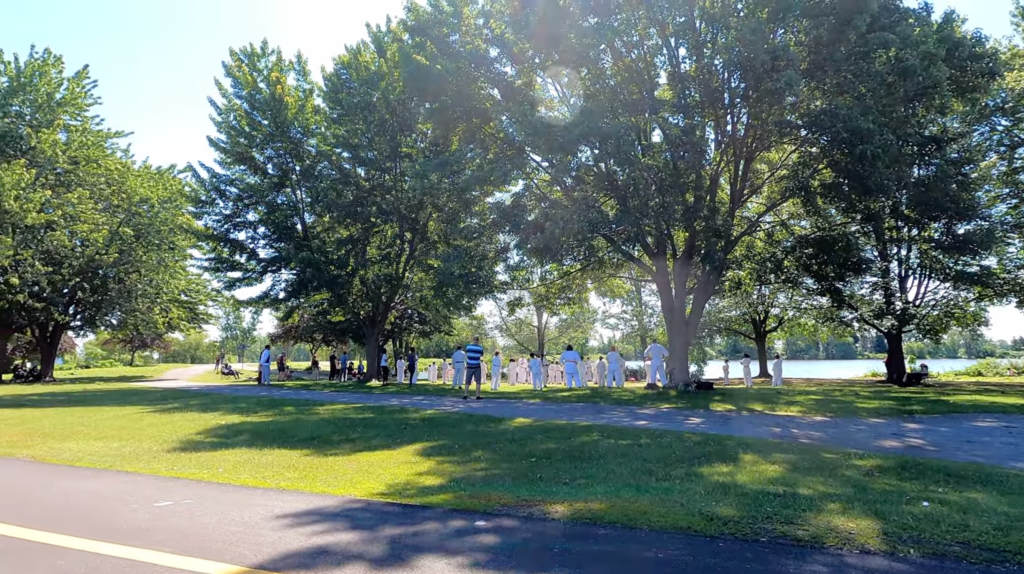
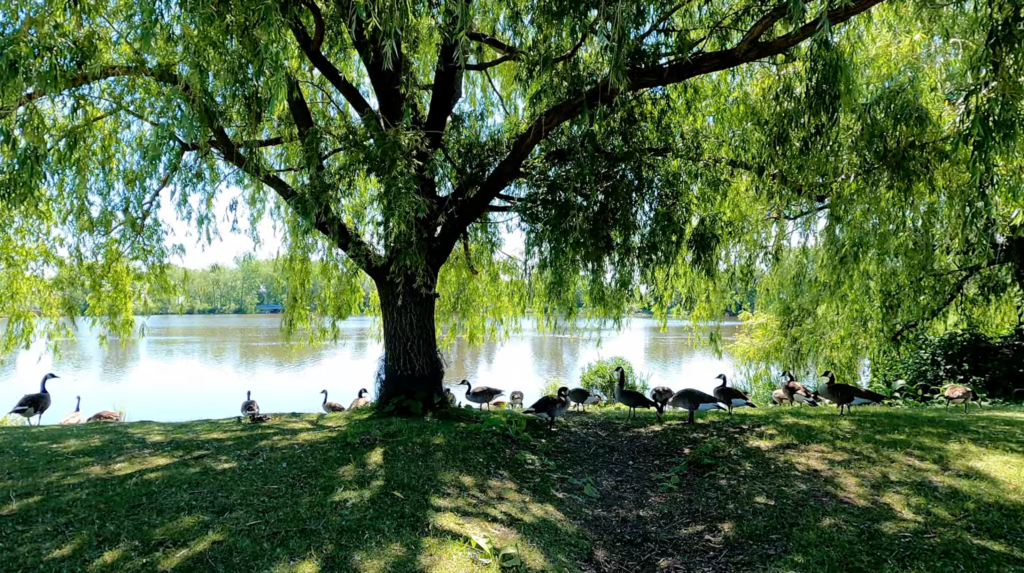
This entire area, from Parc des Rapides all the way down Boul. LaSalle to Verdun, feels almost like a small town on the water despite being minutes from downtown.
2. Central LaSalle (around Newman Boulevard & major shopping areas)
Next up, we have Central LaSalle. This area is more affordable than Riverside LaSalle and Old LaSalle. The area stretches from Newman Boulevard in the north down to Champlain Boulevard and the surrounding residential streets in the south.
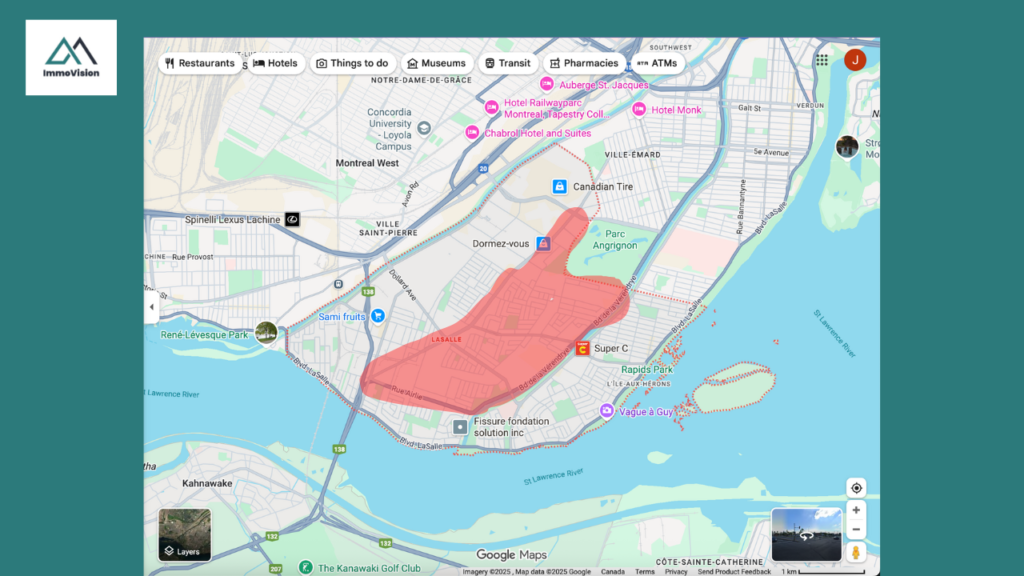
Central LaSalle is noticeably more affordable than Riverside LaSalle, with homes often selling for $100,000–$300,000 less and rents typically $200–$350 cheaper per month. The area has a wide range of housing including classic 1950s–1980s Montréal-style duplexes and triplexes and even detached houses. Of course, like in any urban area, the closer you get to the metro links, the more expensive properties become.
As you come out of Angringon metro, you immediately see a number of shopping plazas, sitting across from newly built, high rise condominiums. Inside these buildings, you will find mainly young professionals renting apartments. The condos here are slightly more expensive than those further from the metro and amenities.
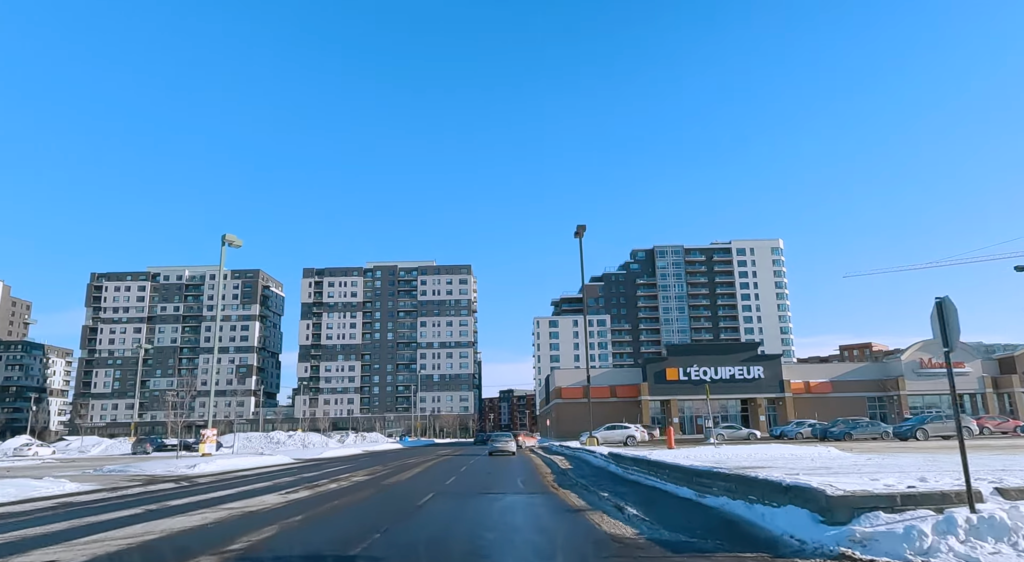
Turning west down Newman Boulevard, the road is very wide and not particularly pedestrian-friendly. As you travel down this street, you’ll see loads of restaurants, big-box stores, and fast-food chains. Here you can find everything from cafés and bakeries to supermarkets, pharmacies, and take-out spots.
Just off the wide, commercial stretch of Newman Boulevard, the neighbourhood quickly shifts into a more suburban residential feel. Here you’ll find rows of 1960s–1980s semi-detached homes, many of which have been updated or converted into condo-style units. Mixed in are modern-style duplexes and triplexes and a number of low-rise condo buildings from the 1980s–2000s. The result is a cleaner, newer-looking housing stock compared to older Montréal neighbourhoods, but with streets that were clearly designed around cars rather than pedestrians.
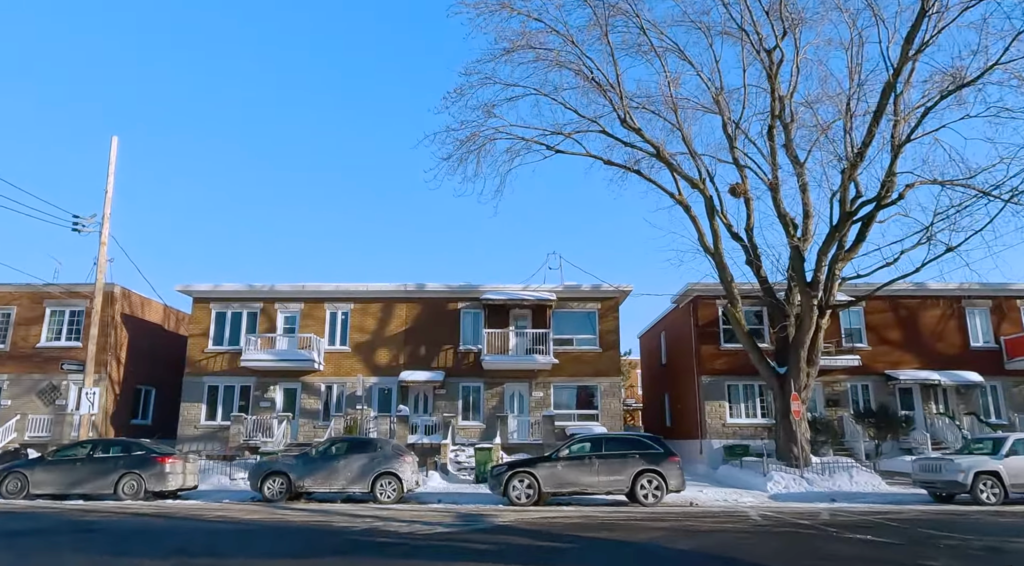
These properties are slightly more affordable in terms of rent and property value than those located directly opposite Angringon Park and Metro. Local’s in this area will need to either get a bus or drive to the metro and nearby park, as well as the Riverside area of LaSalle. Although this can be with relative ease. Angrignon Park is a major draw in summer, many locals go there to barbecue, picnic, and gather with family.
3. LaSalle Heights
LaSalle Heights is the area north of Highway 138. It is a quiet pocket of detached and semi-detached homes built mostly between the 1950s and 1970s. And it has the most suburban-feeling of any part of the borough.
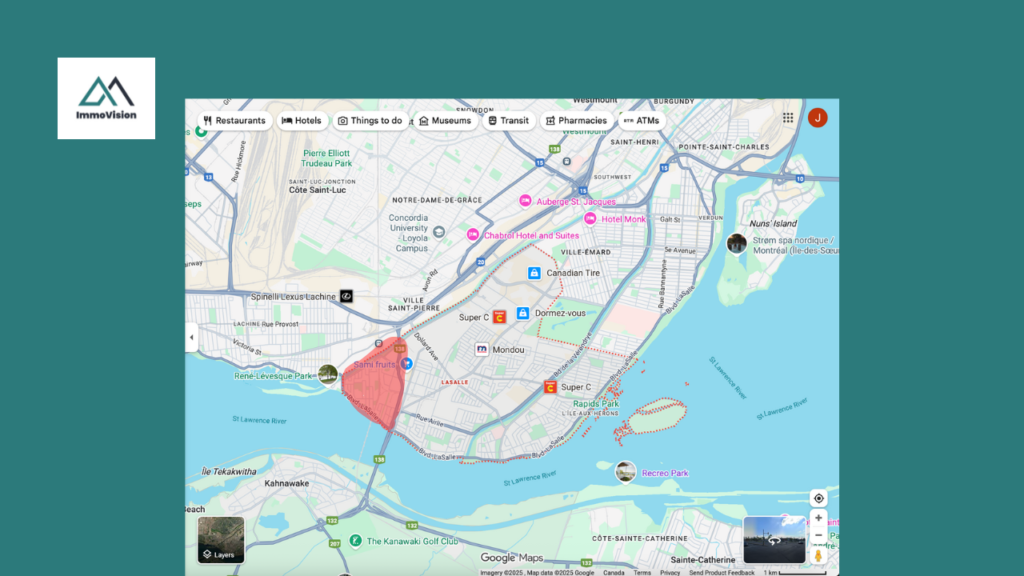
The streets here are wider, greener, and more residential than the Central LaSalle. The properties tend to have front lawns, driveways, and backyards. This gives the entire area a family-focused vibe. The housing stock is dominated by single-family homes, split-levels, and bungalows, with only small clusters of low-rise apartments. This makes it one of the less dense areas of the borough.
It’s not the most walkable part of LaSalle, however there is a bike path that runs along the river and takes you up the commuter train, that can take you downtown in about 20 minutes. It is peaceful, safe, and popular with families who want suburban comfort while still being just a short distance from the major shopping centres on Newman Boulevard and downtown Montreal.
4. The “Old LaSalle” Streets (between Airlie, Centrale, Champlain)
Old LaSalle sits in the southwest corner of the borough, near the St. Lawrence River, directly west of Parc des Rapides.
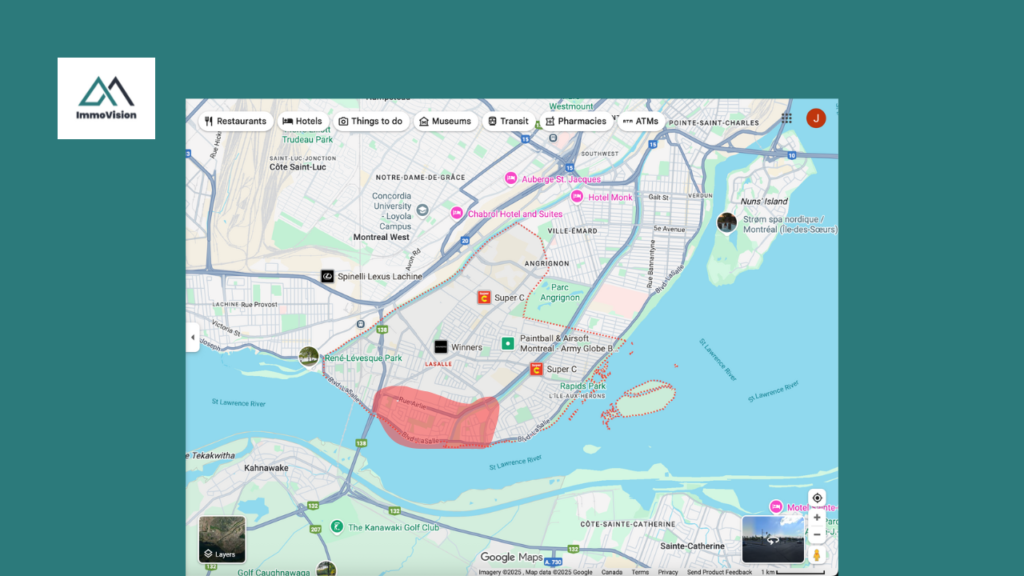
The Old LaSalle streets (Airlie–Centrale–Champlain) form one of the borough’s earliest residential areas, with homes dating from the 1920s to the 1950s. This is much older than the post-war, 1950s–70s suburban builds found in LaSalle Heights. The housing stock here is a mix of classic Montréal duplexes and triplexes, small single-family homes, and modest mid-century walk-ups. These give the neighbourhood a lived-in, village-like feel.
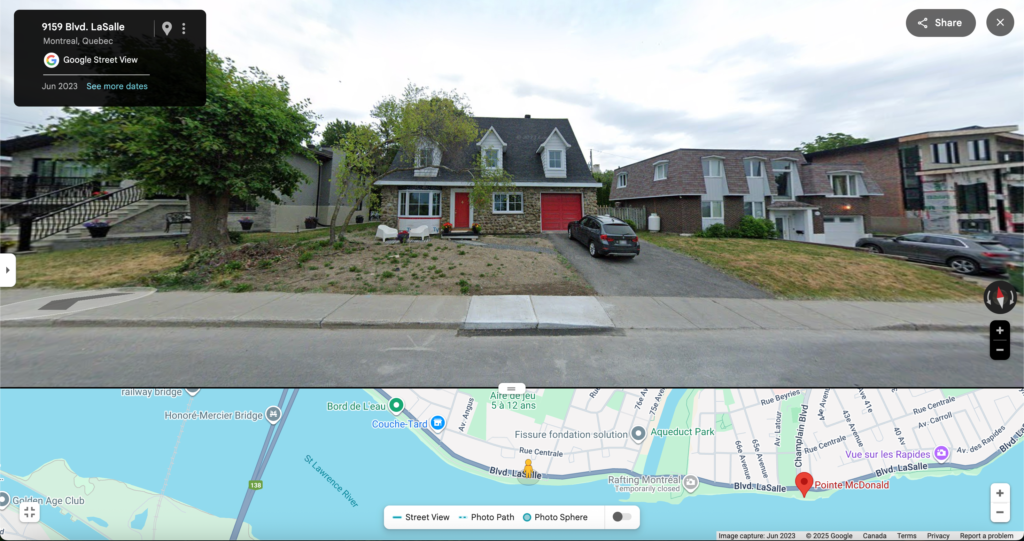
In terms of atmosphere, it sits comfortably between the two extremes. It is not as polished or high-value as Riverside LaSalle (although the prices are still high), but it is noticeably more walkable and with better river access than LaSalle Heights.
The name “Old LaSalle” simply reflects this area’s history as the original village core of the borough, before the rest of LaSalle suburbanized and expanded northward.
5. Industrial and commercial edges (North side, Highway 20 area)
These are a small strip of factories, warehouses and commercial depots that sit between the desidential neighbourhoods and Highway 20.
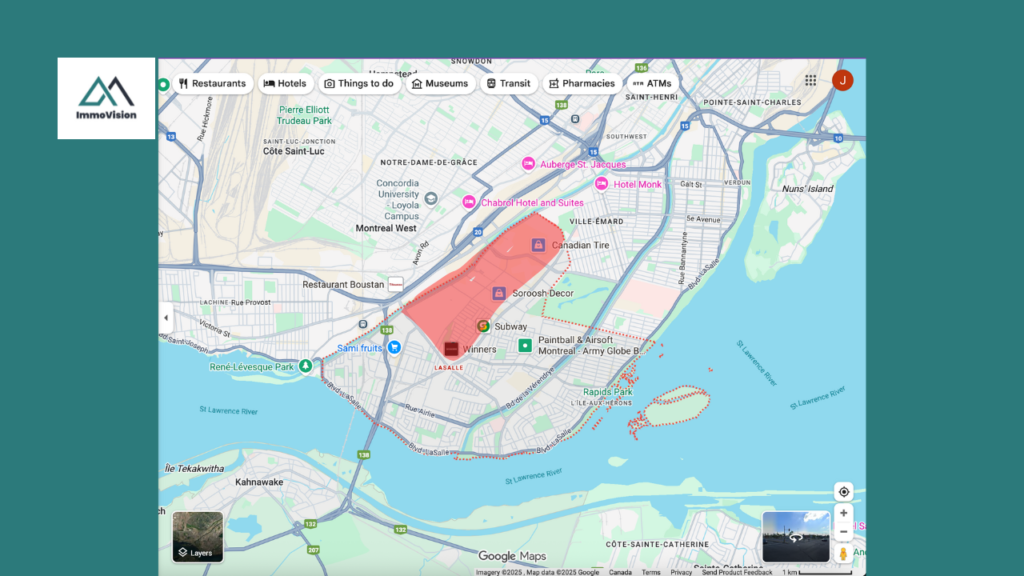
No one really lives in LaSalle’s industrial edges. It is a daytime zone of warehouses and factories. It’s generally safe, but empty and not pedestrian-friendly once businesses close.
Lasalle demographics
As of the 2021 census, LaSalle has a population of about 82,235 residents. The borough is fairly bilingual with roughly 42% of people speaking French at home; 36 % speak English; and about 22 % speak “other” languages.
About 35 % of the population are immigrants (i.e., people who came to Canada and now live in LaSalle). This number is slightly above the Montréal average of ~33%. Specific sectors (e.g., LaSalle Nord, LaSalle Centre-Ouest) have even higher shares of immigrant and visible minority residents.
The rate of low income households is ~11%, which is very slightly higher than the Montreal average of ~10%. And the number of adults between 25 – 64 without a high school diploma is ~11% compared with the Montreal city wide of average number of ~9%. So, whilst it is not an ultra-luxury area of Montreal, it is a fairly stable and diverse economically. There are pockets of higher vulnerability, but also many settled families and homeowners.
Of course, the closer you get to Riverside LaSalle, the more you’ll find higher-earning, long-term homeowners living in well-kept houses and newer condos. This riverfront corridor has some of the borough’s most stable, established households and generally higher property values compared with the more mixed-income sectors further north.
LaSalle commute
In this section, we take a look at what it is like to commute in LaSalle using three modes of transport:
Car
Owning a car in LaSalle is generally easy and convenient. Most homes have driveways or garages, street parking is straightforward, and shopping areas like Newman and Angrignon have plenty of parking. Getting off the island is also relatively simple. You can take Highway 138 toward the West Island, or to cross the Honoré-Mercier Bridge.
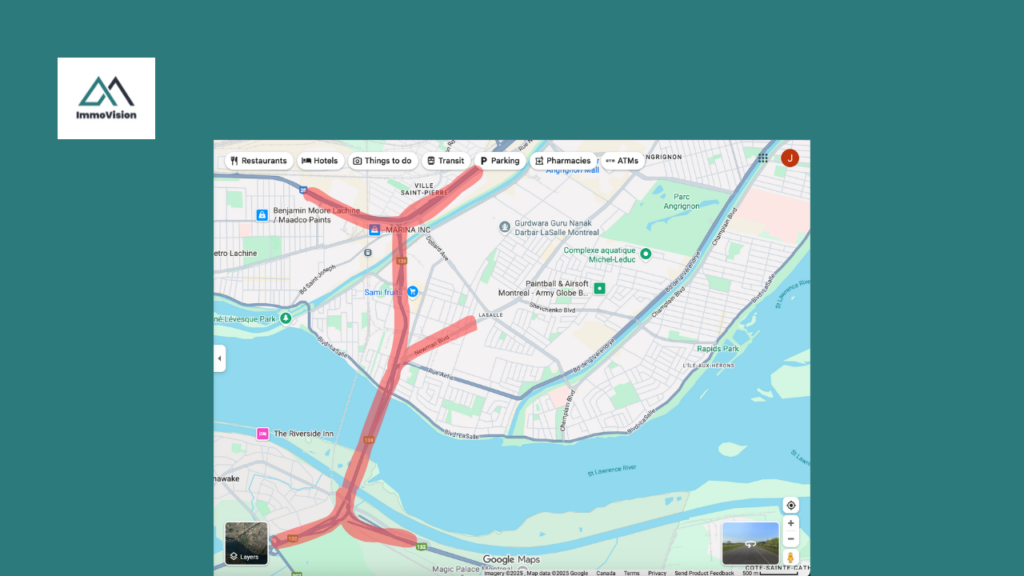
Inside LaSalle, traffic is manageable, but winter snow can slow smaller residential streets. Overall, it’s one of the more car-friendly boroughs in Montréal.
Public transport
If you do not have a car, don’t worry! LaSalle has an extensive network of bus routes operated by the STM. Central LaSalle, in particular, has one of the highest concentrations of STM bus service on the island.
The Montreal metro line does stops at Angrignon Park. So this means that, the further you move into LaSalle, the further you move away from direct metro access.
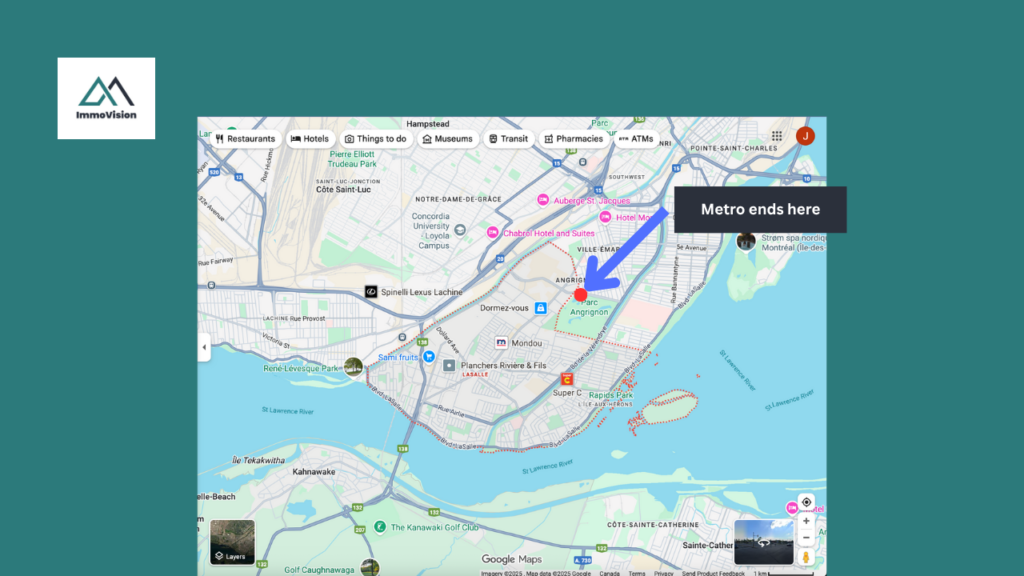
This means that most likely, you will need to get a bus to the metro if you live anywhere beyond Newman Boulevard and Rue Lapierre. However, you will be able to use the same bus and metro ticket, with the price costing $3.75 CAD for the trip to downtown. Depending on how far from the metro you live, this will take you anywhere between 30 minutes and 1 hour.
For those people living in the South East part of LaSalle, the Exo Commuter train line, officially designated as Exo Line 14 – Candiac is in close proximity. This is a commuter rail service in the Greater Montreal area that runs between the LaSalle station in Montreal and the Lucien-L’Allier station in downtown Montreal. It is the last station on the island of Montreal and is served by the Candiac line, with a trip time of approximately 20 minutes.
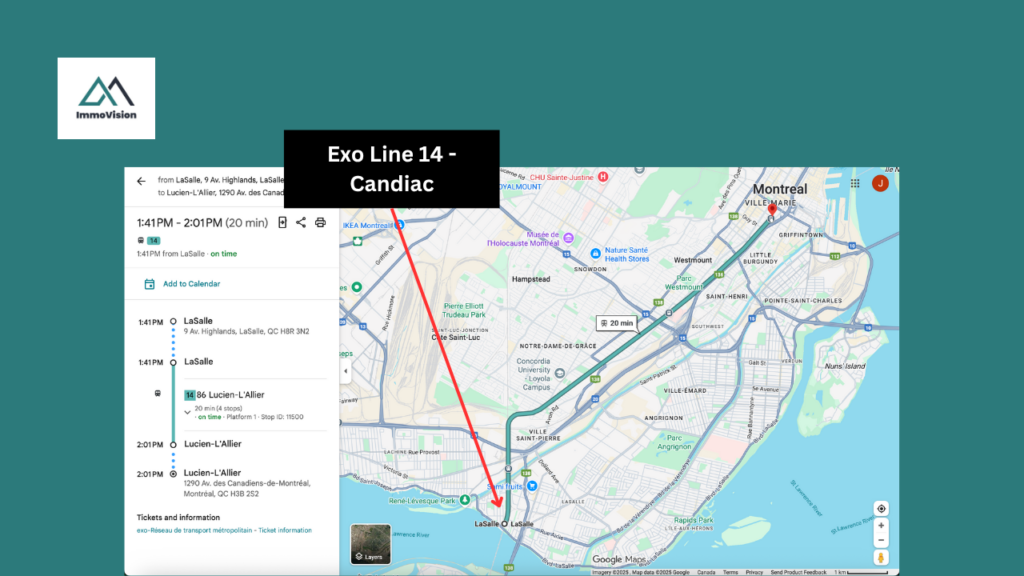
The Commuter Train is closest to people living in LaSalle Heights or “Old LaSalle” and can be reached using a bike path that runs adjacent to the river.
Bike
LaSalle is one of the better boroughs for cycling on the island because of its long, scenic paths along the St. Lawrence River and its direct connection to major bike routes heading toward Verdun, Lachine, and downtown. The riverfront path is fully separated from traffic, wide, and flat — ideal for commuting, training rides, or weekend rides with kids. In summer, it’s one of the most popular cycling corridors in Montréal.
Inside the borough, bike-friendliness depends on the area. Riverside LaSalle and the streets around Angrignon Park offer safer, more comfortable routes. Central LaSalle (Newman/Shevchenko area) is more car-oriented, with fast-moving traffic and fewer protected lanes, so cyclists often ride on side streets or use the river path as a bypass. Western LaSalle and LaSalle Heights have bike lanes, but they’re more fragmented and require mixing with cars.
Commuting by bike is definitely possible: many cyclists use the riverside path → Verdun → downtown route, which is one of the fastest and safest cross-borough commutes on the island. The main drawbacks are winter cycling—snow clearance on secondary bike paths varies—and the fact that certain commercial areas are still built around cars.
Is LaSalle safe?
According to the SPVM’s official crime profile for PDQ 13 (which covers LaSalle), the borough is relatively safe compared to most areas of Montréal.
While LaSalle reports a normal volume of total incidents for a borough of its size, its crime rate per resident is consistently lower than the median of Montréal’s 30 police districts for many major categories. This includes property crime, service-call volume, and disorder/incivility calls. This means that, proportionally, residents experience fewer incidents than in many other parts of the city.
Crimes against the person (e.g., assaults) are close to Montréal averages, but violent crime rates do not exceed those in comparable boroughs. Importantly, LaSalle’s rate of robberies is 49% lower than the city median, and its rates of break-ins, mischief, fraud, and simple theft are all below the median.
Motor-vehicle theft is the main area where LaSalle performs worse than average. The rate of motor-vehicle theft has risen significantly in recent years, reflecting a trend seen across Montreal.
Overall, the official data paints a picture of a stable, family-oriented borough with lower-than-average crime rates. This is especially for property-related incidents. There are however some pockets with higher vulnerability, as in any large borough, but LaSalle, as a whole, is considered safe, residential, and predictable, with no indicators of increasing danger for average residents.
What are the schools like in LaSalle?
LaSalle has a mix of French-language and English-language public schools, along with a small number of private and alternative options. But because the borough is large and zoning rules are strict, school eligibility depends on your exact address, not just the fact you live in LaSalle. Two families living five blocks apart may be assigned to different schools.
For French-language public schools, zoning is handled by the Centre de services scolaire Marguerite-Bourgeoys (CSSMB). Parents should use the CSSMB’s official school finder tool and search by address to confirm the correct elementary or high school.
For English-language public schools, zoning depends on Lester B. Pearson School Board (LBPSB) – main English board serving LaSalle and the English Montreal School Board (EMSB) which services some border areas of LaSalle. Both boards offer postal-code lookup tools that tell you exactly which school your child is zoned for.
Because LaSalle is geographically large, with different neighbourhood profiles, the best approach is always: enter your address on the school board website. This is the only reliable way to confirm which French or English school your child can attend.
What is the LaSalle real-estate market like? (Q4 2025)
Below are some key statistics on the LaSalle real-estate market. This is a snapshot of the market taken as of Q4 2025.
| Metric | Value | Trend (YoY) | What It Means |
|---|---|---|---|
| Median Single-Family Price | ~$715,000 | ⬆ +10–11% | Strong demand; family homes still appreciating. |
| Median Condo Price | ~$450,000 | ⬆ +4–7% | Moderate growth; stable condo market. |
| Total Sales (All Types) | Lower activity | ⬇ –10–16% | Market is calmer; fewer transactions. |
| Active Listings | Higher inventory | ⬆ +10–15% | More choice for buyers; fewer bidding wars. |
| Median Rent (All Units) | ~$1,600/month | ⬇ –15–17% | Rents have softened; better affordability for tenants. |
Final thoughts
After exploring LaSalle and even making offers on a few homes, what struck me most is how balanced the borough is. It offers riverfront nature, suburban calm, and big-city convenience, all at prices that remain lower than many neighbouring areas.
If you love the outdoors, Riverside LaSalle is the standout. Living near the water is great, and you can easily bike into Verdun or the Exo commuter train along bike paths. For transit convenience, Angrignon is hard to beat. Residents here have metro access, a huge park, and endless shopping along Newman. In this area, the older low and mid rise condos offer the best value compared to the newer high rises.
Neighbourhoods farther from the metro are less convenient, but this shows in the pricing. Many families choose these pockets for the quieter streets and extra space.
For pure value though, Old LaSalle may be the hidden gem. It offers character, walkability, quick river access, and proximity to the commuter train. Moreover there are plenty of solid mid-priced homes. The only thing is, you need to be wary when buying or renting an old building. They can be great, but also may lack modern insulation, updated electrical systems, or more foundational work.
Overall, LaSalle is a practical, diverse, safe, and affordable place to live, with different corners appealing to very different lifestyles.