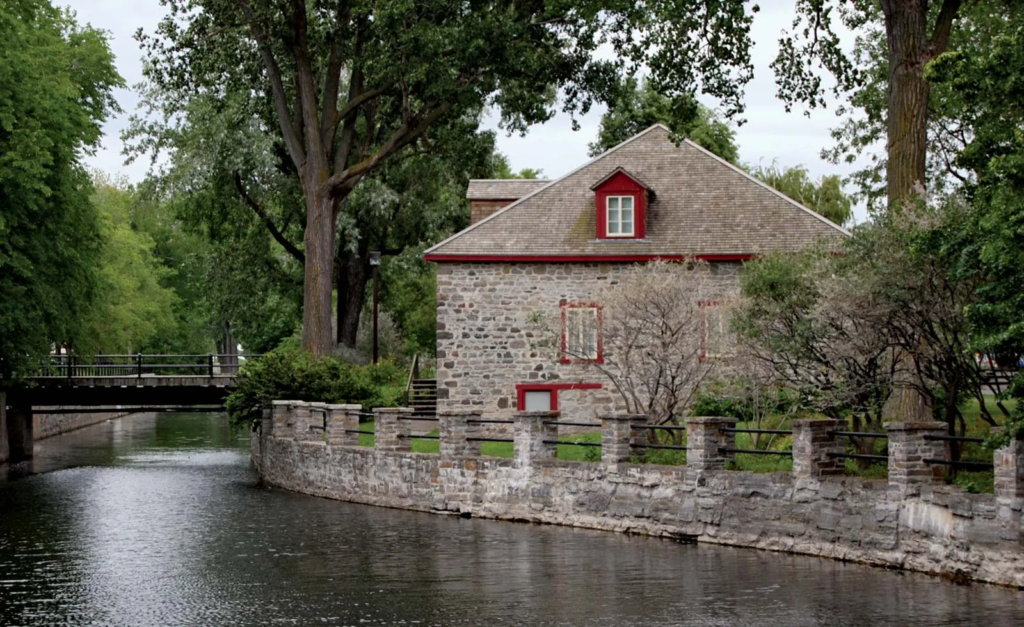

Once recognized as the “cradle of industrialization” in North America, the Lachine Borough is now one of the most sought after urban areas in Montreal. This is particularly for those wanting to live near the airport, or to be closer to the employment hubs of the West Island and Downtown Montreal.
In this article, I will cover what it is like to live in the Lachine Borough. More specifically I will cover:
- Where is the Lachine Borough located?
- The history of the Lachine Borough of Montreal
- What is it like to live in the Lachine Borough today?
- Lachine Borough demographics
- Lachine Borough commute
- Is Lachine Borough safe?
- What are the schools like in the Lachine Borough?
- What is the Lachine Borough real-estate market like? (Q1 2026)
- Final thoughts
Where is the Lachine Borough located?
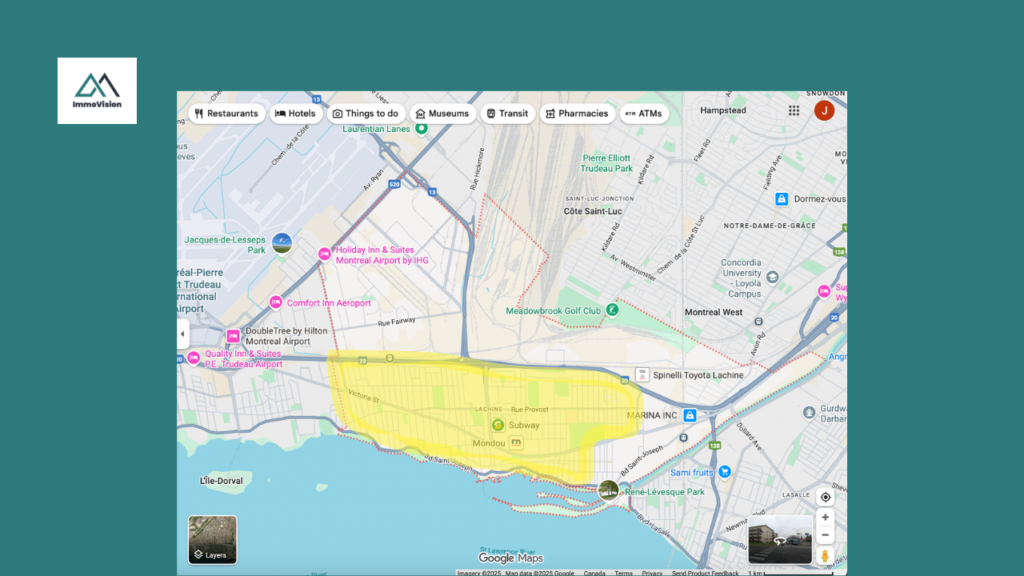
The Lachine Borough is located on the Southwest portion of the Island of Montreal.
It is bordered by the waters of Lac-Saint-Louis to the West and Lachine Canal to the South, the boroughs of LaSalle to the east and Saint-Laurent to the northeast and the cites and towns of Dorval to the northwest and Côte Saint-Luc and Montreal West to the east. Lachine is approximately 15 kilometers (9 miles) from downtown Montreal.
The history of the Lachine Borough of Montreal
The history of the Lachine Borough stretches back to 1667 when René-Robert Cavelier de La Salle was granted the land as a seigneury by the French colonial government. At the time, the region was remote, heavily forested, and dangerous for new settlers. La Salle took the land and then in 1669, he sold most of his land back to the Sulpicians and the rest to Montréal merchants.
With the proceeds from the sale, La Salle funded a private exploration to search for the Northwest Passage to Asia via the Ohio River. Discovery of the Northwest Passage would enable European powers safer and faster access to Asia for trade. This would bestow a massive economic advantage on whoever found it first. However, La Salle’s expedition failed and this led to part of the territory that he had sold being mockingly renamed to “La Chine” (French for “China”) and then later Lachine.
Fort Rolland – 1670
François Lenoir, known as Rolland, a former soldier and fur trader, was granted a specific piece of land “at the place called La Chine” in November 1670. Rolland built a fortified trading post on his land around 1670–1671, which became known as Fort Rolland. This was located near the current Lachine wharf and 35th Avenue, closer to Lac Saint-Louis.
Rolland used the strategic location of Fort Rolland (on the edge of Lac Saint-Louis) to establish a centre for the Fur Trade. Essentially the location was an ideal departure and arrival point for canoes traveling into the western interior of Canada. As such Indigenous peoples would travel to Fort Rolland in order to exchange valuable furs for European goods (including alcohol and guns).
Unfortunately, this prosperity was short-lived. In 1689, the Iroquois, who had become increasingly aggravated by French colonial expansion into their territories, attacked Fort Rolland in what is now known as the Lachine Massacre.
During this attack, Fort Rolland was effectively destroyed and the surrounding settlement was burned. The massacre was a significant blow to Rolland’s assets and the regional fur trade. He was ultimately forced to assign his property as security for loans to his creditors around 1703, leading to his bankruptcy. He never managed to afford to rebuild the land or the fort, and the ownership of the site eventually passed to his creditors.
The Lachine Canal Era – 1821
Following the Lachine Massacre in 1689, the land at Lachine became primarily used for farming. More importantly, the area served as the main departure point and transshipment hub for the fur trade to the West. Goods coming from Montreal were portaged overland to Lachine to bypass the treacherous rapids in the St. Lawrence before continuing by boat on the Great Lakes route. A significant fur trade warehouse, built in 1803, still stands as a National Historic Site.
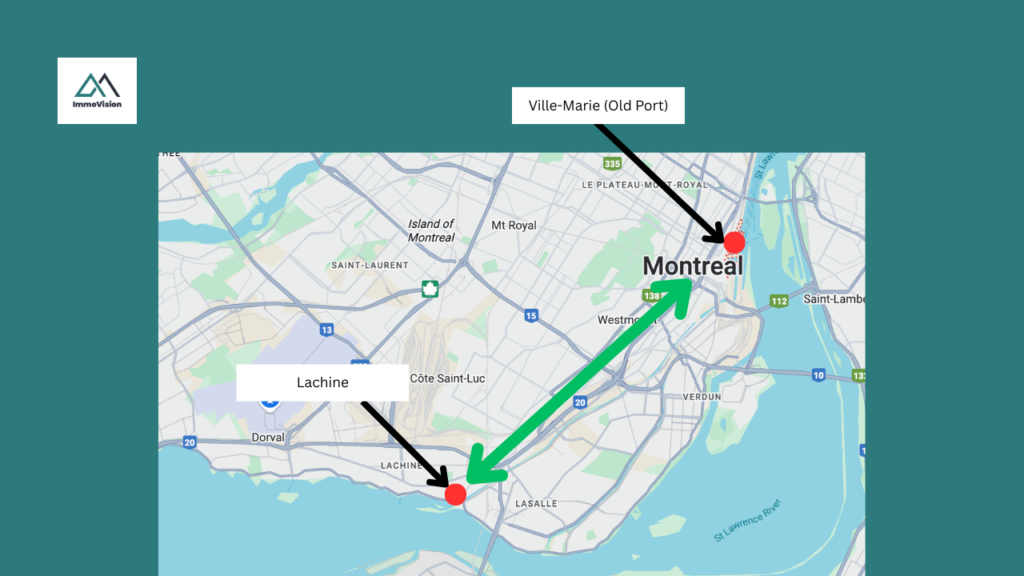
The strategic importance of the location led to the construction of the Lachine Canal in 1821. This canal would cut across the Island allowing goods to be transported by barge from the Old Port in Ville-Marie through to Lachine, where goods and cargo could be easily transferred to larger vessels or other transportation networks to continue their journey upstream on the St. Lawrence River and into the vast Great Lakes region.
The development of the Lachine Canal transformed the area of Lachine into a major commercial and industrial centre. At its peak, the canal corridor was the largest industrial district in Canada, employing roughly a quarter of all Montreal’s factory workers and producing the vast majority of Eastern Canada’s output in several key industries.
The area fell into decline in the 1960s and 1970s, following the opening of the deeper St. Lawrence Seaway in 1959 and the closure of the Lachine Canal to commercial navigation in 1970. This shift in transportation made the Lachine Canal obsolete for commercial use, leading to the closure of most of the factories that relied on the canal’s proximity and infrastructure.
1970’s and Urban Renewal
Before the Lachine Canal fell into decline, the factories in the Borough of Lachine had been producing a large amount of industrial goods, such as steel, textiles, hardware, and machinery.
Many of these factories had no environmental regulations and so had just been dumping toxic waste directly into the canal, onto the factory grounds, or into nearby empty lots. For instance, a well documented case was the Jenkins Factory that was dumping byproducts from metal production, such as foundry sand, oils, and heavy metals.
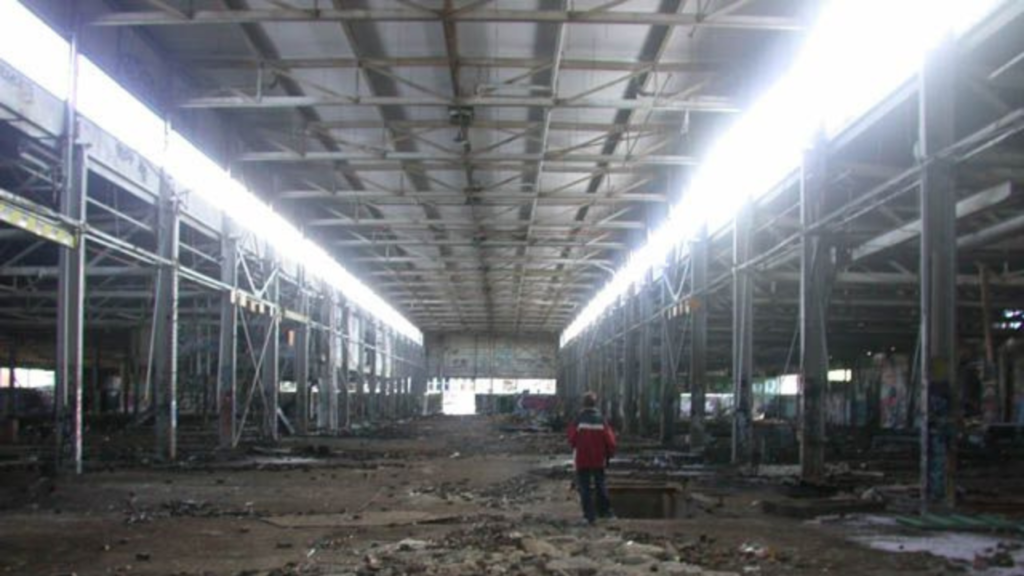
When the Lachine Canal shut down, these factories started to struggle. Some that didn’t move went bankrupt and others were bought out for their patents and intellectual property. However, in most cases the buildings were not required by the companies that bought them and so were just left to decay. Eventually, large parts of the Lachine Borough, particularly the former industrial lands along the canal, became a toxic, derelict site that required extensive cleanup before redevelopment could begin.
In 1978, as a result of growing public awareness of environmental contamination and pressure for new recreational green space, the area was transferred to Parks Canada for management as a National Historic Site, initiating the long process of cleanup and redevelopment.
What is it like to live in the Lachine Borough today?
Since the late 1990s until early 2000s, both the Lachine Canal and the Lachine Borough has received significant investment from both government organizations and private investors. These investments have transformed the derelict canal and its surrounding neighbourhoods into one the best places to live in Montreal.
In this section, we will take a look at what it is like to live in different districts of the Lachine Borough today. Specifically we will focus on what it is like to live in the following districts:
- Waterfront & Vieux-Lachine
- Centre Sector
- Lachine-Est
- Lachine-North
Let’s take a look at what it is like to live in each of these today.
Waterfront & Vieux-Lachine
Starting at the far west of Lachine, we have the jewel of the Lachine Borough. This is the Vieux-Lachine which sits right on the shores of Lake Saint-Louis.

Here, residents have access to a perfect blend of history, culture, and outdoor activity. The area is home to heritage buildings like the 17th-century Maison LeBer-Le Moyne and the Fur Trade at Lachine National Historic Site, offering unique cultural immersion.

For recreation, you can bike the Lachine Canal path from end to end, stroll the scenic Père-Marquette Promenade, or wander through the unique sculpture park at René-Lévesque Park, all offering stunning views of Lake Saint-Louis.

There is also the historic Lachine Market and hundreds of small independent cafe’s and restaurants, along Boulevard Saint-Joseph that runs the length of the waterfront and and the small streets that shoot off to the North.

The Vieux-Lachine waterfront offers access to a variety of water sports. It is also the location of the Aviron Lachine rowing club and the Lachine Canoe Club.
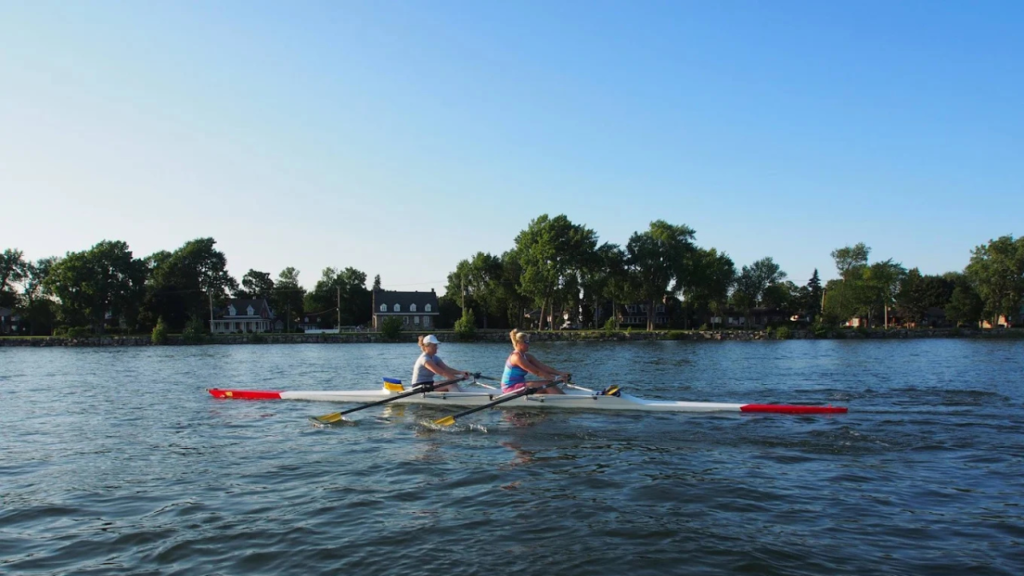
Sailing is also accommodated through organizations operating out of the nearby marinas, though the former private yacht club. This is now a city-owned marina slated for a $25 million redevelopment that is scheduled for completion by 2027. The project aims to transform the waterfront from exclusively private access into a waterfront park that can be enjoyed by general members of the public.
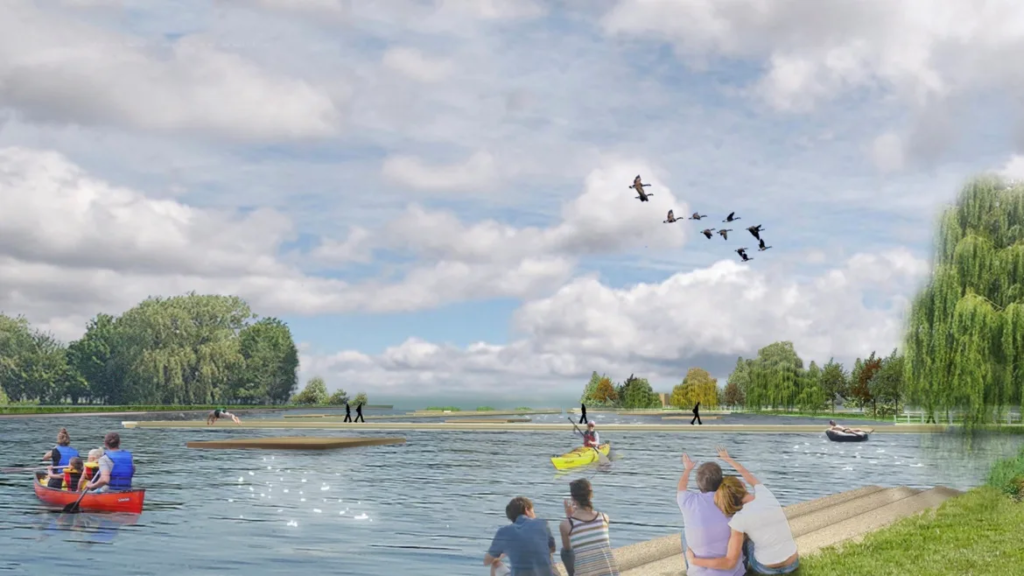
Residents are currently able to launch their watercraft (canoes, kayaks and other non-motorized watercraft) from a designated areas on the 34th Avenue. To find out the exact location of the ramp, you can visit the City of Montreal website.
Overall, the neighbourhood of Vieux-Lachine offers a highly desirable combination of natural beauty (Lake Saint-Louis, parks), rich history, public art, and culture. The ongoing public investments by the city into the waterfront and marina area are further enhancing these qualities, making it a highly attractive place to live. Crucially, Vieux-Lachine is still comparatively affordable compared to downtown Montreal, Ville-Marie and the other neighbourhoods in Le Sud-Ouest boroughs (like Griffintown and Little Burgundy) that span the Lachine Canal.
Centre Sector
Next, let’s take a look at Centre Sector. This area sits directly between the historic Vieux-Lachine district to the west and the industrial Lachine-Est sector to the east.
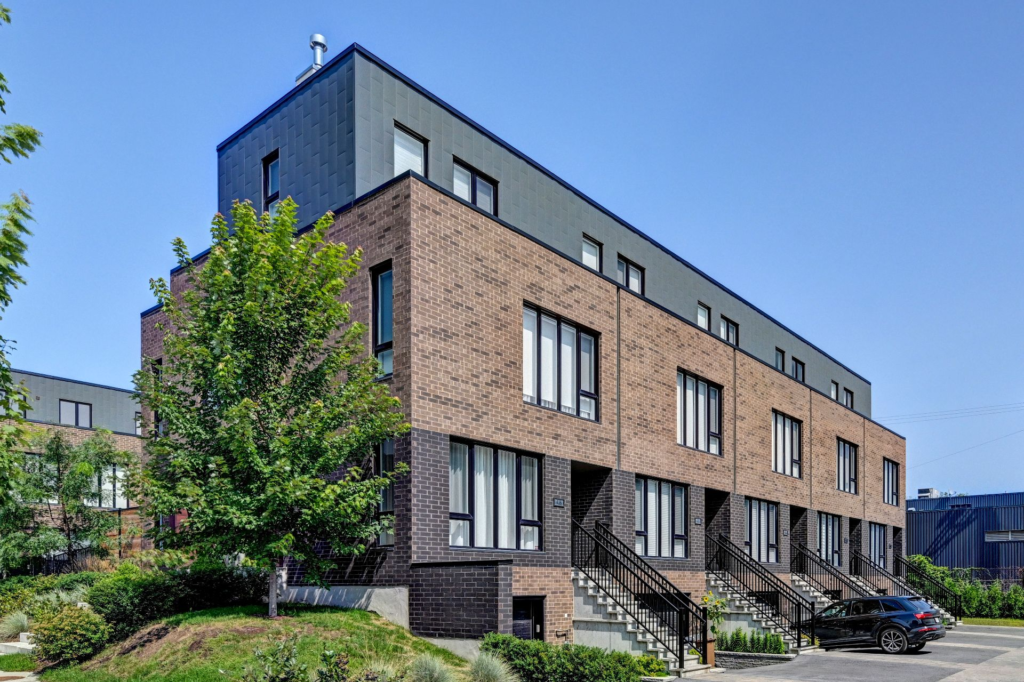
Since early 2000’s the Centre Sector of Lachine has been transformed. Old factories, such as the Jenkins factory, were torn down in in the 2000s and 2010s. This created space for some 2,000 new housing units to be built between the early 2000s and the mid-to-late 2010s. This includes townhouses, condos, residences for independent seniors, and community housing. These newer residences are concentrated around Avenue Jenkins, Gameroff, Rue Remembrance and Rue Notre-Dame.
You can find older, character-filled row houses in the more historic and residential parts of the borough such as West Lachine. You are also able to find older duplexes and triplexes, throughout the borough. These were built primarily in the early to mid-20th century to accommodate factory workers however, they are less densely packed than in other neighbourhoods along the Lachine Canal such as Saint-Henri, or Pointe-St Charles.

The new housing development has increased the population of Lachine. This densification has led to a revitalization of Rue Notre Dame street which is a central hub of activity for residents of Lachine. The street itself has more than 100 small businesses including cafe’s, bars and restaurants.
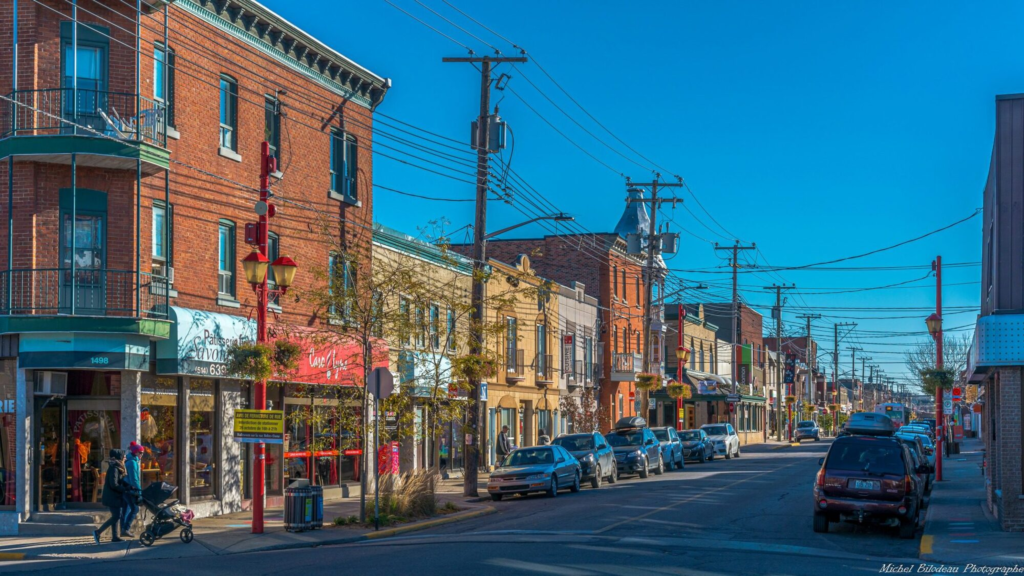
This area is has additional development planned for the next two years. The goal of this development is to highlight the history and the heritage of the area. For instance, you can already see the the history affixed to the base of the Old Tramway poles and in the graphite that lines the street.
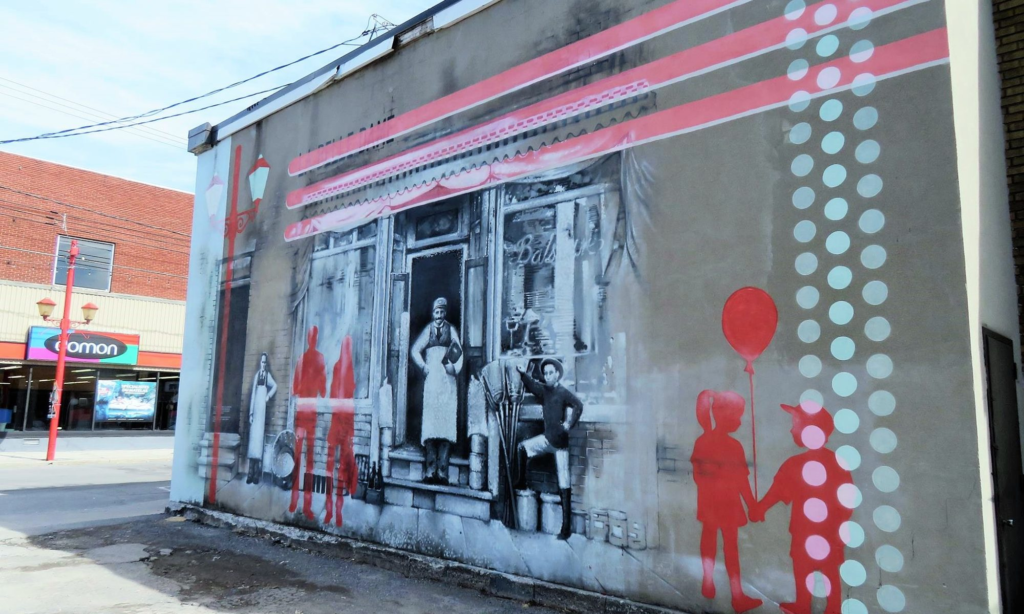
Many of the renovations in the Borough of Lachine have been designed with the goal of ultimately becoming a “smart city”. For instance, you will find free Wifi network that spans the length of Rue Notre Dame. The government is also offering grants to incetivize entrepreneurs who want to come to this part of the city to setup their headquarters.
Lastly, residents of Notre-Dame Street also have access to a hospital affiliated with the University Health Center (MHCI) and some 18 educational institutions. This includes including a vocational education centre and International school (Saint-Louis College), and a private school (the Saint-Anne College).
Overall, Center Lachine has received a lot of investment and attention from the City of Montreal. Over the coming years, you should expect that the development of this area continues. For instance, residents should also expect to see the development of two pedestrian walkways and a park at the 11th Avenue of Rue Notre Dame that aims to make the street more welcoming and highlight its village like character.
Lachine-Est
Lachine-Est is located in the East of the Borough of Lachine. It is boundried by the Lachine Canal to the south, 6th Avenue and Rue Saint-Louis to the west and Rue Victoria to the North.
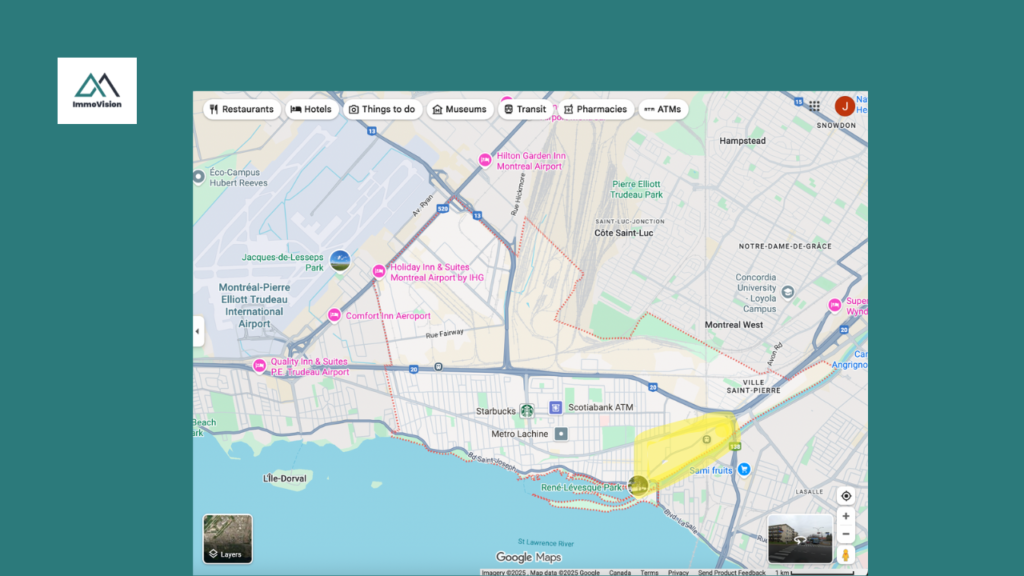
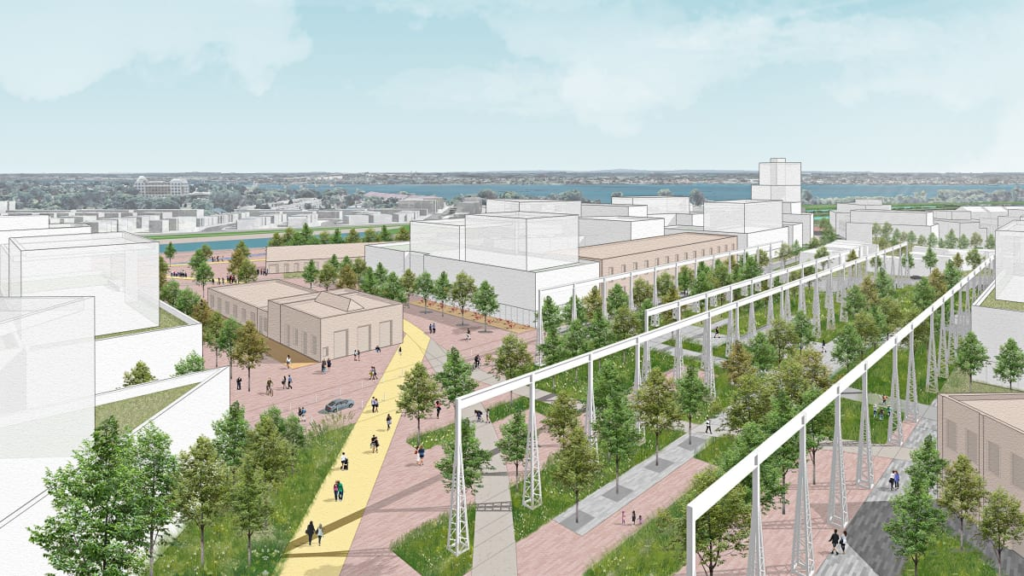
The area does not currently have many houses developed there and is currently a very low income pocket of the Lachine Borough. However, it is currently undergoing a multi-decade transformation into a sustainable, mixed use eco-neighbourhood. The project aims to build up to 7,800 housing units, integrate new services and green spaces, and preserve the area’s industrial heritage.
Lachine-North
Lachine-North refers to the industrial zone located north of Autoroute 20 within the Borough of Lachine in Montreal, Quebec. This area is a significant concentration of industrial activities and businesses, with major companies like Coca-Cola, Rolls-Royce and UPS operating there. There are also lots of Quebec SMEs who have chosen to come here such as Acier Lachine, Boulart, Norvik inc, to name a few.
Every company has their own specific reason for choosing this location. However, Lachine-North’s industrial zone offers a strategic position as a premier transportation hub in North America. Companies have access to key provincial and national highways such as highways A20 and A13. These offer efficient road access to vast consumer and industrial markets across Canada and the United States. Furthermore, the location also has access to excellent rail infrastructure through proximity to major CN and CPKC rail yards and is near the Montréal-Trudeau International Airport for efficient air cargo.
All of these features mean that Lachine-North has a robust logistics ecosystem, ideal for manufacturing, distribution, and maintenance operations. Many of the companies located in Lachine-North have operated in the region since early 20th Century choosing to continually re-invest millions of dollars to upgrade their facilities. We therefore do not expect to see this changing any time soon.
Lachine Borough demographics
Lachine Borough is home to approximately 45,743 residents with an average age of 42. It is a largely bilingual community, though French is the predominant language spoken at home (around 60%), followed closely by English (around 29%) and more than half of the boroughs residents can hold a conversation in French and English. A significant portion of the population are immigrants, with this rate growing to roughly 24% of residents.
The average household income is around $83,200, which is relatively comparable to the wider Montreal area. However, the poverty rate in the borough as a whole is around 10%, with certain areas, particularly Lachine-Est’s Duff Court and Saint-Pierre sectors, experiencing significantly higher rates of low-income residents.
The census data highlights a stable number of families in Lachine, with approximately 23.5% of households home to at least one child under 18. Among all family types, around 39% are couples raising children. A notable demographic point, however, is the borough’s higher rate of single-parent families, which account for 39% of Lachine’s families. This is a rate significantly higher than the Montreal average and particularly concentrated in the Lachine-Est sectors. The housing data shows a clear divide: 58% of residents are renters, while 42% are owners.
These statistics paint the picture of a borough in significant flux, with a stable average age that masks a dynamic blend of long-term residents and new arrivals. This social and economic stratification, coupled with massive private investment in the Centre Sector and the massive Lachine-Est redevelopment project, strongly indicates that the area is entering into a period of gentrification.
Lachine Borough commute
In this section, we look at what it’s like to commute in the Lachine Borough using the three main ways people get around:
- Car
- Public transport (bus and train)
- Bike
Car
Driving in Lachine is generally efficient due to immediate access to major highway infrastructure that encircles the borough. The local streets are residential and quiet, especially in Vieux-Lachine, with on-street parking generally more available than in denser inner-city neighbourhoods. Navigation is straightforward due to the grid layout, with congestion rare outside of peak hours on major arteries like Boulevard Saint-Joseph.
Lachine sits directly beside several major highways, giving residents quick, direct connections to:
- Highway 20 (Autoroute du Souvenir): Provides rapid access east toward Downtown Montreal and west toward the Montréal-Trudeau International Airport and the West Island.
- Highway 13: Offers a direct north-south connection to Laval and the North Shore.
- Boulevard des Sources & Boulevard Saint-Jean: Major access roads to the West Island suburbs.
- Rue Notre-Dame & Boulevard Saint-Joseph: The main east–west commercial and local routes within the borough.
From Lachine, you can reach the airport, Dorval, the West Island, and Downtown Montreal in minutes. The area also has numerous Communauto stations and is well-served by ride-sharing and taxi services, making car ownership optional for some residents.
Public transport (bus and train)
Public transit in Lachine is based on a robust bus network and commuter train line rather than the metro system. Most residents rely on the bus network to connect them to nearby metro stations or downtown Montreal directly.
The primary commuter rail service is the Exo Vaudreuil-Hudson line, served by the Lachine train station and the Pine Beach station. From these stations, commuters can reach Downtown Montreal’s Gare Centrale (Central Station) in approximately 20 minutes, bypassing road traffic completely.
The bus network is excellent, with routes running along:
- Rue Notre-Dame
- Boulevard Saint-Joseph
- Avenue Richmond
- Boulevard Newman (in the Lachine-Est area)
These routes link Lachine directly with key hubs, including the Lionel-Groulx metro station (for Green/Orange line transfers), Angrignon bus terminal, the LaSalle borough, and the MUHC superhospital area.
Bike
Lachine is a paradise for cyclists, offering one of the most scenic and extensive bike networks in Montreal. The topography is flat, and traffic is light on most local streets, making cycling safe and comfortable.
The crown jewel is the Lachine Canal bike path, which starts right at the western end of the borough near Lake Saint-Louis. Once on the canal path, cyclists can reach:
- Atwater Market (30–40 minutes)
- Saint-Henri (40 minutes)
- Old Port (50–60 minutes)
- René-Lévesque Park and the Lachine Marina (local access)
The borough also features dedicated bike lanes on local streets, connecting residents to the LaSalle waterfront path and extending further west into the quiet suburban areas. BIXI bike-share stations are available throughout the core commercial and park areas, offering an easy option for errands or leisurely rides along the water.
Is Lachine Borough safe?
According to data from the SPVM (Service de police de la Ville de Montréal) and recent analyses, the
Lachine Borough is considered one of the safer areas on the island compared to more central Montréal neighbourhoods. The area is covered by Police Station 8 (PDQ 8), which consistently reports lower overall crime rates than the median for all Montreal police districts.
In practical terms, Lachine feels like a calm, stable, and family-oriented neighbourhood. The safety is shaped by its residential character, abundant parks, and waterfront access, particularly in the quiet streets of Vieux-Lachine and West Lachine. The borough also operates under a “Vision Zero” strategy for road safety, aiming to eliminate serious injuries on its streets by implementing traffic-calming measures and setting residential speed limits at 30 km/hr.
That said, safety can vary by micro-area, reflecting the socio-economic disparities within the borough. The Lachine-Est industrial zone and the isolated Saint-Pierre/Duff Court residential pockets can have higher rates of low-income residents and associated social issues, with some reports of petty theft or drug use. However, these tend to be localized issues, and the overall data positions Lachine among the safer brackets in Montreal, with specific crime types like break-ins, vehicle thefts, and robberies generally below average.
What are the schools like in the Lachine Borough?
The Lachine Borough offers a solid selection of public schools serving its diverse, family-oriented population. The school network provides options in both French and English, though the majority of schools within the borough are French-language institutions. As in all of Quebec, school eligibility is strictly based on your home address and the stipulations of Quebec’s Bill 101, so the best way to confirm your child’s specific options is to check directly with the relevant school boards.
Lachine is primarily served by the Centre de services scolaire Marguerite-Bourgeoys (CSSMB) for French-language education. The borough is home to several French elementary schools, including:
- École primaire Jardin-des-Saints-Anges
- École primaire Catherine-Soumestre
- École primaire Philippe-Morin
- École primaire Victor-Thérien
For secondary students in the French system, the main high school is École secondaire Dalbé-Viau, located within the Lachine borough. There is also École secondaire Saint-Louis in the eastern part of Lachine, which offers specialized international education programs.
Families who qualify for English-language public education under Quebec’s Bill 101 fall under the English Montreal School Board (EMSB). Lachine is served by:
- Maple Grove Elementary School: The main English-language elementary school located within Lachine itself.
- Lachine High School: The English-language secondary school for the area.
Overall, Lachine’s school network is well-established, offering strong French-language coverage and a local English-language option. The area is also seeing new developments planned for Lachine-Est that may include future schools to accommodate the growing population.
What is the Lachine Borough real-estate market like? (Q4 2026)
Lachine Borough real estate market is expected to remain relatively resilient and stable compared to other Canadian markets in 2026.
Key trends in Q1 2026:
- Resilience and Stability: Unlike steeper declines in more volatile markets like Toronto and Vancouver, the Quebec market, and by extension the Greater Montreal area, is showing more resilience and is projected to experience modest price growth.
- Low Inventory: Lachine, like many sought-after Montreal neighborhoods, is expected to continue facing a low supply of properties for sale. This keeps market pressure on prices despite broader economic fluctuations.
- Strong Demand: Demand remains consistent, buoyed by factors such as lower mortgage rates and sustained buyer interest, particularly from first-time buyers and families.
- Balancing Market: Some market reports indicate a shift towards more balanced conditions, with inventory levels approaching historical averages for certain property types. This could provide some relief for buyers.
- Regional Differences: Price trends can vary significantly by property type and specific micro-market. For example, some market segments may see more moderation than others.
- Continued Investment: Ongoing and significant investments in Lachine’s infrastructure, both industrial and residential, further underscore the area’s economic vitality and potential for sustained growth.
Final remarks
Lachine Borough may not immediately come to mind for prospective Montreal residents, who are often drawn to the established allure of areas within Le Sud-Ouest, such as the Lachine Canal area or Griffintown. These popular neighborhoods are frequently highlighted for their vibrant waterfront views, bustling urban environments, and immediate proximity to downtown Montreal. The focus on these central boroughs often overshadows Lachine’s potential as a residential area.
However, Lachine is a hidden gem that arguably offers superior natural views, extensive green spaces, and a more expansive waterfront experience along Lac Saint-Louis. With the development of the new REM commuter rail system, residents will soon be able to reach downtown Montreal from the Gare Lachine or Gare Pine Beach stations in approximately 20-25 minutes, providing a competitive commute time without the downtown density. This combination of natural beauty and accessibility positions Lachine as a location worth considering for those seeking an alternative to more commonly known Montreal neighborhoods.