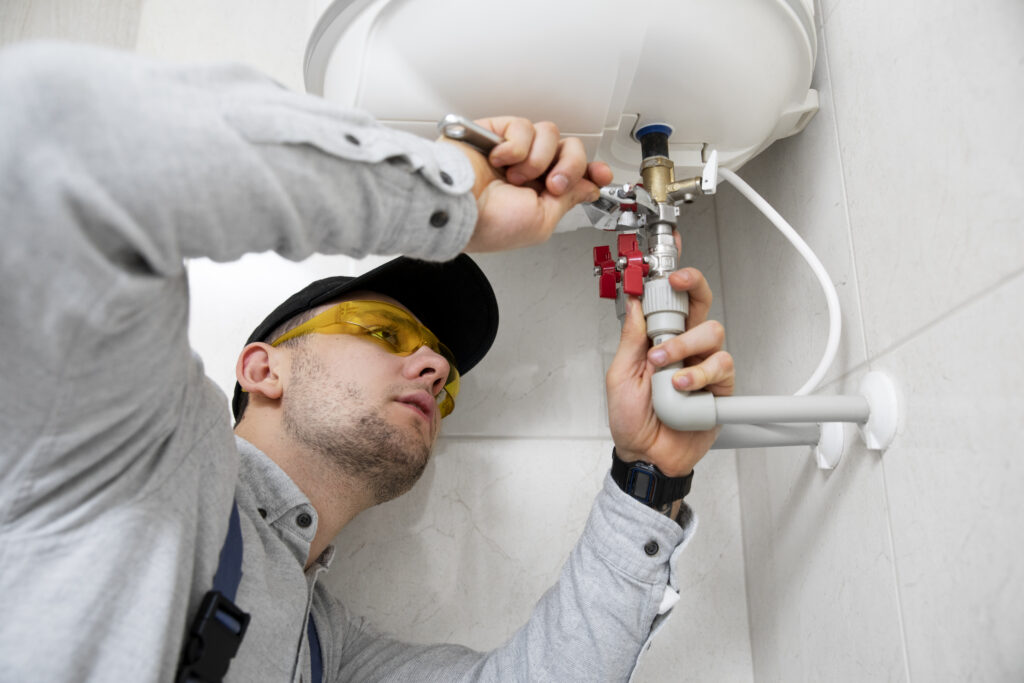

Replacing an old, faulty, or non-compliant boiler can cost new homeowners roughly $5,000 – $10,000. In addition to this, faulty boilers that do not run at maximal efficiency can cost you thousands of dollars more than they should in annual running costs.
In this article, we give you the information you need to assess a boiler’s condition before you buy, give you a brief introduction to how different types of boilers work, so that when you move into your new home, you can avoid unexpected costs, and know how to improve the efficiency and overall comfort of your new home. More specifically we will cover:
- What is a boiler?
- What are the different types of boiler?
- How long does a boiler last for?
- How can you find out how old your boiler is?
- How much does it cost for boiler installation?
- How to do proper boiler maintenance?
- How to check a boiler when viewing a house?
- Frequently asked questions
- Final remarks
What is a boiler?
A boiler is a heating system that heats water and circulates it around your home. For heating the rooms in your house or apartment, the boiler uses a closed loop system that continuously recirculates the same water through radiators, baseboards, or in-floor pipes. For showers and taps the boiler will heat fresh cold water that comes into your home from the municipal water supply. This water drains out once it has been used.
What are the different types of boiler?
There are two broad categories of boiler: tankless systems and tank systems. Both of these systems do the same work of providing hot water to your home. However, there are some large differences between the two types of boiler. If you know what the differences are, you can choose the best type of water for your home.
How does a tankless boiler work?
Tankless systems, also known as on-demand water heaters, heat water only when it is needed.
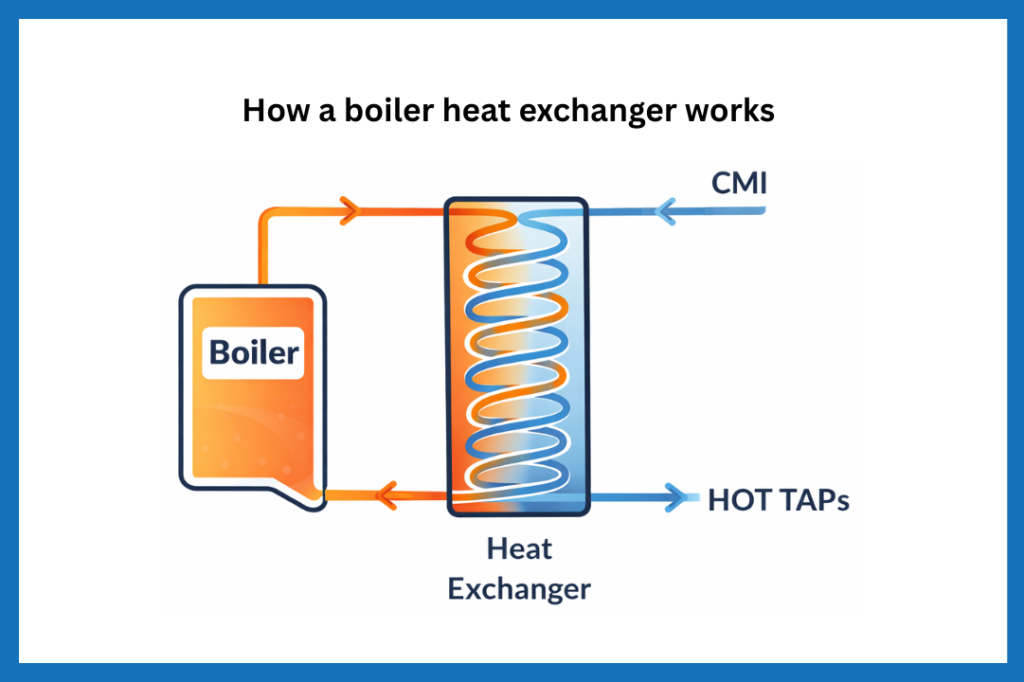
The way this works is that when you turn on a tap, cold water from the cities water system flows into your boiler. The boiler detects that water is flowing and automatically fires the burner inside the combustion chamber. This heats the water that already exists inside the boiler’s internal loop. This “boiler water” is then pumped through a heat exchanger, where it transfers heat to the cold water coming into the boiler from your mains supply.
The cold mains water passes through the heat exchanger, picks up heat, and is then sent to your taps as hot water. Meanwhile, the boiler water flows back into the boiler to be heated again. At no point does the water from your mains supply directly mix with the boiler water the heat is transferred between them through the heat exchanger.
How does a tank boiler work
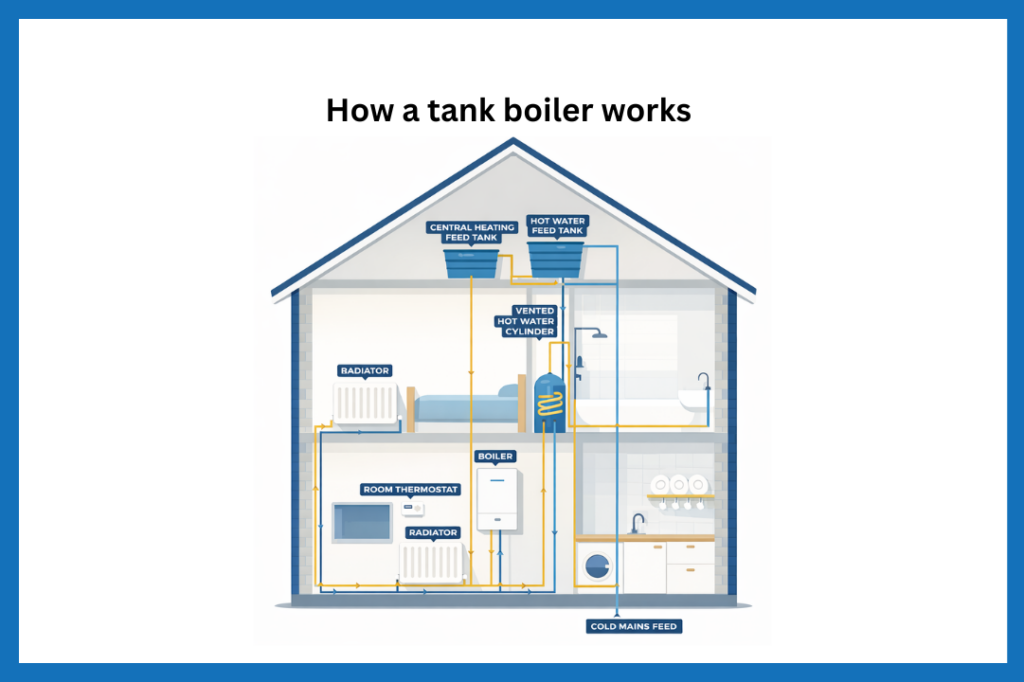
In a traditional boiler system, hot water is stored in a cylinder rather than produced on demand. Cold mains water first fills a feed tank in the loft, which supplies the cylinder by gravity. As with the combi boiler, the traditional boiler heats “boiler water” in its own loop and pumps it through a coil inside the cylinder, transferring heat to the stored domestic water. The cylinder has no burner; it simply holds heated water until needed. The “boiler water” that is pumped around its own system never leaves the system, unless there is a leak.
When a tap is opened, hot water flows from the cylinder until it is depleted. The boiler continues heating the radiators and will fire as needed to reheat the cylinder and maintain its temperature. If the hot water runs out, the system must refill and reheat before more is available.
Pros and cons of tankless vs tank boilers
Tank water heaters are a more traditional and budget-friendly option, making them widely available and cheaper to install, maintain, and repair. They can supply hot water to multiple faucets at once, which is useful for larger households. However, they are less energy-efficient because they continuously heat water even when it’s not being used, leading to higher utility costs. They also require regular maintenance to prevent sediment buildup and have a limited hot water supply, meaning you can run out and wait for the tank to refill and reheat.
Tankless water heaters, on the other hand, are more energy-efficient since they heat water only when needed, which can lower utility bills and reduce environmental impact. They are compact, provide hot water on demand, and typically last longer with less maintenance. However, they come with higher upfront and installation costs, and their ability to supply hot water can be limited if multiple appliances are used at the same time unless a larger or additional unit is installed.
How long does a boiler last for?
There are many residential boilers in Quebec that are very old and inefficient. In these cases, by upgrading your boiler you will not only save money on fuel but also minimize environmental impacts and improve how comfortable it is to live in your home. However, many homeowners do not realize they they have a problem, because the boiler is still actually working, it is just running on outdated technology and using more fuel than necessary.
With this in mind, the lifetime of a boiler isn’t just how long it continues to function, but when it should be replaced for efficiency and safety reasons, or due to environmental regulations that make older systems non-compliant or illegal to operate.
In practice, most boilers have an effective lifespan of around 15 years. While some components may continue to operate beyond this point, performance and efficiency typically decline. Manufacturer warranties, often ranging from 5 to 10 years, also provide a useful benchmark, as they reflect the period during which the system is expected to operate reliably under normal conditions.
How can you find out how old your boiler is?
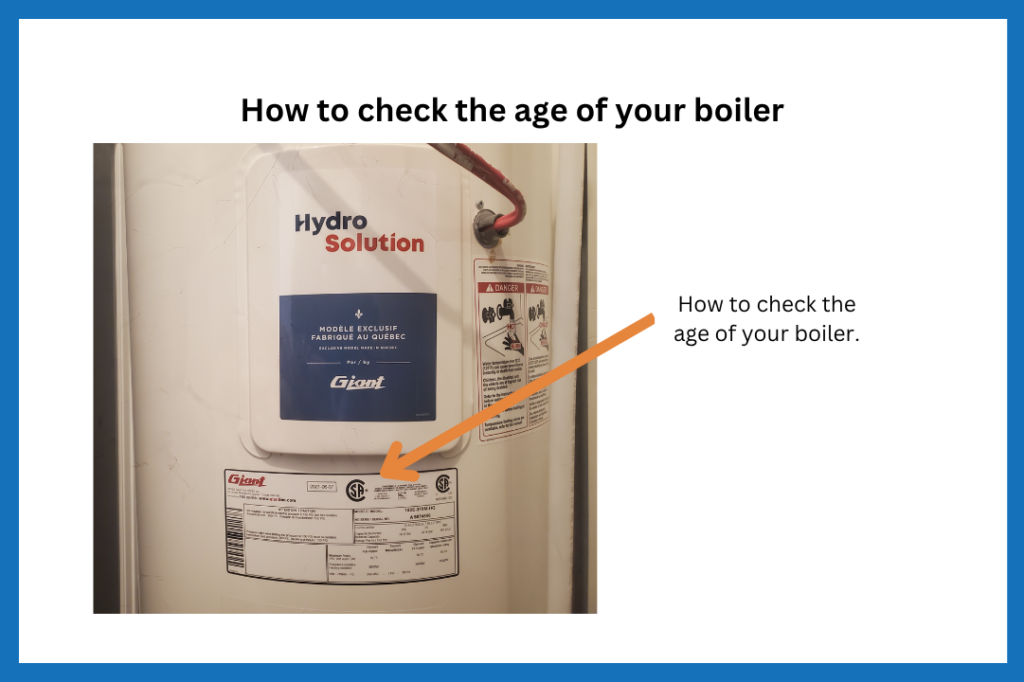
Now that you know a boiler’s typical lifespan, check how old yours is. Look at the rating plate on the front of the unit to find the manufacture date. Manufacturers display this information in slightly different ways, but they usually use a standard, easy-to-read date format.
How much does for boiler installation?
There are several factors to consider when budgeting to replace a boiler such as the type of system you choose, the size and heating capacity required (how big is your home), and the installation complexity. Roughly speaking, in Quebec, you will be looking at anywhere from $4,290 to $10,070, according to recent market estimates.
How to do proper boiler maintenance?
Maintaining your boiler ensures that it operates cost effectively, lasts longer, and runs safely and reliably. Most people recommend having annual maintance done on your boiler, done by a professionally licensed engineer. Ideally, maintenance should be done during the summer months, when heating demand is low and it’s easier to service the system without disrupting your comfort.
A professional service should include (as a minimum) the following components:
- Recharge the expansion vessel
Restores the correct internal pressure so the system can handle thermal expansion, preventing pressure spikes and strain on components.
- Clear the condensate trap
Removes debris and sludge from the trap to prevent blockages, which can cause shutdowns or water damage (especially in condensing boilers).
- Recalibrate the gas valve
Ensures the correct gas-to-air ratio for efficient combustion, improving performance and reducing fuel waste.
- Clean the magnetic filter and check water quality
Removes metal debris (sludge) from the system and verifies inhibitor levels, helping prevent corrosion and protecting key components like the pump and heat exchanger.
- Run gas safety checks
Tests for leaks, checks combustion readings, and ensures the system operates safely within regulatory limits.
- Clean the heat exchanger
Removes soot and scale buildup to maintain efficient heat transfer and prevent overheating or long-term damage.
How do you know if it is time to replace your boiler?
In addition to scheduling an annual service, you can watch for warning signs that indicate it may be time to replace your boiler. If you keep an eye out for these issues, it can help you avoid spending thousands of dollars on unnecessary heating costs. These include:
- Check the system pressure
You can monitor the pressure using the pressure gauge on the boiler’s control panel. For most systems, the ideal pressure is between 1 and 1.5 bar when the system is cold. Pressure that is consistently too high or too low may signal a problem with the system.
- Check for leaks or water damage
Inspect the area around your boiler for any signs of water, such as puddles, damp spots, or staining on the floor or nearby surfaces. Look closely at pipes and joints for drips or corrosion. Rust marks on the boiler, pipe connections, or even around radiators can indicate a slow or ongoing leak that should be addressed.
- Listen for unusual noises
A properly functioning boiler should operate relatively quietly. Banging, whistling, gurgling, or rattling sounds may indicate internal issues such as limescale buildup, trapped air, or worn components.
How to check a boiler when viewing a house?
If you are looking to buy a house, you will not be able to take apart a boiler to inspect it. A pre-purchase inspection will probably not do this for you as part of their standard inspection. However, there are some things that you can look out for, and questions that you can ask the listing agent to make sure that you minimize your risk. Here are a quick list of things to watch out for and, some questions that you can ask your the seller.
Things to watch out for:
- Water spots – Look for stains, damp areas, or signs of past leaks around the boiler, nearby walls, or flooring. These can indicate ongoing or previous leakage issues.
- Rust on the pipes – Corrosion or rust around joints and fittings may suggest long-term moisture exposure or small, persistent leaks.
- Noisy boilers – Boilers should run relatively quietly. Banging, whistling, or gurgling noises can point to internal problems or poor maintenance.
- Check the age of the boiler – Most boilers last around 15–20 years. An older unit may be less efficient and closer to needing replacement.
- Check the make of the boiler – Some brands have better reliability, parts availability, and service support than others. This can impact long-term maintenance costs. You may not know the name of the brand off the top of your head, but if you note it down, you can look it up later.
- Check the pressure gauge – The system pressure should typically be between 1 and 1.5 bar when cold. Readings outside this range may indicate an issue with the system.
Questions to ask the seller:
- When was the boiler last serviced? – Regular annual servicing is a good sign the system has been properly maintained.
- Is the boiler under warranty? – A valid warranty can reduce near-term repair or replacement costs.
- Can I see the last 12 months energy bills? – This helps you understand real operating costs and spot inefficiencies. In Quebec, you can check what your standard heating should be in the area on the Hyrdo Quebec website. Compare this number to those in the bills.
Frequently asked questions
Rebates and programs can change over time, so it’s important to check current offers before making a decision. In many cases, upgrading to a high-efficiency or dual-energy system can significantly reduce both your upfront costs and long-term energy bills.
However, some homes—especially older ones—may still use oil or natural gas boilers. In recent years, there has also been a growing shift toward more energy-efficient systems, including dual-energy setups that combine electricity with another fuel source to reduce costs during peak periods.
However, inspectors are not usually heating specialists, so they may recommend a more in-depth evaluation by a licensed HVAC technician if there are concerns. If the boiler is near or beyond its expected lifespan (around 15 years), it’s reasonable to assume that replacement may be needed in the near future.
Final remarks
When buying a home, it’s easy to focus on visible features like kitchens, finishes, and layout, but the boiler is one of the most important (and expensive) systems in the house. Taking the time to understand its condition, age, and efficiency can save you thousands of dollars in unexpected costs after you move in.
By knowing what to look for, asking the right questions, and planning for maintenance or replacement when needed, you can make a more informed decision and avoid costly surprises. A well-maintained, efficient boiler doesn’t just reduce energy bills, it also improves comfort and gives you peace of mind in your new home.