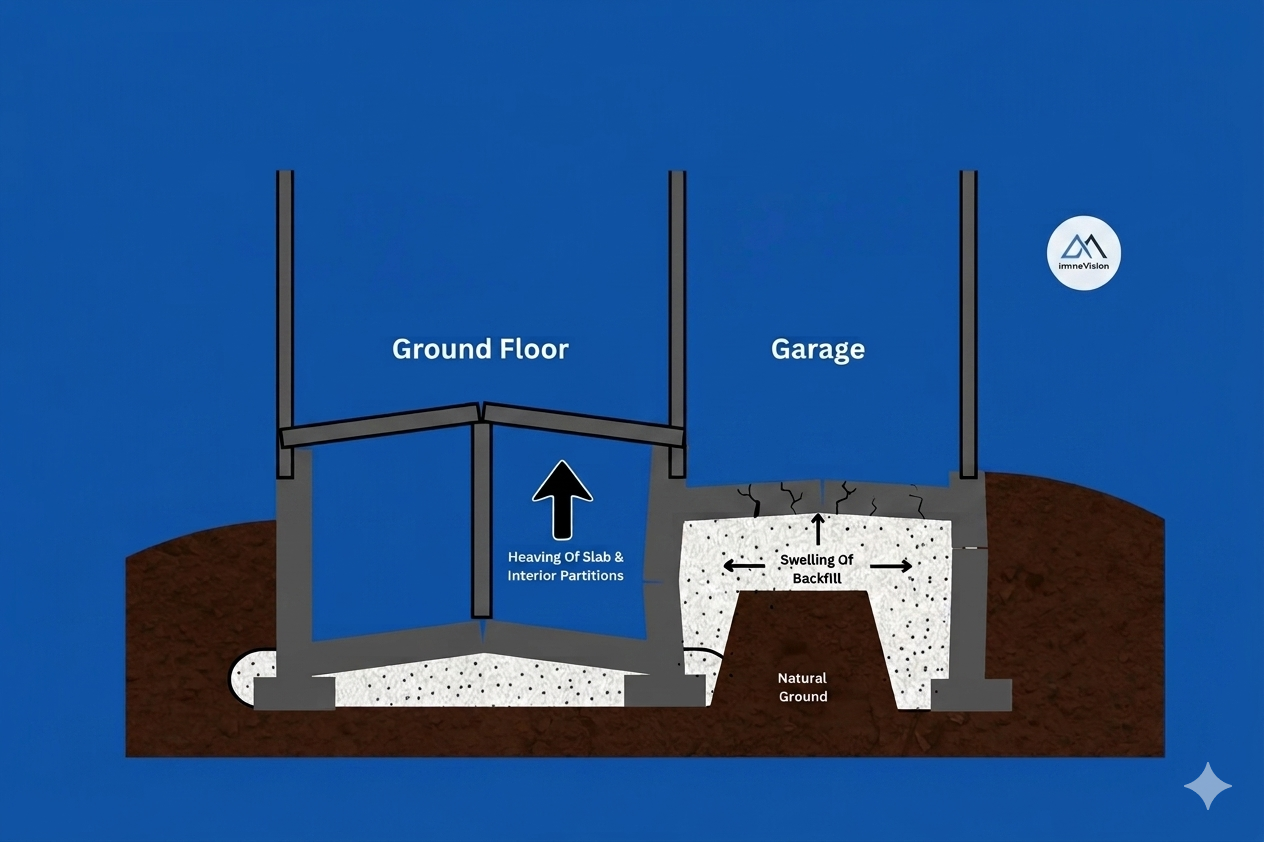
Pyrite In The Backfill Can Swell

What is Pyrite?

Pyrite, often called “fool’s gold,” is a mineral that can be found in the crushed stone (or backfill) that surrounds your homes foundation. When pyrite is exposed to oxygen and moisture, it undergoes a chemical reaction that produces sulfuric acid. This reaction causes the material beneath the foundation to expand.

Over time, that expansion puts pressure on the concrete slab, leading to:

  • Doors and windows becoming misaligned
  • Cracks in basement floors
  • Heaving (lifting) of the slab
  • Damage to your homes walls, partitions, and flooring
What is a Pyrite Test?

In Quebec, a pyrite test follows the CTQ-M200 standardized protocol to evaluate the swelling potential of materials beneath a building’s concrete slab.

The test involves taking a sample of backfill (crushed stone) from under the concrete slab (the floor) of your home to determine if there is potential for swelling that could damage the building. In Quebec, most pyrite inspectors will evaluate this using something called an IPPG test. This will tell you how risky the material in your backfill is—even if no damage has happened yet.

Almost all pyrite tests will also include a sulfation test, which looks for signs that the chemical reaction has already begun affecting the concrete slab.

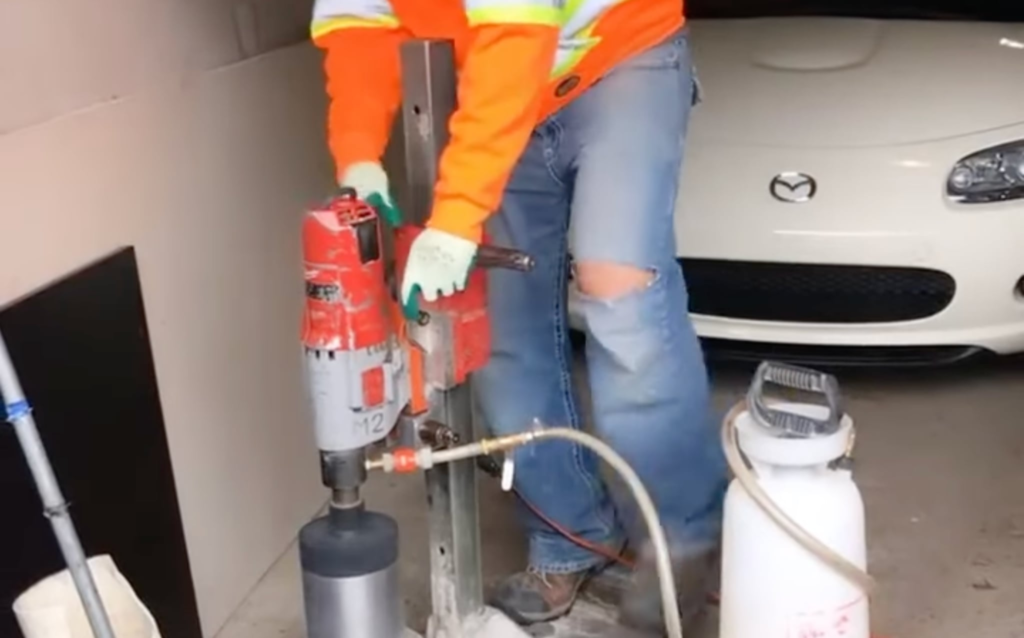
Image of a construction worker drilling into a basement slab for a pyrite test.
A worker drilling into a basement slab for a pyrite test.

How Much Does a Pyrite Test Cost?

Pyrite tests range in price, from about $400 – $1000, depending on:

  • Number of samples – for larger properties, you may need to take multiple samples.
  • Accessibility (finished basement vs exposed slab)
  • Lab testing scope (IPPG only vs IPPG + sulfation test)

For commercial and Multi-residential (6 plexes and more), you will need to get a custom quote.

Warning

The result of a pyrite test are important and not all firms are equal. And the results do matter since:

  1. If your pyrite test overstates risk, you may unnecessarily scare buyers or lower your sale price of your property.
  2. If the result understates risk, you could be accused of failing to properly disclose a latent defect, or risk price renegotiation when the buyer conducts their own inspection.

Choose a reputable firm with a proven methodology, proper sampling practices, and clear, defensible reporting.

Pyrite testing

Book a pyrite specialist

Compare local providers and book a pyrite specialist.

Q

QualiTAM

Pyrite testing Google
5.0 61 reviews
  • CTQ-M200 protocol
  • Accredited sampling
  • Detailed report
Location
Côte Saint-Luc, QC
Services provided
35% Sampling 40% Lab analysis 25% Reporting

Comprehensive pyrite inspection and testing under CTQ-M200, with accredited lab analysis and a detailed report.

Phone: 514-612-0377
M

Multitest

Pyrite testing Google
4.7 67 reviews
  • Since 1999
  • Accredited laboratories
  • Fast turnaround
  • Transparent pricing
Location
Longueuil, QC
Services provided
45% Testing 35% Lab work 20% Advice

Environmental and material testing services, including pyrite backfill analysis beneath concrete slabs to assess swelling risk.

Phone: 514-990-2063
NG
4.9 127 reviews
  • RBQ # 5731-7612-01
  • DB-certified stone
  • Montreal service
  • Foundation reinforcement
Location
Saint-Zotique, QC
Services provided
45% Removal 35% Rebuild 20% Sealing

Pyrite removal and decontamination services with excavation, backfill replacement, and new concrete slab installation.

Phone: 514-608-8922
B

Bisson Expert

Pyrite removal Google
4.5 338 reviews
  • DB-certified crushed stone
  • Financing up to $100,000
  • RBQ: 1137-6860-16
  • Alt phone: 514 613-5412
Location
Saint-Hubert, QC
Services provided
40% Excavation 35% Backfill 25% Concrete

Pyrite removal with excavation and replacement of backfill using DB-certified crushed stone, plus a new concrete slab.

Phone: 514-700-5866
G

GOLOTON Home Inspection Services

Home inspection Google
5.0 18 reviews
  • Free thermographic survey
  • Report within 48 hours
  • InterNACHI certified
  • Greater Montreal
Location
Greater Montreal, QC
Services provided
55% Inspection 25% Thermography 20% Reporting

Residential inspections across Greater Montreal with a free thermographic (infrared) survey included, plus detailed PDF reporting.

Phone: 514-647-5584

Free Pyrite Risk Check

Instantly know if your property is located in a pyrite risk zone.

Check My Property
FAQs

Frequently Asked Questions

Everything you need to know about pyrite in Montreal

Pyrite testing determines whether the material beneath a home’s concrete slab contains reactive pyrite that could damage the foundation. It typically involves drilling a small hole in the basement floor to collect samples of the underlying backfill, which are then analyzed in a laboratory using the CTQ-M200 standard. The results are used to calculate an IPPG score, indicating the level of risk—from no concern to high risk requiring remediation. In some cases, an engineering report may also be provided for real estate or financing purposes. Most tests take a few hours onsite, with results available within a few days, and typically cost between $400 and $1,200 depending on the scope.

A typical pyrite test takes a few hours on-site. This includes drilling, sampling, and sealing the hole. Lab analysis usually takes a few days to about a week, depending on the lab and service level.

It depends. If the previous test is old (e.g. 10+ years) and you are preparing to sell or refinance, you may want a new report since testing standards and methods have changed. You might also consider a new test if your old report lacks detail. However, it is probably not necessary if the test is recent, completed by a reputable firm, and includes a clear IPPG score with proper documentation.

Yes, the test is moderately noisy since it involves drilling into the floor. However, drilling typically lasts no more than 15–30 minutes. Most firms can schedule the work at a convenient time if noise is a concern.

There is no official expiration, but reports are generally considered reliable for 5–10 years, or until testing standards change. For real estate transactions, lenders and buyers often prefer more recent tests (within 3–5 years).

Yes. The drilled hole is typically sealed with concrete or patching material. The finish may be basic (functional) or more refined depending on the company. You should confirm in advance if cosmetic finishing is included.

The PSPI (Potential Swelling Potential Index) measures the potential for swelling in the backfill. Lower scores indicate minimal risk, while higher scores suggest increased risk and possible need for remediation.

PSPI Range Risk Level With Sulfation Likely IPPG
0–10 Safe None IPPG 0–1
10–20 Moderate None IPPG 1–2
15–25+ Moderate–High Present IPPG 2–3
20+ High Present IPPG 3

Some dust is generated during drilling, but reputable companies use dust control methods to keep the impact localized and temporary. There should be no long-term pollution or contamination.

You can request that the company drill in an unfinished or less visible area, such as a utility room. Placement should always be discussed before the test begins to avoid surprises.

If you have a high IPPG test score, it can impact your insurance and resale value. You are also legally required to disclose this to potential buyers in your seller’s declaration; failing to do so could result in liability for concealing a latent defect.

If sulfation is present, it’s best to act quickly, as the damage can worsen over time and lead to significantly higher repair costs.