HVAC Definition
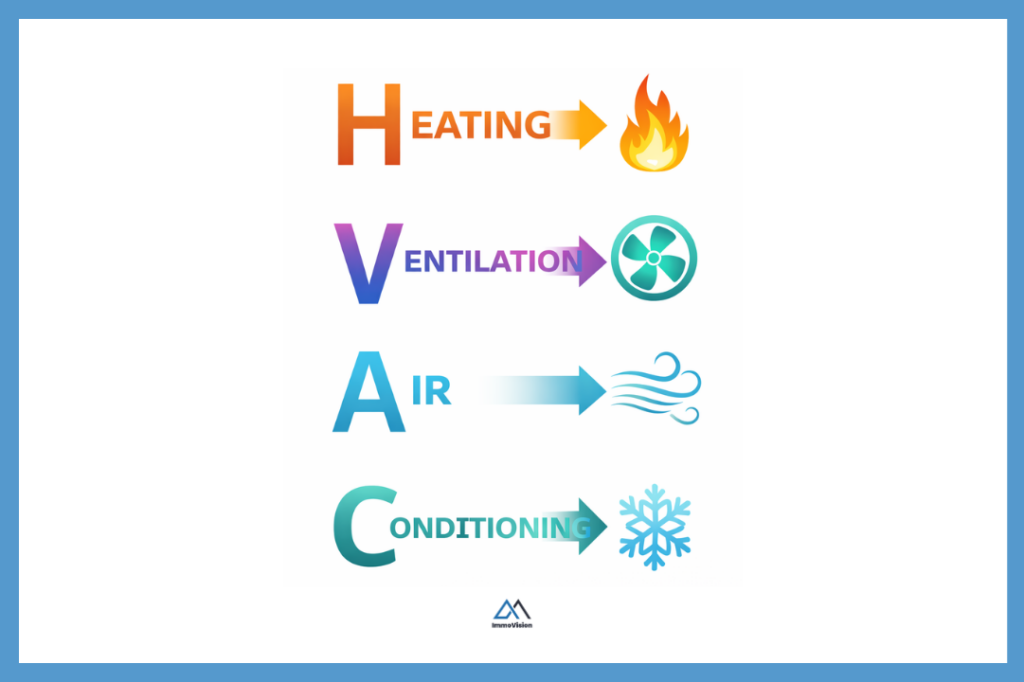
HVAC stands for Heating, Ventilation, and Air Conditioning. It’s a broad term used to describe the systems and equipment that regulate a building’s temperature, air quality, and overall airflow.
If you have problems with the temperature of your home, air humidity, stuffy or stale air, these are all related to the configuration of your HVAC system.
What does HVAC mean?
HVAC is an acronym that stands for Heating, Ventilation, and Air Conditioning. It is an all-encompassing term that covers the systems and equipment used to control indoor temperature, air quality, and airflow in buildings.
What is an HVAC System?
Your HVAC system describes the configuration of equipment in your home that controls heating, ventilation, and air conditioning.
The way your HVAC system typically works is by heating or cooling air, using either a furnace or a heat pump. And then circulating this air throughout the home using a network of ducts and vents. Air is also continuously exchanged with fresh air from outside, and filtered to maintain a comfortable indoor environment.
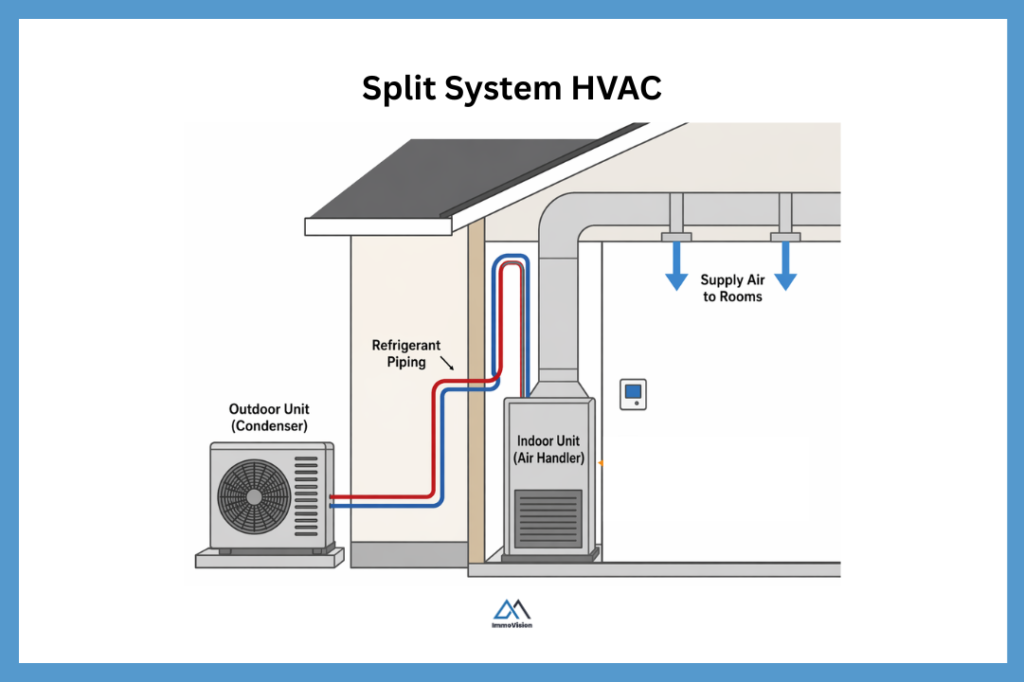
The diagram below shows a residential split HVAC system. As we shall see later, there are different types of HVAC system.
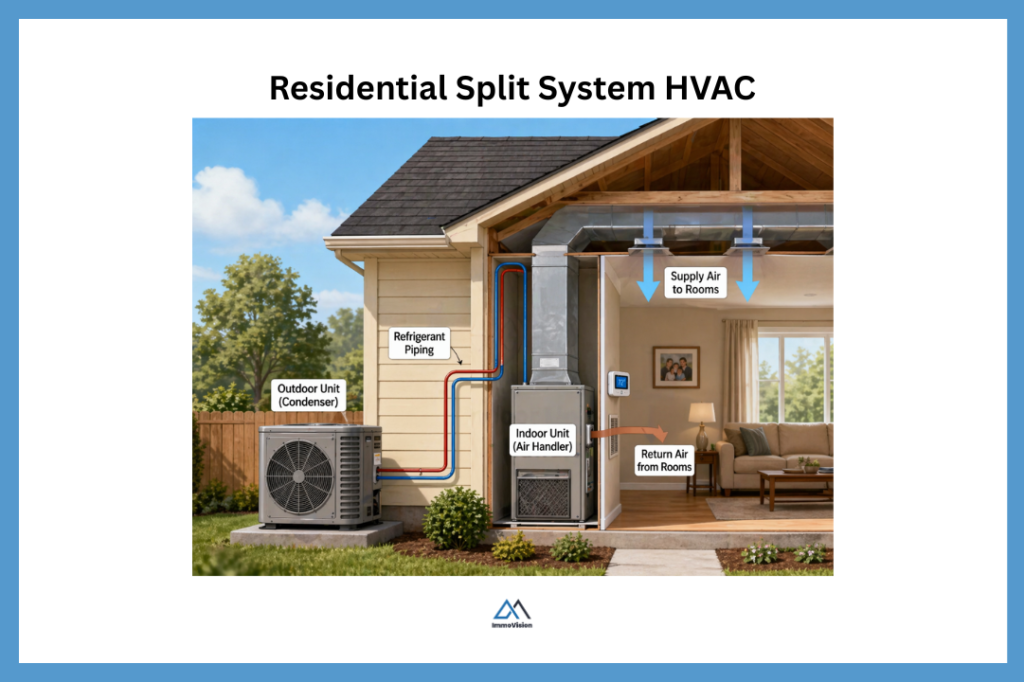
As you can see in the image, there is an outside unit. This could be a heat pump, or air conditioning unit. This connects to an air handler inside the building.
The outside unit uses outside air to heat or cool a liquid contained in the refrigerant piping. This liquid is then passed into a coiled wire inside the air handler. The air handler has a fan inside it and, once the air handler turns on, the fan will push air across the coiled wire causing the air to almost instantly heat up or cool down. This air is then pushed through a network of ducts to heat or cool the different rooms throughout the home.
What are the Components That Make Up an HVAC System?
An HVAC system is made up of multiple components that work together to regulate temperature, manage airflow, and maintain a comfortable and healthy indoor living environment. Although not every home has the exact same HVAC setup, you will often find the following components:
- Air Conditioner
- Whole-House Ventilation System
- Air Handlers
- Heat Pump
- Furnace
- Ductwork
- Humidifier/Dehumidifier
- Whole-House Air Cleaners
- Thermostat
- Boilers
- Geothermal Heat Pump
- Radient Heating
Note
Not all HVAC systems work the same way, but they all serve the same purpose: controlling indoor temperature and air distribution. Most systems either heat or cool air and circulate it through the home. The key differences lie in how they generate heat or cooling. For example, furnaces burn fuel, heat pumps move heat, and boilers heat water instead of air.
Air Conditioner
Your air conditioning (AC) unit is responsible for cooling your home by removing heat and humidity from the indoor air and transferring it outside.
This is important not only for comfort, but also for maintaining a healthy indoor environment and protecting the condition of your home. Excess heat and humidity can make your home feel sticky, and unpleasant to live in. It can also cause the growth of mold and mildew, and, over time, this will contribute to damage to materials such as wood, drywall, and flooring.
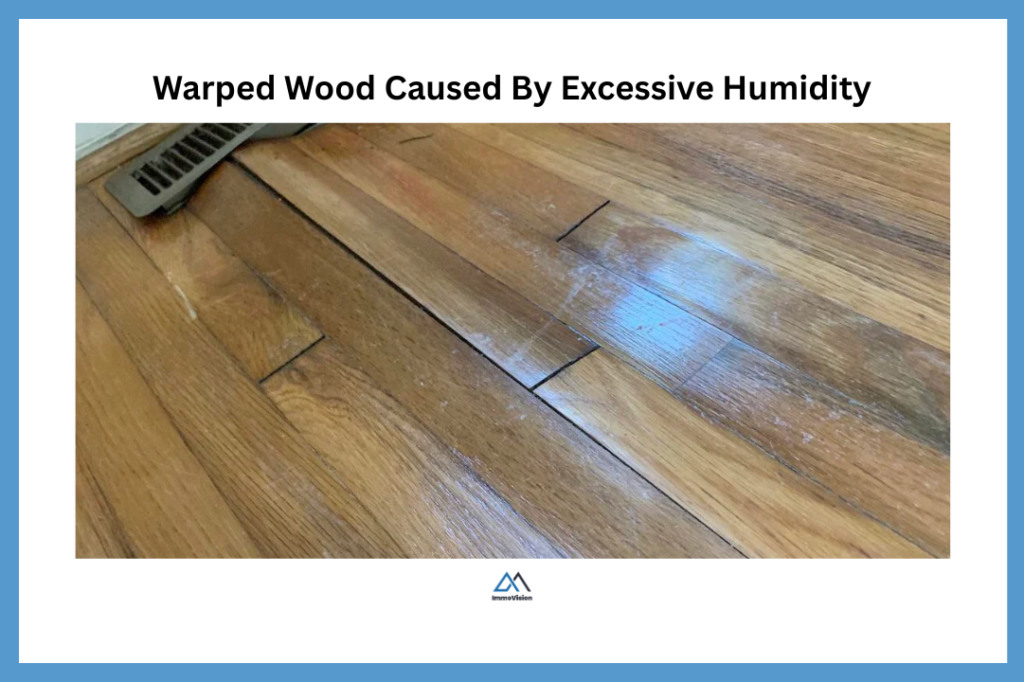
A working AC is most important in the summer months, when both temperature and humidity levels are high. Without proper cooling and dehumidification, indoor spaces can quickly become hot, damp, and uncomfortable.
Humidity and moisture can still build up in the winter; however, this is not the responsibility of your AC system. Instead, it is managed by your home’s ventilation system. In modern homes, this often includes a whole-house ventilation system designed to continuously exchange stale indoor air with fresh outdoor air.
Whole-House Ventilation System
A whole-house ventilation system is designed to continuously replace stale indoor air with fresh outdoor air. It is typically comprised of a central ventilation unit, ductwork, and air inlets and outlets that help circulate air throughout the home.
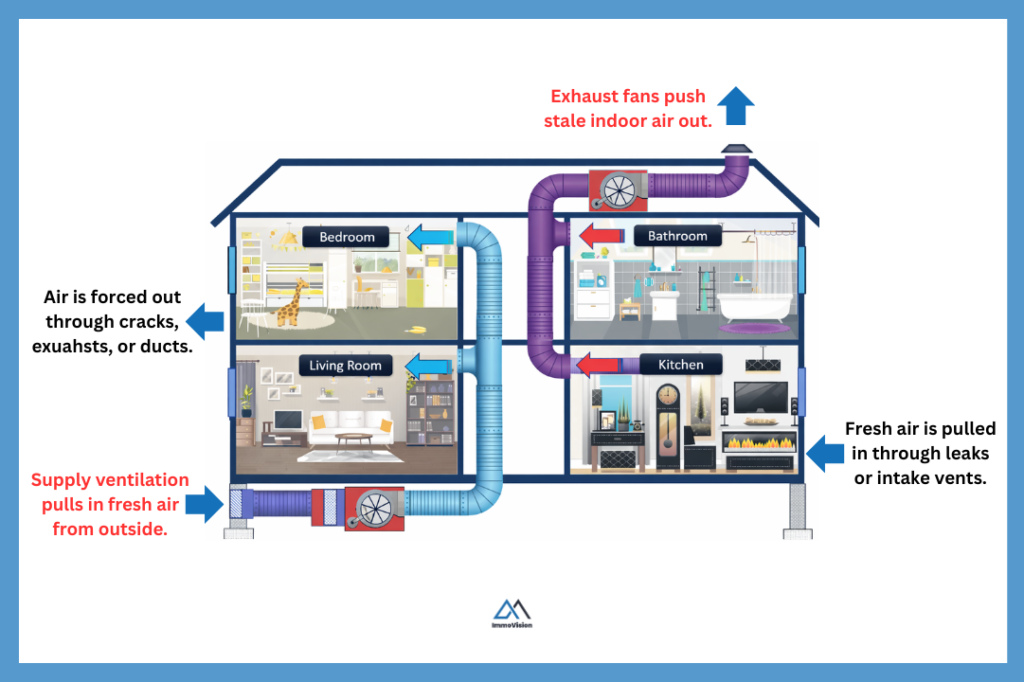
At a high level, whole-house ventilation systems work one of three ways:
- Supply ventilation: fresh outdoor air is pulled inside, and this forces stale indoor air to leak out through cracks, bathroom exhaust fans, kitchen range hood exhaust ducts, or through vents.
- Exhaust ventilation: exhaust fans push stale indoor air out, which creates negative pressure and pulls fresh air in through leaks or intake vents.
- Balanced ventilation: doing both at the same time in a controlled way.
Air Handlers
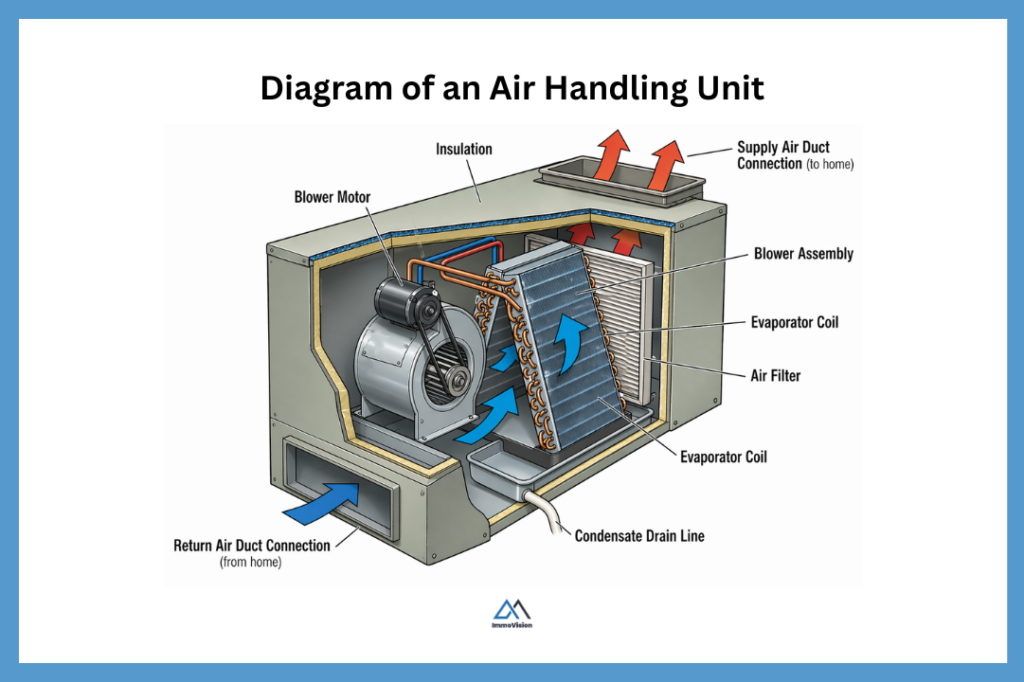
The air handler is responsible for moving air throughout your home. It works as the central distribution point, pulling in indoor air, conditioning it (making it either hot or cold), and pushing it through the ductwork.
Inside the air handler is a coil, which becomes either hot or cold depending on your heating or cooling system. As air passes over this coil, it is heated or cooled before being circulated through your home.
Heat Pump
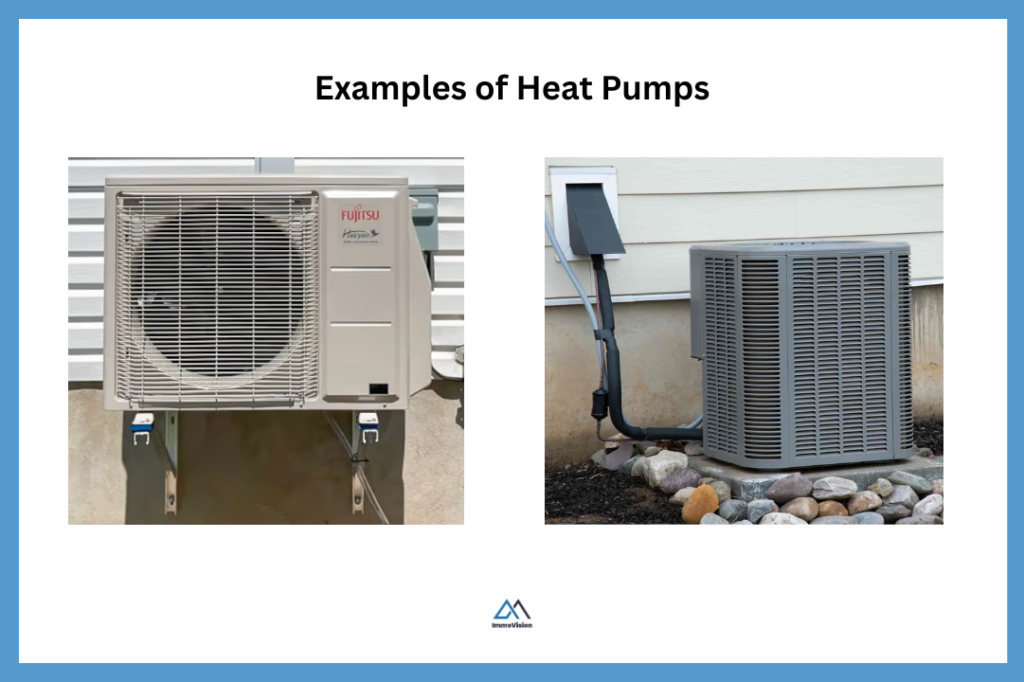
Heat pumps are systems that heat and cool your home by pulling air from outside your home and using it to heat or cool a refrigerant within the system.
This refrigerant is then circulated to the coil inside the air handler. As indoor air is blown over the coil, it is either heated or cooled before being distributed through the ductwork.
Furnace
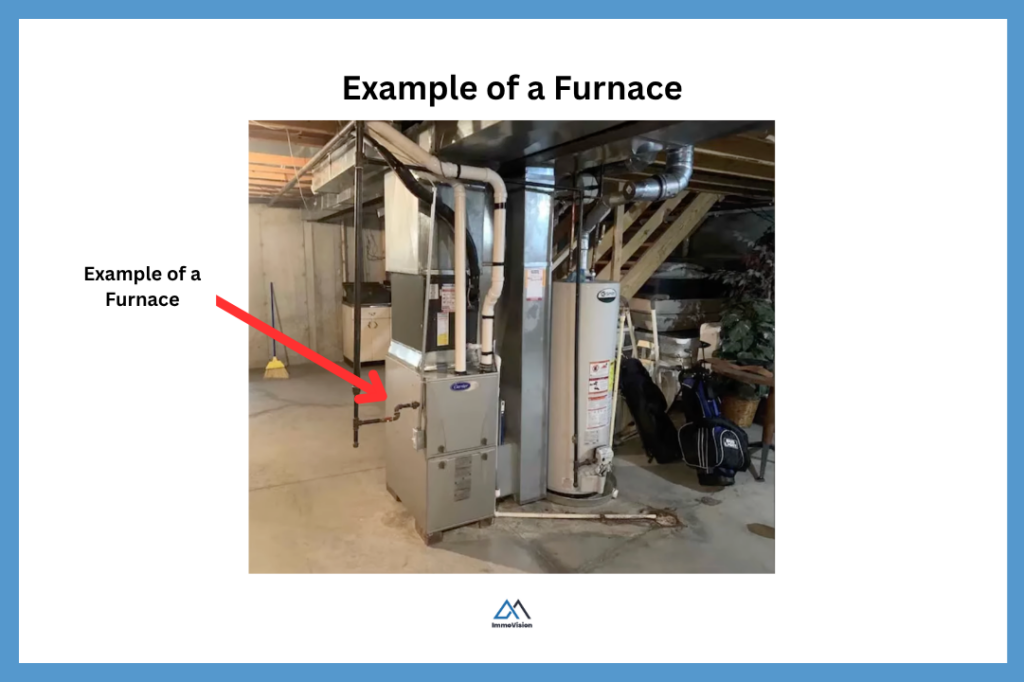
A furnace is another common way to heat your home during the winter. Unlike a heat pump, which transfers heat from the outside air, a furnace generates heat directly by burning fuel such as natural gas, oil, or propane.
Most furnace systems do not have an air handler, since they already have a built-in blower fan to push warm air through the ductwork and into the home, although systems vary.
Most older homes have furnaces. However, heat pumps are generally considered more energy-efficient, especially in places like Canada where electricity can be relatively affordable compared to fossil fuels. Because heat pumps move heat rather than create it, they can use significantly less energy.
A common criticism of heat pumps is that they are less effective in extremely cold temperatures, which can be a concern during harsh Canadian winters. They can also be more expensive to install upfront. However, modern cold-climate heat pumps have improved significantly and can still operate efficiently well below freezing.
Additionally, many federal and provincial government programs offer rebates and incentives to help offset the installation cost, making heat pumps more accessible.
Ductwork
Ductwork is the network of air channels that connects all the components of your HVAC system and distributes air throughout your home.
It carries heated or cooled air from your air handler or furnace into each room, and returns air back to the system to be reconditioned. This continuous cycle helps maintain consistent temperature and airflow throughout the home.
Properly sealed and insulated ductwork is important for efficiency, as leaks or poor design can lead to energy loss and uneven heating or cooling.
Humidifier/Dehumidifier
Humidity control systems can be integrated into your heating and cooling setup. Humidifiers add moisture to dry air, which is especially helpful during winter months or in naturally dry climates. On the other hand, whole-home dehumidifiers help reduce excess humidity in more humid environments and can also support homes with single-stage air conditioning systems.
Whole-House Air Cleaners
Whole-house air cleaners, also known as air purification systems, are an optional upgrade that can be integrated into your HVAC system. They improve your home’s indoor air quality (IAQ) by capturing and removing airborne contaminants such as dust, pollen, allergens, viruses, bacteria, and other pollutants before they circulate through your ductwork and living spaces.
Compared to standard HVAC filters, whole-house air cleaners are significantly more effective because they are designed to treat the air throughout the entire home, not just trap larger particles at a single return vent. As a result, they provide a higher level of filtration and can help create a cleaner, healthier indoor environment.
Thermostat
The thermostat acts as the control center of your HVAC system. Installed inside your home, it lets you set and adjust the indoor temperature. When you change the setting, it sends a signal to the system to heat or cool your home accordingly.
Boilers
A boiler is a key component of a heating system that burns fuel to heat water. That hot water is then circulated through pipes and radiators to warm a home or commercial space. Boiler systems are especially common in older buildings and in regions like the Mid-Atlantic and Northeastern United States.
Geothermal Heat Pumps
Unlike standard air-source heat pumps, geothermal heat pumps rely on a network of underground pipes to tap into the earth’s stable temperature for heating and cooling. While they tend to have higher upfront costs, they’re very efficient. However, they require enough outdoor backyard space to install the underground system.
Radient Heating
Radiant heating uses a network of tubes or panels to deliver heat directly through floors or walls. These systems can run on electricity or use heated water in a hydronic setup, where warm water circulates through the pipes to evenly heat the space.
What are the Different Types of HVAC System
There are several different types of HVAC system. The most common types are:
Split System
A split system is the most common central heating and air conditioning system in single-family homes across Canada. It has a condenser unit outside the home and an air handler (fan coil, or furnace with coil) inside the home. The condenser could be a heat pump, a central air conditioner, or any other outdoor condensing unit.
The way this system works is that there is a special liquid called a refrigerant that is pushed by the outside unit into the home, where it connects to a coil, (also called an “evaporator coil”) inside the air handler. The air handler uses a fan to blow air from inside the home across the coil to heat or cool the air, and then down ducts back into the rooms of the house.
Note
Heating in a split system can come from various sources, including a gas furnace, radiant heating, geothermal systems, heat pumps, or boilers.
Each option has a slightly different configuration. For example, in a gas furnace setup, the furnace is located inside the home as part of the air handler, while the outdoor unit (condenser) remains outside.
Dual Fuel Heat Pump System
A dual fuel heat pump system consists of an outdoor electric heat pump and an indoor gas furnace. In the summer, the heat pump cools the home by circulating refrigerant between the outdoor unit and an indoor evaporator coil inside the furnace. The furnace’s in-built blower fan then pushes the cooled air through the ducts and around the home. In the winter, the system can use either the heat pump or the gas furnace to heat the home, depending on outdoor temperatures and efficiency needs.
This setup is useful, because it gives the homeowner the flexibility to use whatever means is cheaper to heat their home. For instance, in Canada where electricity tends to be cheaper than natural gas, the homeowner can rely on the heat pump. However, if tempretures drop below around -15°C, the homeowner can switch to the gas furnace instead.
Ductless Mini-Split System
Ductless HVAC systems are a great option for older homes without existing ductwork, as well as for new builds or spaces that need extra heating and cooling. A ductless mini-split system includes an outdoor condenser or compressor (often referred to as a mini-split heat pump) and one or more indoor units.
A standard mini-split system typically has a single indoor unit, while a multi-zone system can support up to eight. Each indoor unit can be controlled independently, allowing you to set different temperatures or turn them off as needed. However, the system can only operate in either heating or cooling mode at one time, and not both simultaneously.
Packaged System
A packaged HVAC system combines both heating and cooling components into a single, compact unit. These systems are a great option for smaller homes or spaces where there isn’t enough room for a traditional split system.
There are several types of packaged systems available, including gas/electric units, heat pump systems, dual-fuel options, and packaged air conditioners.
The best HVAC system for your home will depend on a number of factors, such as the size of your space, your local climate, whether ductwork is already in place, and your energy efficiency goals. For the best outcome, it’s a good idea to work with experienced heating and cooling professionals who are familiar with a wide range of HVAC systems.
HVAC Codes and Standards
Residential HVAC equipment installed across Canada must comply with applicable provincial and local building codes. This is for building safety and occupant safety, as well as to ensure equipment meets required energy efficiency standards. For example, if your home uses a furnace, building codes make sure the fumes created when burning gas are properly vented outside.
Examples of HVAC codes and standards include:
- National Building Code of Canada (NBCC)
- Quebec Building Code (based on the NBCC)
- Régie du bâtiment du Québec (RBQ) regulations and enforcement
- CSA Group (CSA standards for HVAC equipment and safety)
Frequently asked questions
What HVAC System is Right for me?
The goal of an HVAC system is to maintain the comfort level in your home in the most cost effect way possible.
However, if you buy a unit that is too small, then it will struggle to heat or cool your home properly, running constantly and never fully reaching the desired temperature. Alternatively, if you buy one that is too big, then it will cool or heat the space too quickly and shut on and off constantly, which reduces efficiency, increase wear and tear, and can end up costing a fortune to run over time.
To make sure that you correctly size your HVAC system, you should hire a qualified HVAC professional to come to your home and run something called a manual J load calculation. This formula considers the unique aspects of your home to determine the most cost effective HVAC size.
How much does a new HVAC system cost in Canada?
In Canada, it costs between $5,000 – $28,000 to get a new HVAC system installed. This wide cost range is because there are several factors that at play. This includes:
- The unit(s) that you are replacing
- The size of the units
- The size of your home
- HVAC pricing where you live
- If you stick with basic components, or get add-ons like a humidifier
- If you need new ductwork
- If you need electrical upgrades
- What brand you choose
- Who you hire
- Labour and local market rates
There are also specific cost factors related to the type of heating or cooling unit.
How to check your HVAC system is working
To check if your HVAC system is working, does not require any special tools. The following steps will allow you to check if it is working or not:
- Set a temperature on your thermostat. If the system is working, your HVAC system should turn on in a couple of minutes.
- Listen for the system turning on. The fan in your air handling unit should turn on, and you should feel as the fan pushes hot or cold air out of the vents.
- Check for unusual signs. If there are strange noises (banging, grinding), bad smells, water leaks around the unit, then this is probably a sign that your HVAC system is not working perfectly.
- Monitor room temperature change. Let the system run for 10 – 15 minutes. If nothing changes, the system may not be functioning properly.